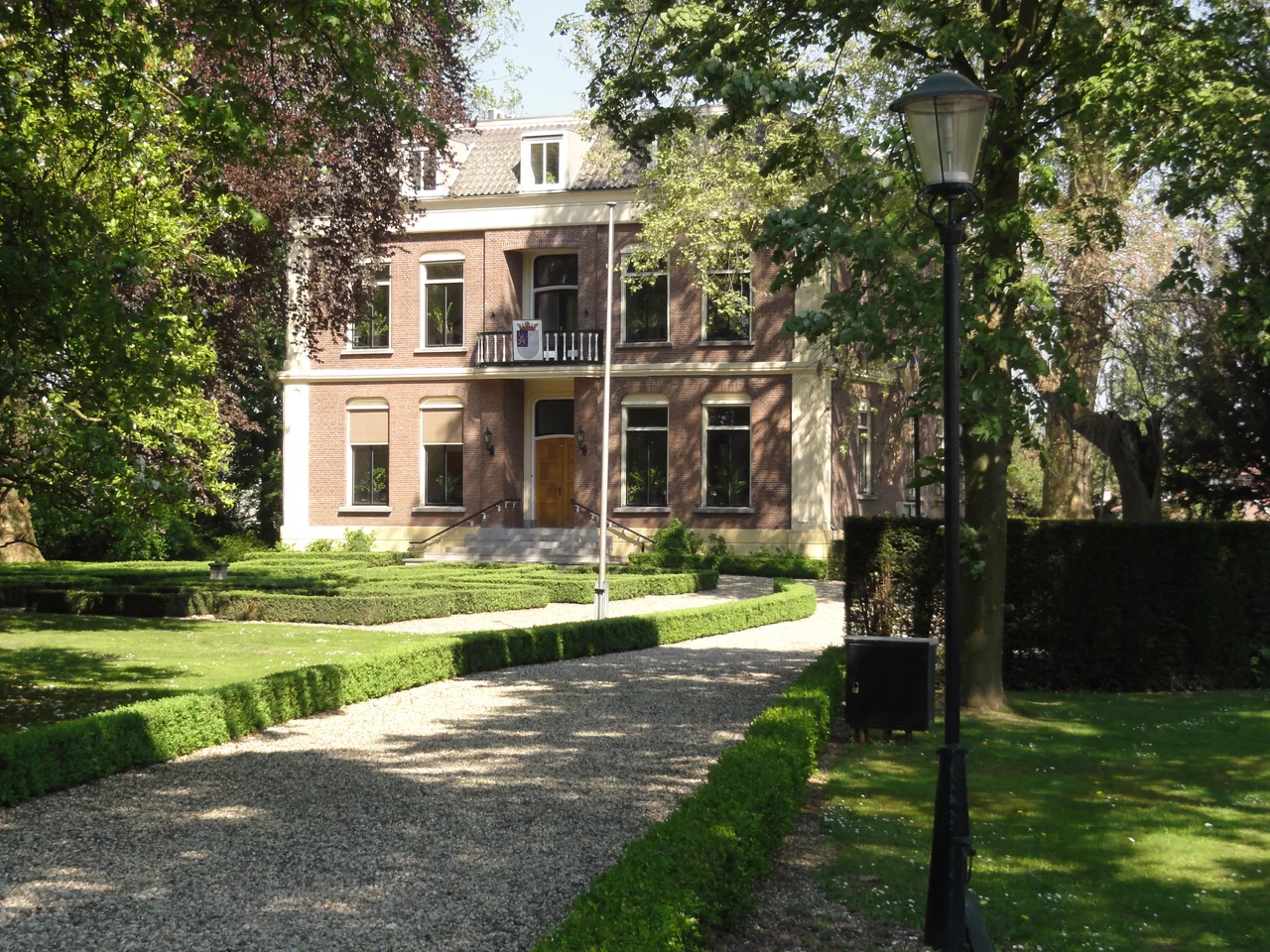

Neder-Betuwe
Look at a map of central Holland and you can see why Neder-Betuwe exists the way it does. The Rhine runs along the top. The Waal runs along the bottom. The land between them narrows in places to barely four kilometres of clay and orchard, defended on both sides by dikes. In February 1995 those dikes started to wobble. A quarter of a million people were ordered to leave their homes. It is the kind of evacuation that, in a less practical country, would have ended in panic. In Neder-Betuwe it ended in a brief shrug, a much-strengthened dike, and the resumption of pear-picking.
Built on a River Edge
The whole municipality is, in essence, a polder - a former floodplain reclaimed from the rivers that bracket it. The soil is clay over sand over gravel, the kind of profile that grows fruit trees with enthusiasm. Archaeologists have pulled Stone Age and Iron Age remains out of these fields, though it is not clear that anyone lived here continuously back then. The Romans, however, definitely did: the northernmost limes of the empire ran along the Rhine, and there is evidence of a Roman castra where the town of Kesteren sits today. The first proper dikes went up around 1300. Until then, the river decided where the land was.
The Invisible Religious Border
Walk east across the municipal boundary and the churches change. To the west, in Neder-Betuwe, almost every congregation is Reformed - Protestant, often strictly so. There is not a single Catholic church in the municipality. To the east, a substantial part of the population is Catholic. The line between them is invisible on the modern map but historically very real: it follows the Spanjaardsdijk, the Spaniards Dike, raised before or during the Eighty Years' War. The local ruler on this side of the dike was Protestant. The rulers on the other side were Catholic. Four hundred years later, the dike is mostly forgotten - but the parishes and bell towers still trace the old fault line.
September 1944 Came Through Here
In May 1940 the Germans drove through this narrow strip on their way to attack the Grebbeberg. Four years later the Allies did the reverse. After Operation Market Garden faltered at Arnhem in September 1944, the front line settled across the narrowest part of the Betuwe. The town of Opheusden was destroyed in the fighting - first between the Germans and the 101st Airborne Division, then between the Germans and the British and the 1st Belgian Infantry Brigade. Ochten, the next village west, was flattened by British artillery and mortars firing from across the Waal to dislodge its German occupants. By the time the front moved on, much of Neder-Betuwe was rubble. The villages were rebuilt in the postwar style, plain and quick. The dead were not.
The Night Everyone Left
Late January and early February 1995 brought rain. Then more rain. The Rhine and the Waal rose to record heights and stayed there for almost two months. On 1 February, the dike near Ochten began to shift sideways. Authorities ordered 250,000 people in the wider region to evacuate. Livestock was trucked out. Houses were locked, and lights left on in some windows for the looters. A massive engineering response stabilised the dike before it gave way. Within months the long-planned strengthening programme was finally moving with public support - the same residents who had opposed it for NIMBY reasons were now harassed by neighbours who had spent a week in evacuation centres. The strengthening went ahead. The next high water in 1998 was a routine event.
The Quiet Reactor at Dodewaard
On the southern edge of the municipality, in the village of Dodewaard, sits a small white building that used to be a 55-megawatt nuclear power plant. It ran from 1968 to 1997 - the Netherlands' first commercial reactor, a boiling water design used mostly for research and grid experience. In 2005 the last fissionable material was removed. The spent fuel went to Sellafield in England for reprocessing. The building itself is now in a state engineers call 'safe enclosure': sealed, monitored, and waiting. The plan is to wait until 2045, then demolish it. The arithmetic is patient. The main remaining radioactive isotope is cobalt-60, which has a half-life of 5.27 years. Forty years of waiting reduces it by a factor of 193. After that, the dominant isotope becomes nickel-63, half-life 100 years, and waiting stops helping. So the demolition will happen at the optimum moment. Until then, Dodewaard sits between two rivers, in an orchard, doing nothing.
From the Air
Neder-Betuwe stretches east-west between the Rhine (north) and the Waal (south) at roughly 51.93 N, 5.63 E. The A15 motorway runs through its middle; the Betuweroute freight rail line parallels it. The orchards are striking from low altitude in spring, when entire fields turn white with pear and apple blossom. Nearest airport is Eindhoven (EHEH) about 55 km south; Schiphol (EHAM) is 80 km northwest.
Nearby Stories
- Herzogenbusch Concentration Camp 1.8 km away
- Gooi 4.8 km away
- Volkel Air Base 6.9 km away
- Achterhoek 8.3 km away
- Sportpark Berg & Bos 8.8 km away
- Vetera 9 km away
- Beverweerd Castle 10 km away
- Sallandse Heuvelrug National Park 15 km away