_(37671976581).jpg)
Ness, Lewis
Each year, in late August or early September, ten men from Ness sail forty miles north into the open Atlantic to a rock called Sula Sgeir. They stay for a fortnight. They harvest around two thousand young gannets - guga, the local name - and bring them home as a delicacy. The hunt is unique in Britain: nowhere else is a wild seabird harvest legally allowed, and nowhere else does it carry the weight of an unbroken tradition. Ness is the northernmost settlement on Lewis - sixteen villages strung along the road that ends at the Butt - and the guga hunt is only the most striking of the ways in which this community has insisted on continuing to be exactly itself.
Sixteen Villages
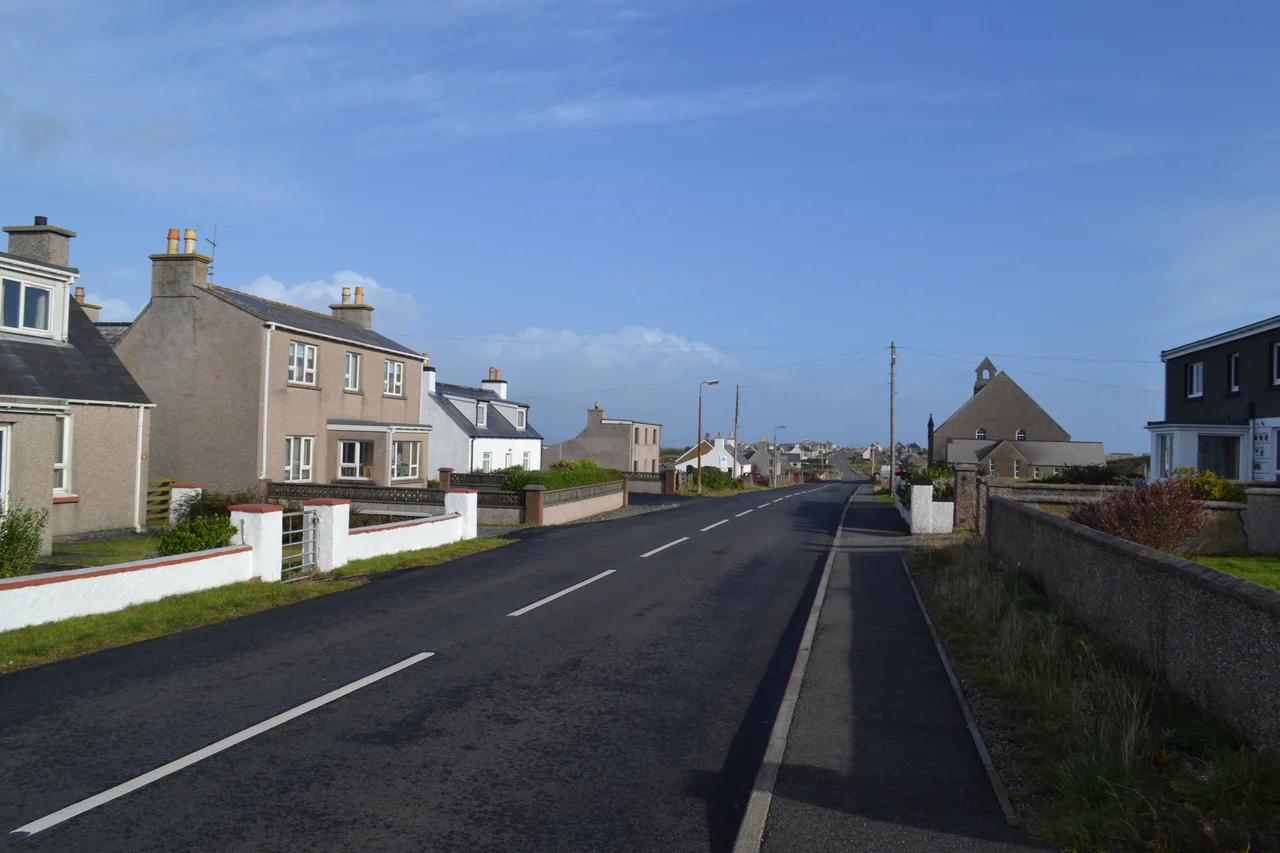
Ness is not one village but a community of about sixteen, including Lionel, Habost, Swainbost, Cross, North Dell, South Dell, Cross Skigersta, Skigersta, Eorodale, Adabroc, Port of Ness, Knockaird, Fivepenny and Eoropie. The settlements run along the northern shore of Lewis, the road threading them like beads on a string until it reaches the Butt and the open Atlantic. When the United Kingdom was a member of the European Union, Ness was the most north-westerly community in the entire EU. The name comes from the Old Norse word for headland - the same root as English ness - and many of the other place names here are Norse too, evidence of the Viking centuries when these islands were part of a North Atlantic kingdom rather than a Scottish one.
The Great Drowning
The community remembers its losses with precision. In 1862, the same year the lighthouse at the Butt was built, thirty-one fishermen from Ness were lost during a single storm - an event named in local memory as the Great Drowning of Ness. The storm left twenty-four widows and seventy-one children without fathers in a community that could barely afford the absence of a single one. A Ness Fishery Memorial above the harbour at Port of Ness was unveiled in 2014 to honour all the local fishermen lost to the sea over the centuries, at the instigation of the veteran boat-builder John Murdo Macleod. The sea here is generous and pitiless in roughly equal measure, and Ness has accounting for both.
The Guga Hunt
The guga hunt is the most extraordinary tradition still practised in Britain. Each year ten men from Ness travel to the remote rocky island of Sula Sgeir, about forty miles north of Lewis, and spend a fortnight there harvesting around two thousand young gannets. The birds are salted, cooked, and eaten - considered a local delicacy. The practice is the only legal wild seabird harvest in Britain, protected by an annual special licence, and rooted in centuries of sustainable use of an extraordinary food source. The hunters live rough on the island, sleep in stone bothies built by their predecessors, and bring the catch home as their fathers and grandfathers did. The hunt is filmed, written about, debated, and continued. Ten men go out every year. Ten men come back.
The Sgoth and the Gaelic
Ness has produced one of Scotland's distinctive boat-building traditions: the Sgoth Niseach, a clinker-built skiff with a dipping lug sail, designed for the local conditions and used for line fishing until the early 20th century. Several Sgoth are still in active use, maintained by community trusts that have kept the boats and the skills alive. The language of the community is Scottish Gaelic - about 75 percent of residents speak it - and the Comunn Eachdraidh Nis (the Ness Historical Society) has been the first historical society in the Outer Hebrides since its founding in 1977. When Cross School closed in 2011 with only nineteen pupils, the buildings were taken over by the historical society as a museum. The peat for many household fires still comes from the moor, though that use is in slow decline.
The Estate and the Community
In 2007, the community bought its own land. Ness became part of the Galson Estate, owned by Urras Oighreachd Ghabhsainn - the Galson Estate Trust - managed by ten local trustees elected by the community. The hand-over took place on 12 January 2007 and was part of the wider Scottish community land reform movement, which has returned thousands of acres of Highlands and Islands to the people who actually live on them. The population today is just under a thousand, down from over three thousand in 1831 - the same depopulation that has hollowed out much of the Hebrides since the Clearances. But the people who remain have kept the school, the football club (Ness FC plays on Fivepenny Machair), the sports centre Spors Nis opened in 2007 with its two-lane bowling alley, and the guga hunt. Ten men still go out every year. The boats still come back.
From the Air
Ness is at 58.47°N, 6.25°W - the northernmost district of the Isle of Lewis, with sixteen villages strung along the road that ends at the Butt of Lewis. From 2,000-5,000 feet AGL the road, lighthouse, scattered villages, and the contrast between green machair and bare moor are all clearly visible. Stornoway airport (EGPO) is about 22nm to the south, accessible by the A857. North of Ness, no land until Iceland; northeast is the open Atlantic; the Minch is to the south. The guga-hunt island of Sula Sgeir lies about 40nm to the north - visible from cruise altitude on clear days as a small rock surrounded by open ocean.
Nearby Stories
- Callanish IV 2.2 km away
- Siadar Wave Power Station 14 km away
- The Minch 19 km away
- Enard Bay 20 km away
- Stoer Head Lighthouse 26 km away
- HMS Bullen 45 km away
- HMS King Edward VII 113 km away
- The Laki Eruption: The Volcano That Changed World History 854 km away