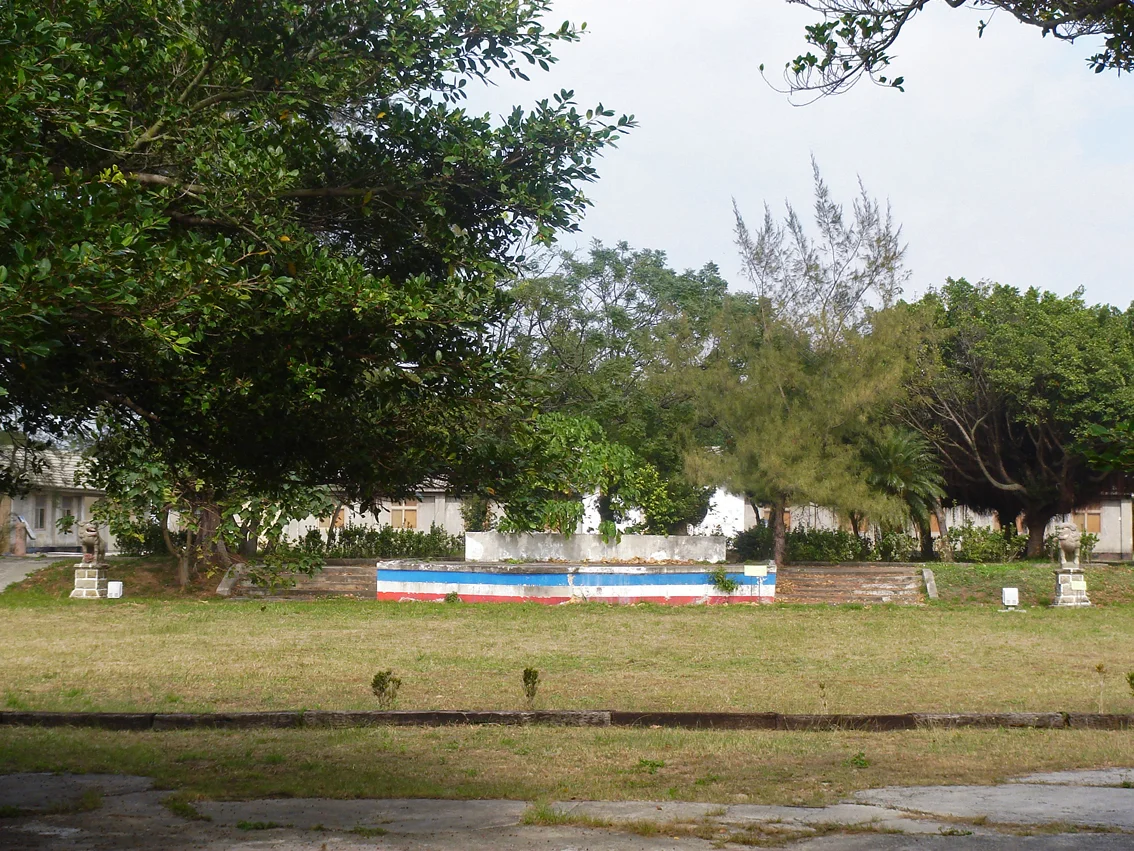

Niumatou Site
Before the name Qingshui existed, before the Qing Dynasty opened this coast to Chinese settlement, the people of this shoreline had their own word for it: Gomach. The Papora people, indigenous inhabitants of Taiwan's western plains, lived here for generations. And before even them, someone else broke ground along this stretch of coast. Buried beneath the Qingshui Plain, in a patch of central Taiwan that looks like farmland today, lie the traces of people who cultivated these fields roughly 4,000 years ago — the oldest evidence of human settlement in central Taiwan. The Niumatou Site is what archaeologists named the place. They took the name from the land itself.
What the Earth Gave Back
The first reports of unusual objects surfacing here came as early as 1937. Farmers, construction workers, or curious passersby had encountered pottery shards or shaped stone in the soil. The formal discovery came in 1943, and then the real work of understanding began. In 1955, researcher Liu Pin-Hsiung conducted detailed investigation of the site, and what he documented changed how archaeologists understood Taiwan's prehistoric past.
Two distinct cultural layers emerged. The older material featured cord-marked pottery — ceramics impressed with rope patterns before firing, a technique found across prehistoric Asia. The later material included black pottery of a different tradition. Liu named these the Niumatou Culture and the Yingpu Culture respectively, two distinct prehistoric peoples who had lived in the same place across different eras. The site has since been designated a protected historical relic by the Taichung City Government.
Farmers on the Plain
The objects themselves tell the story plainly. Stone hoes turned up in large numbers — not the occasional find, but enough that archaeologists concluded farming was central to how these people fed themselves. They cultivated this coastal plain when it was younger, wetter, closer to its natural state before centuries of embankments and development reshaped the shoreline.
But cultivation alone did not sustain them. The Taiwan Strait lay just to the west, and the sea provided what the fields did not. The people of the Niumatou site fished and hunted, rounding out a diet that was diverse by Neolithic standards. They built, they made pottery, they shaped stone into tools. They left the kind of evidence that, found 4,000 years later, tells a quiet story of ordinary life made remarkable only by time.
A Name Passed Through Languages
The word Niumatou arrived in Chinese through an interesting channel. The Papora people — the indigenous Formosan group who inhabited this coastal region before Han Chinese migration — called the area Gomach. When Han settlers arrived during the Qing Dynasty, after the Kangxi Emperor opened the region to Chinese immigration, they needed a name they could pronounce. Niumatou became the phonetic approximation of Gomach, the indigenous word rendered into Chinese sounds.
The archaeological site takes its name from this linguistic inheritance, which itself traces through centuries of population change. What the Papora called Gomach became what the Han called Niumatou, which eventually became Qingshui — "clear water" — the name the Japanese administrators formalized as Kiyomizu and that persists today. The site preserves something older than any of these names: a time before the naming itself.
A Short Walk from the Station
Today the Niumatou Site sits within a modern urban district, accessible on foot from Qingshui Station on the Taiwan Railway. The Qingshui Plain that once stretched to the sea has been altered dramatically — the Port of Taichung now anchors the coastline to the south, the freeway system threads through the district, and the Gaomei Wetlands to the northwest exist partly because port construction changed how the Dajia River deposits its sediment.
Yet the site itself remains, protected and recognized. Visiting it requires no great expedition — just a train ride to the coast and a short walk northeast from the station. The land is not dramatic to look at. What makes it remarkable is invisible, locked in the soil: the residue of the first known farmers of central Taiwan, working fields that faced the same strait that faces them still.
From the Air
The Niumatou Site lies at approximately 24.27°N, 120.58°E, on the flat Qingshui Plain of western Taichung near the Taiwan Strait shoreline. From the air at 3,000–5,000 feet, the coastal geometry is clear: the Port of Taichung occupies the reclaimed shoreline to the south, while the Gaomei Wetlands form a visible dark-green band along the coast to the northwest. The site itself is inland within the Qingshui urban area, indistinguishable from surrounding farmland and neighborhoods at most altitudes. Nearest major airport: RCMQ (Taichung International Airport), approximately 15 km to the southeast. The Taiwan Strait's broad gray expanse provides a reliable western landmark for orientation.
Nearby Stories
- Lukang Tianhou Temple 3.3 km away
- 1916–1917 Nantou Earthquakes 11 km away
- Beipu 15 km away
- Shei-Pa National Park 21 km away
- China Airlines Flight 611 23 km away
- 1991 Miaoli Train Collision 43 km away
- Mudouyu Lighthouse 69 km away
- Battle of Xiapi 1097 km away