
Beipu
In 1834, two men received an unusual gift from the Qing dynasty: permission to tame a frontier. A Cantonese farmer named Jiang Siou-luan and a Fujianese merchant named Jhou Bang-Jheng were granted the right to develop a remote stretch of northwestern Taiwan that the imperial bureaucracy had largely ignored. What followed was half a century of hard clearing, community building, and survival in territory that was genuinely dangerous — dense forests, uncertain weather, and the constant negotiation of boundaries with indigenous peoples who had lived there far longer. The result of that effort is Beipu (北埔), a small town in Hsinchu County that wears its Hakka origins more openly than almost anywhere else in Taiwan.
What Two Pioneers Built
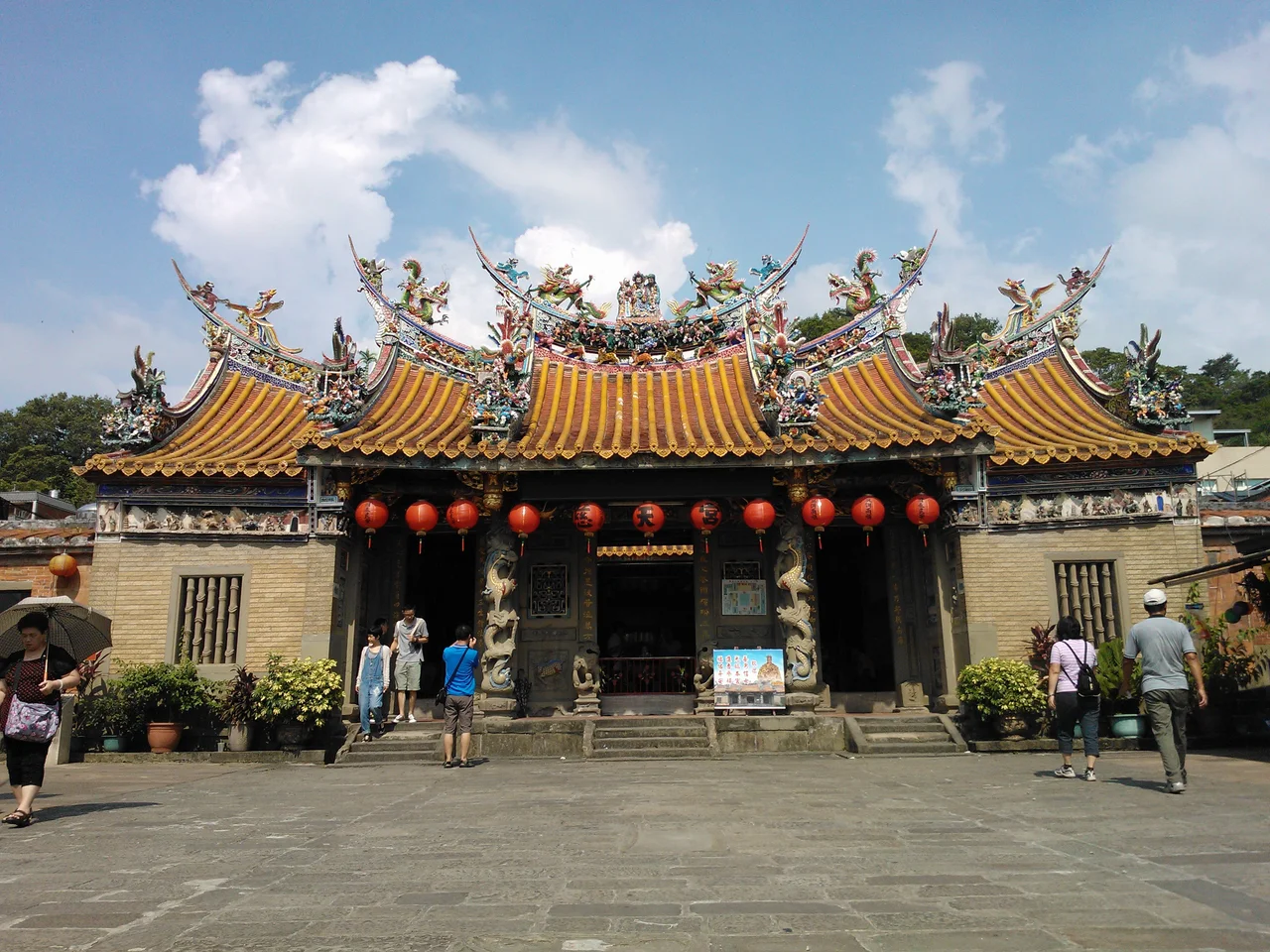
The most visible legacy of those founding families is the cluster of historic buildings in Beipu's town center: the Jiang family residence, the Jin-guang-fu administrative compound, and the Jiang-ah-hsin residence. These are not museums in the conventional sense — they are old buildings in active use, aged stone and brick courtyards that still smell faintly of wood polish and incense, where the architecture speaks directly to the defensive logic of frontier settlement.
Hakka settlers in Taiwan built their homes with courtyards designed for communal defense, thick walls, and careful orientation. The wealthier the family, the more elaborate the compound. Walking through Beipu's historic quarter, you feel the logic of a society that needed to hold together against real threats — and mostly did. Half a century after Jiang and Jhou received their imperial grant, Beipu had become a regional administrative and economic center, which is exactly what they set out to build.
The Art of Grinding Tea
The thing most visitors come to Beipu to do is simple: sit down in one of the small tea houses that line the central streets and grind their own tea. This is not the elegant gongfu ceremony of Taiwanese high tea culture — it is something older and more physical. You are given a ceramic mortar and a combination of tea leaves, peanuts, and rice, and you grind them together into a thick paste, after which hot water is added. The result is a warm, nutty, slightly grassy drink that locals have been preparing this way for generations.
The tea houses themselves are built in traditional Hakka materials: stone foundations, wooden fittings, roofs that curve in ways that echo older architecture across the Taiwan Strait. The streets are narrow enough that the buildings on either side create a kind of covered gallery effect in the middle of the day. It is one of the more genuinely preserved small-town experiences available in northwestern Taiwan — unhurried, unhyped, and still oriented toward the people who live there rather than the people who come to visit.
Cold Springs and Hill Country
Just outside the town center, Beipu has a cold spring producing weakly alkaline carbonic acid water — naturally still, clear, and cold at 10 to 15 degrees Celsius year-round. Locals use it for therapeutic purposes; the water is reputed to help with skin ailments, gout, arthritis, and gastric complaints, though it is not considered suitable for drinking. A spring like this would draw crowds at a spa resort; in Beipu it sits with the unceremonious matter-of-factness of a place that has had it long enough to take it for granted.
Beyond the spring, the country around Beipu opens into the rolling highlands that lead toward the Lionhead's Mountain Scenic Area (Shitoushan), a region of temples, forest trails, and views across the Miaoli and Hsinchu valleys. For hikers and day-trippers, Beipu serves as a natural staging point — close enough to the hills to reach them easily, small enough that it doesn't overwhelm the visit with its own demands.
Nashi Pears, Honey Vinegar, and What the Shops Sell
Summer in Beipu brings nashi pears to the market stalls — the large, round, crisp Asian pears that are grown in the cooler hill country nearby. They appear alongside honey vinegar, locally produced tea, and the kind of handmade lucky charms that are a staple of Taiwanese folk religious tradition. The shops are small and run by families, which means the selection changes with the season and the stocks are actually made by the people selling them.
This is the texture of Beipu: specific, personal, and rooted in a place that never quite decided to become a tourist town, even as it accumulated the ingredients of one. The Hakka identity here is not performed for outsiders — it simply persists, as it has since two determined men began clearing this land nearly two centuries ago.
From the Air
Beipu lies at approximately 24.66°N, 121.07°E in the hills of Hsinchu County, Taiwan. From the air at 8,000–10,000 feet, the town appears as a compact settlement at the edge of flatter coastal plains, with forested ridges rising visibly to the east and southeast toward Shitoushan (Lion's Head Mountain). The historic town core is small and dense; the surrounding landscape is agricultural terracing giving way to forest. Nearest airports: RCSS (Taipei Songshan, ~65km N), RCKH (Kaohsiung, ~160km S). For light aircraft, terrain rises quickly east and southeast — maintain altitude when proceeding inland. Morning approaches from the west offer clearest views of the hill-to-plain transition that defines Beipu's geography.
Nearby Stories
- Kavalan Distillery 5.5 km away
- Shei-Pa National Park 5.8 km away
- Taoyuan Guanxin Algal Reefs Ecosystem Wildlife Refuge 11 km away
- Jingtong Mining Industry Museum 11 km away
- Gaomei Lighthouse 14 km away
- Qingshui Cliff 25 km away
- 2022 Chinese Military Exercises Around Taiwan 34 km away
- Gaomei Wetlands 43 km away