Normanton railway station, Queensland
On a dead-flat plain at the edge of town, where there is nothing to hide behind, the railway terminus throws a startling silhouette against the Gulf sky. A long arched carriage shade of curved corrugated iron rises over the tracks, its bowstring trusses exposed at either end, edged with a scalloped metal fringe like the brim of a hat. Decorated cast-iron columns hold it up. Inside the station building, the timber walls carry their original painted colour schemes and some of the original furniture still stands. This was built in 1889 as the end of the line - the Normanton end of a railway to the Croydon goldfields that became, almost by accident, one of the most curiously durable feats of engineering in outback Australia.
The Line to Nowhere and Everywhere
It was meant to go to Cloncurry. When a railway from Normanton was first debated in the 1880s, the goal was to link the port with the copper country and, eventually, with Townsville's Great Northern line. Then in late 1885 came the gold strike at Belmore Station, and within two years the Croydon field held six thousand people clamouring for supplies no road could carry. Plans changed. The line was diverted east to Croydon instead, reaching it in July 1891. But the link to Cloncurry never came, and neither did the connection to the rest of Queensland's network. The Normanton to Croydon railway was left exactly as it began: an island of track, connected to no other line in the country, running its own isolated world between two Gulf towns.
A Railway Built to Drown
The man who made it work was George Phillips, who had helped survey the very ground the town stood on back in 1867. Phillips knew the Gulf's two great enemies - seasonal floods that washed out ordinary embankments, and termites that devoured timber sleepers from below. In 1884 he patented an answer: special U-shaped steel sleepers laid directly on the bare ground, with no ballast to scour away. The genius was that the line could simply go underwater. When the wet season came, floods rolled over the track and then receded, leaving it ready for service almost at once, while the roads stayed impassable for weeks. The steel ignored the termites entirely. More expensive to buy than timber, it proved cheaper to lay and to maintain - and it has lasted, remarkably, into the present day.
The Shape of a Terminus
Phillips supervised the construction and shaped the buildings too, with designs drawn up under his direction by departmental draftsman James Gartside. At its peak the terminus was a small town in itself: a station building holding the telegraph office, the station master's and traffic manager's offices, a booking office, waiting and parcels rooms, even a ladies' room with its own ramp. Because the line was cut off from everywhere, it had to be self-sufficient, with a goods shed, a maintenance store, fitting and blacksmith's shops, an engine shed and a gantry. Much of that working machinery has gone, leaving footings and inspection pits in the grass, but the heart survives. The cast-iron columns of the carriage shade were cast at the Toowoomba Foundry - the same works that supplied some of the railway's steel sleepers - so the building and the track it shelters were, in a sense, forged together.
Enter the Gulflander
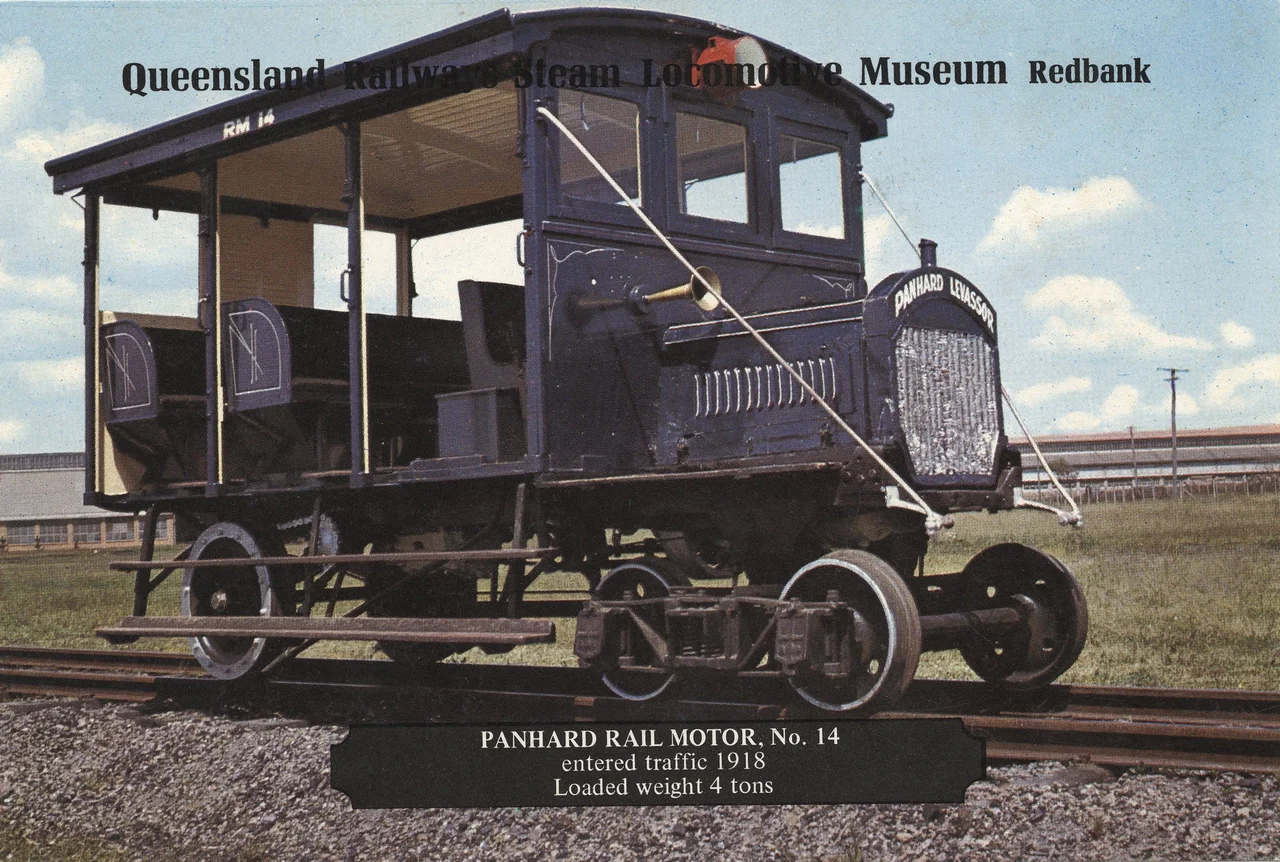
The goldfield faded after the First World War, and traffic on the line dwindled, but the railway refused to die. Supplying enough water for steam engines had always been a struggle this far out, so railmotors took over: a Panhard was tried in 1922, and by 1929 steam was abandoned altogether. The track's flood-proof reliability kept it open as a lifeline long after the gold was gone, a vital link through the wet when nothing else could move. In 1982 a 1950-built railmotor, RM93, was restored and transferred to Normanton; by 1987 it carried the name Gulflander on its sides and set running its now-famous weekly schedule - up to Croydon on Wednesdays, home on Thursdays. It still runs today, the oldest railmotor on the line, carrying tourists across the same submerged steel that George Phillips dreamed up nearly a century and a half ago. The line that 'goes from nowhere to nowhere,' as locals proudly put it, has outlasted them all.
From the Air
The Normanton railway terminus stands at 17.673°S, 141.072°E, at the western edge of town on famously flat ground that makes its silhouette stand out sharply from the air. The long curved carriage shade and pale corrugated-iron station building are among the most identifiable structures in Normanton - look for the arched roofline near the Landsborough Street crossing. Best viewed from 1,500-3,000 ft AGL, where the geometry of the track and shade reads clearly against the savannah. The terminus sits beside Normanton Airport (ICAO YNTN), barely 2-3 km away, making it an easy landmark on approach. Karumba (YKMB) lies about 70 km north-west; Mount Isa (YBMA) is the nearest major field, roughly 370 km south. The dry season (May-October) gives the cleanest light; in the wet, the surrounding plains - and the historic line itself - can flood.
Nearby Stories
- Flinders River 7.8 km away
- Delta Downs Station 49 km away
- Normanton to Croydon Railway Line 53 km away
- Golden Gate: The Richest Reef on the Field, Now a Field Again 61 km away
- 2000 Australia Beechcraft King Air Crash 65 km away
- Croydon Station: End of the Line That Floods on Purpose 84 km away
- Sweers Island 112 km away
- Aboriginal Shire of Kowanyama 214 km away