
Normanton to Croydon Railway Line
It connects to nothing. The line that leaves Normanton each Wednesday has never joined the rest of Australia's railways, and it never will. For 152 kilometres it runs east across the flat Gulf savannah to Croydon, then it stops. There is no junction at the far end, no branch peeling off into a wider network - just the same single track running back the way it came. The Gulflander, the lone railmotor that works the line, has been called "the train from nowhere to nowhere." Locals say it more kindly: it goes from no-when to no-when, on its own time, and always has.
A Railway Built for Gold
In 1885, prospectors struck a major reef at Belmore station, 145 kilometres east of Normanton, and within two years the new town of Croydon held roughly 6,000 people chasing the find. Getting men, machinery and ore across the savannah was the bottleneck. The colonial government, which had been planning a line inland to Cloncurry, redirected its energy toward the goldfield instead. Construction began in 1888 and reached Croydon on 20 July 1891. The gold rush that justified the line burned out within a generation - the last Golden Gate mine closed in 1914 - but the railway outlived it, and outlived nearly every other isolated branch in Queensland.
The Sleepers That Defeated the Flood
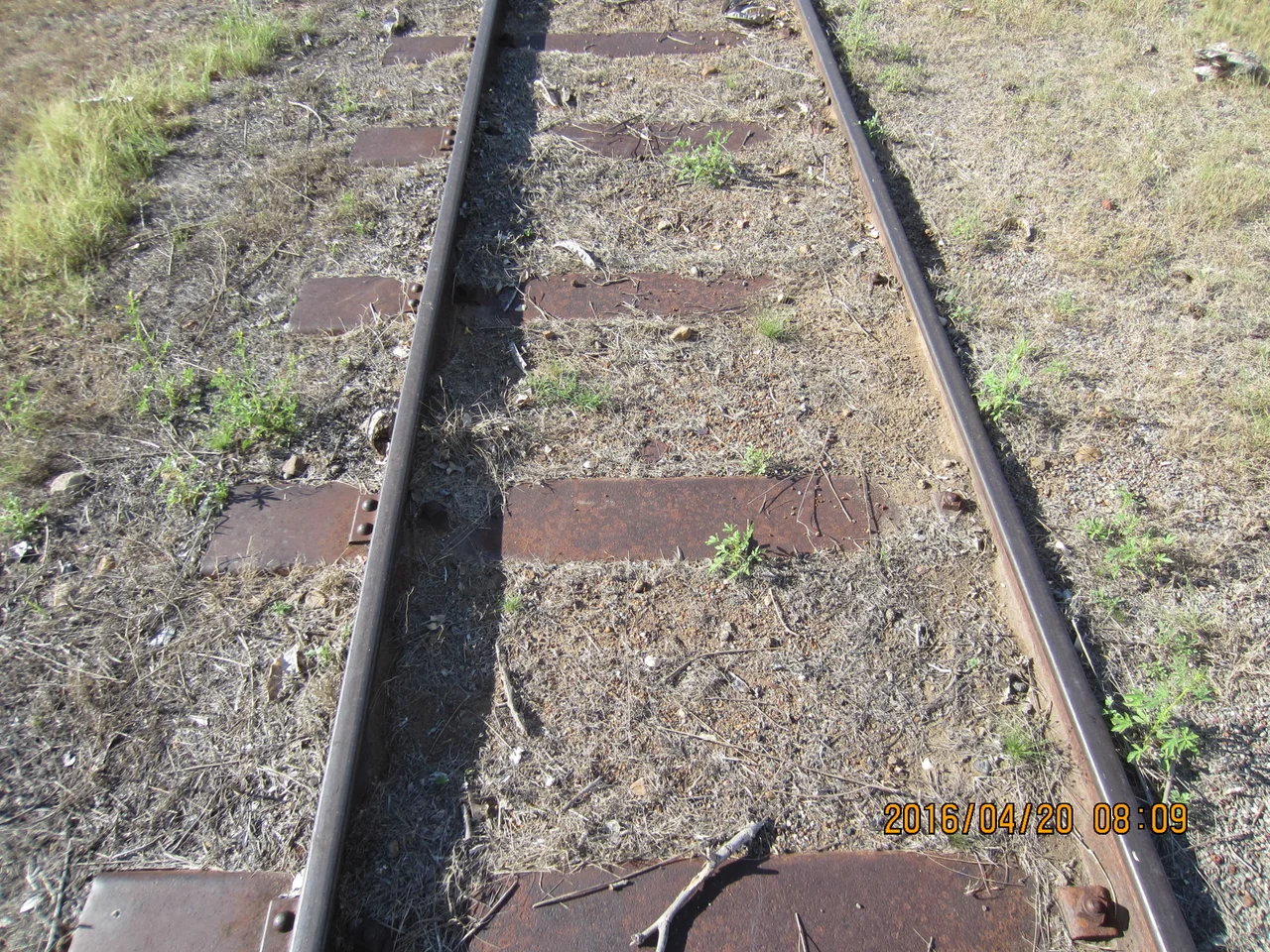
The savannah punished ordinary railways. Each wet season turned the plains to sheet water, washing out timber and ballast, and termites devoured wooden sleepers from below. The surveyor George Phillips had an answer he had patented in 1884: U-shaped steel sleepers laid directly on the ground, with no embankment to erode. When the floods came, the track simply submerged. When the water fell, trains rolled again over rails the termites could not touch. It was more expensive to buy than timber but cheaper to maintain, and it explains why a line built in the 1890s still carries passengers today - much of it on the original ironwork.
Riding the Gulflander
The Gulflander is in no hurry. The weekly service takes around five hours to cover ground a car would manage in under two, rattling past Clarina, Glenore, Haydon and Blackbull before pulling into Croydon, where it rests overnight and returns the next day. Passengers ride for the journey, not the destination: the unbroken horizon, the wallabies scattering from the right of way, the brief photo stop at the ruined Golden Gate mine where the gold rush ended. At Normanton, the 1891 terminus still stands - a long timber station with a curved roof, sheltering the old locomotives that once worked these rails.
The Last of Its Kind
When Queensland Rail lists its lines, this one sits in a category of one: the last isolated railway still in operation, never connected to the national grid, cut off by 400 kilometres of bush from the nearest mainline. Engineers Australia marked it as an engineering heritage site, and the Queensland Heritage Register listed it in 1992. It survives partly by being too remote to bother closing, and partly because the people of the Gulf refused to let it go. The Gulflander runs not because it is needed, but because losing it would mean losing the thread that ties the savannah to its own past.
From the Air
The line runs roughly east-west between Normanton (17.67 S, 141.07 E) and Croydon, about 152 km apart across open savannah. From 3,000-5,000 feet in the dry season the single track and the Normanton terminus with its curved roof are visible against the pale grassland. Normanton Airport (YNTN / NTN) sits beside the town; Croydon Airport (YCDO) lies near the eastern terminus. Best viewing is the dry season (May-October) when the plains are firm and skies clear; in the wet, much of the surrounding country floods.
Nearby Stories
- Burke and Wills Camp B/CXIX 22 km away
- Golden Gate: The Richest Reef on the Field, Now a Field Again 24 km away
- Karumba 34 km away
- Burns Philp Building, Normanton 46 km away
- Augustus Downs Station 121 km away
- Georgetown: The Piece of North America in the Outback 160 km away
- Millungera Station 175 km away
- Palmer River Gold Company Dredge 261 km away