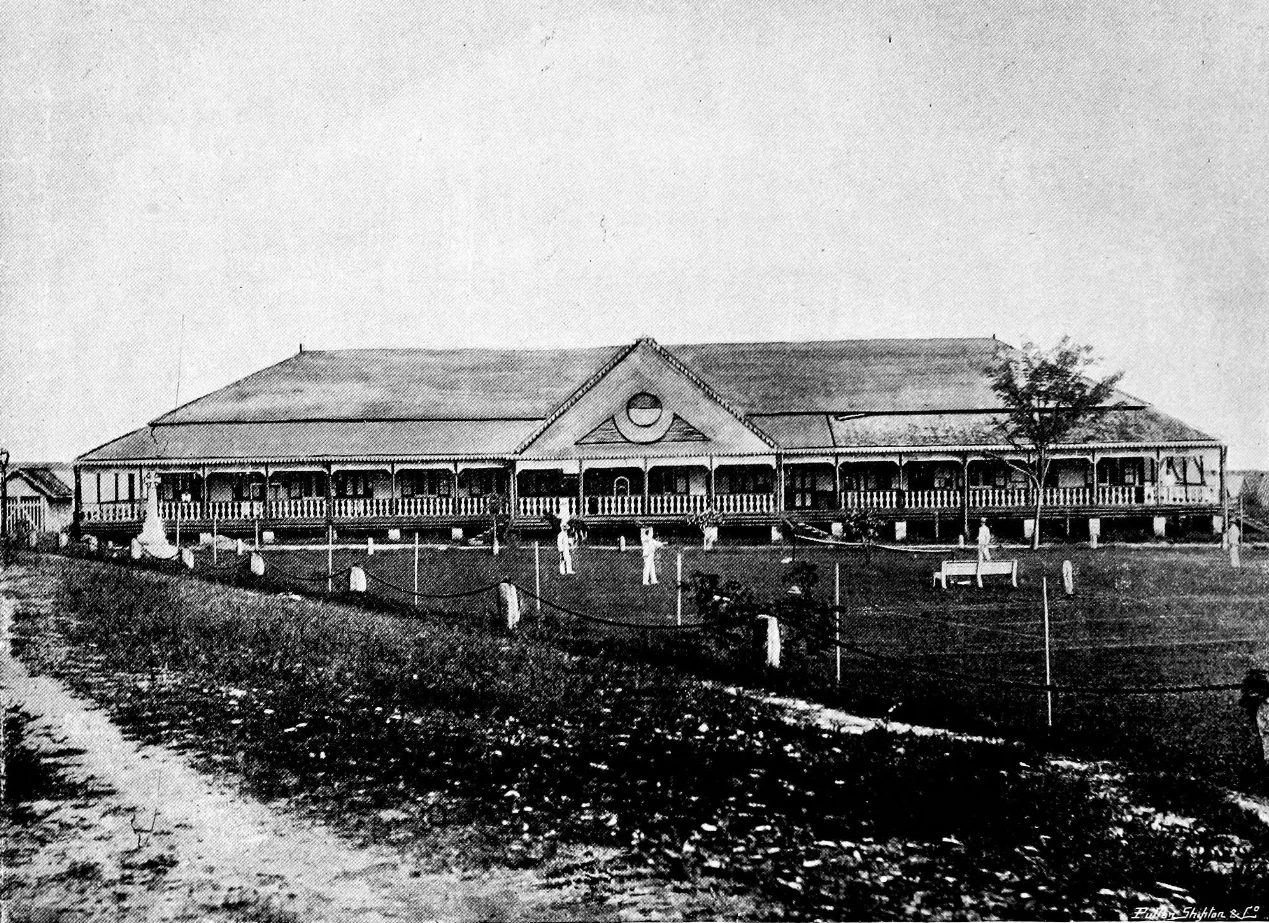

North Borneo
It started with an Austrian buying land from a Brunei sultan. In 1877, Gustav Overbeck - a German-born diplomat representing Austria-Hungary - purchased concessions of northern Borneo from the Sultanates of Brunei and Sulu, building on a small tract of coastline that an American merchant named Joseph William Torrey had been promoting in Hong Kong since 1866. Within four years, the land changed hands again, this time to Alfred Dent, who formed the North Borneo Chartered Company under a British royal charter. The territory that resulted - British North Borneo - would be governed by a commercial enterprise for over sixty years, occupied by Japan for nearly four, and become the Malaysian state of Sabah in 1963.
A Company State
The North Borneo Chartered Company was a commercial operation granted sovereign powers. It collected taxes, raised police forces, built railways, and administered justice across a territory roughly the size of Ireland. The system borrowed from standard British colonial structure: the land was divided into Residencies, then subdivided into districts run by district officers. By 1922, five Residencies covered the territory - West Coast, Kudat, Tawau, Interior, and East Coast - split into seventeen districts. British officers held the top posts while native chiefs managed local affairs. The company encouraged immigration, particularly of Chinese laborers, to build the plantation economy. Its currency evolved from Mexican dollars to Straits dollars, with banknotes featuring Mount Kinabalu and the company arms. Seven separate note issues were printed between 1886 and 1940.
The Indigenous World Beneath
The chartered company governed a territory where customary law already held deep roots. North Borneo's indigenous peoples - including the Dusun, Murut, and Bajau - maintained ancestral property rights grounded in traditional religious practices and protected by adat, the system of customary law that preceded European arrival. When company officials began instituting Western land law, they recognized the need to accommodate these traditions. The Native Courts were established to adjudicate customary matters, and adat remained a living legal force alongside colonial ordinances. The sogit system, for instance, governed compensation for social offenses. The tagal tradition regulated river resources through communal conservation practices. These systems survived the company era, the Japanese occupation, and incorporation into Malaysia, continuing to influence land rights law in Sabah to the present day.
Occupation and Destruction
The Japanese invasion of Borneo began with unopposed landings at Miri and Seria on 16 December 1941. By early January 1942, Japanese forces had moved through Labuan, Mempakul, and Jesselton, meeting little resistance from a protectorate that relied on the Royal Navy for defense. Sandakan fell on 17 January. The occupation lasted until 1945, and its cost was staggering. Allied bombing destroyed most of the territory's infrastructure, including the towns of Jesselton and Sandakan. The Sandakan Death Marches killed thousands of Allied prisoners of war. When Japan surrendered, North Borneo was a ruin. The Chartered Company, unable to fund reconstruction, ceded the territory to the British Crown in 1946. North Borneo became a Crown Colony - a shift from private enterprise to direct imperial rule, sixteen years before it would become part of an independent Malaysia.
Into Malaysia
On 16 September 1963, North Borneo became the state of Sabah within the newly formed Federation of Malaysia. The transition was contested from multiple directions. Indonesia launched the Confrontation, a three-year undeclared war challenging Malaysia's legitimacy. The Philippines claimed sovereignty over portions of the territory based on historical ties to the Sultanate of Sulu. Within North Borneo itself, a referendum showed broad support for joining Malaysia, but the process remains debated. What is undebated is the transformation: a territory that had passed from sultanates to an Austrian businessman to a British company to the Japanese military to the Crown now became a self-governing state within a constitutional federation. The layers of that history - indigenous adat, colonial infrastructure, wartime scars, and postcolonial politics - remain visible in Sabah today.
From the Air
North Borneo corresponds to present-day Sabah, occupying the northern tip of Borneo at approximately 5.25N, 117.00E. Mount Kinabalu (4,095 m) dominates the western interior - the territory's most prominent landmark and the image that appeared on its colonial banknotes. The major historical centers include Sandakan (east coast, former capital), Jesselton (now Kota Kinabalu, west coast), and Tawau (southeast). Kota Kinabalu International Airport (WBKK) is the primary facility. The coastline stretches from the South China Sea in the west to the Sulu Sea in the north and the Celebes Sea in the east.
Nearby Stories
- Maliau Basin 10 km away
- Danum Valley Conservation Area 27 km away
- Keningau Oath Stone 29 km away
- Nunuk Ragang 30 km away
- De Fontaine Memorial 53 km away
- Menara (tree) 55 km away
- Operation Agas 71 km away
- The Forests That Burn Underground 129 km away