
Nunuk Ragang
The tree was enormous. According to Kadazan-Dusun elders, the banyan at the confluence of the two branches of the Liwagu River was six fathoms around, its canopy broad enough to shade a longhouse sheltering ten families, its leaves sufficient cover for seven Kadazan huts measuring 240 square feet each. The settlement that grew beneath it was called Nunuk Ragang -- the "red banyan" -- and oral tradition holds that it was the original homeland of the Kadazan, Dusun, and Rungus peoples who today inhabit most of northern Borneo. For 328 years, from 1415 to 1743, the community lived here at the intersection of the Liwagu Kogibangan and Liwagu Kowananan rivers, east of what is now the Ranau and Tambunan districts of Sabah. Then, according to legend, something called the Minorits drove them away forever.
The Red Banyan
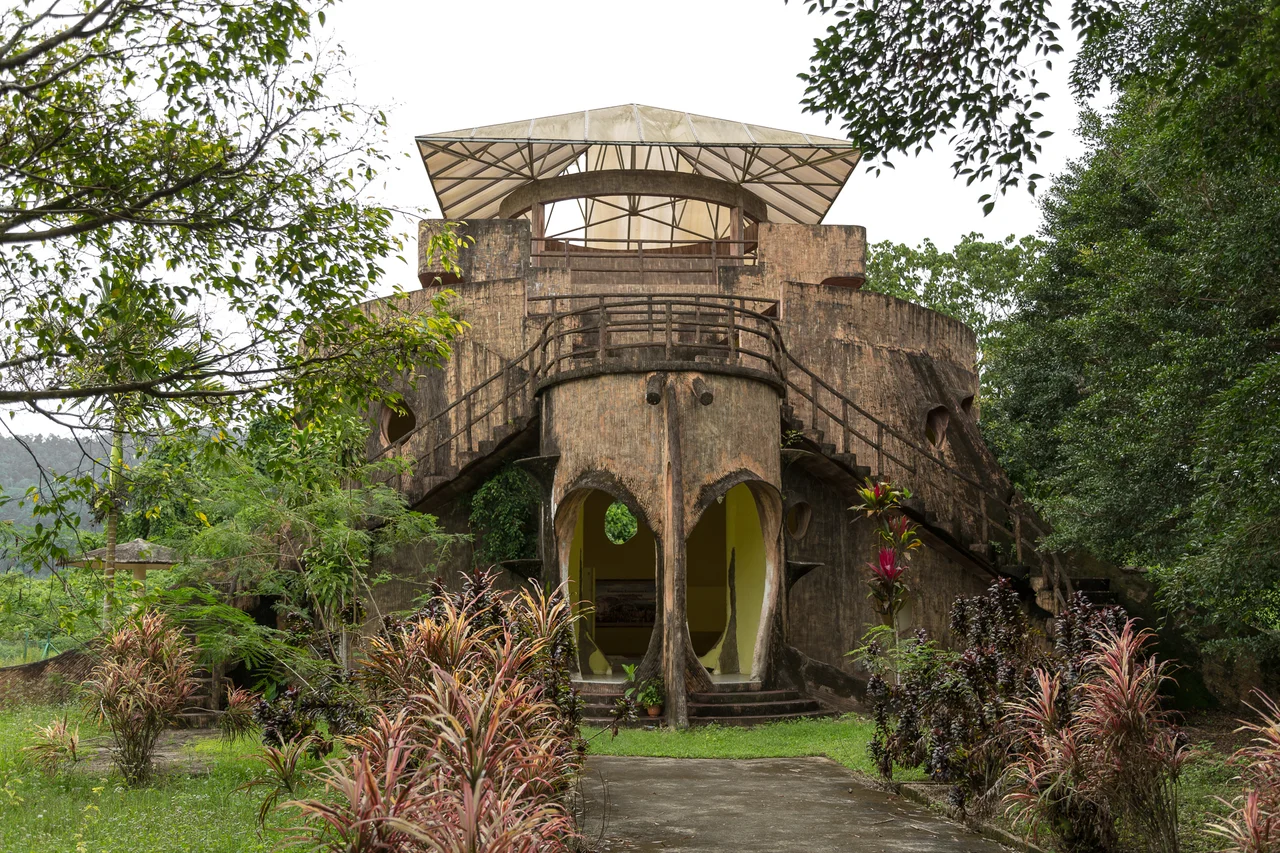
The name itself is a puzzle, as the Kadazan-Dusun intended. "Nunuk" means banyan tree. "Ragang" might mean "newborn baby" or might be a contraction of "aragang" -- red-colored. Botanists have identified the species as Ficus racemosa, a fig tree with large, bright red ripe fruit that would explain the color in the name. But the Kadazan-Dusun have a cultural fondness for riddling, for naming things obliquely, and the ambiguity is the point. Near the village of Tampias -- a name meaning "sprinkled" or "dispersed" -- the two river branches join and flow into the Labuk River, which drains into the Sulu Sea. The site had everything a river civilization needed: water, forest, wildlife, and a convergence of trade routes. No archaeological excavation has ever been conducted at Nunuk Ragang, and the legend remains transmitted purely through oral tradition, but in 2004 the Kadazan-Dusun Cultural Association erected a monument at the site, shaped like a giant fig tree, near what they believe was the original village.
Between the Seen and the Unseen
The Kadazan-Dusun had no word for "religion." What they practiced was a system of relationships between the visible and invisible worlds, centered on maintaining balance and harmony with their environment to ensure bountiful harvests and the survival of their people. At Nunuk Ragang, this belief system took form as Momolianism among the Kadazan and Dusun, while the Rungus developed the Labus system -- both philosophical frameworks that guided daily life. The spiritual leaders were the bobohizan, or bobolians, mostly women who served as priestesses and intermediaries with the spirit world. In times of crisis, warriors led the community, but they looked to the bobohizan for guidance revealed through divine communication. The society was egalitarian. The position of Huguan Siou -- paramount chief -- did not exist at Nunuk Ragang; it was only institutionalized after the formation of Malaysia in 1963, with roots in Guunsing, Penampang. The cultural association still conducts annual pilgrimages to the Nunuk Ragang site, timed to coincide with the inauguration of the Huguan Siou.
Smoke, Salt, and Survival
Life at Nunuk Ragang revolved around the forest and the river. The settlers were hunter-gatherers who became rice farmers, lighting fires with dried bark scraped from the Polod palm tree and forging short machetes called dangol and carving knives called pais from metal obtained through barter trade with coastal peoples. Salt was the great scarcity. The coast was distant, supply was intermittent, and the shortage forced the community to develop preservation techniques that endure today. Memangi produced bosou -- meat or fish fermented with the fleshy kernels of the Pangium edule tree. Manalau yielded sinalau, smoked meat. The settlers also sought out sosopon, natural salt licks frequented by wild animals, turning a mineral deficiency into a hunting strategy. These food traditions traveled with the Kadazan-Dusun when they eventually left Nunuk Ragang, and they persist in Sabahan cuisine today -- a living connection to a settlement that existed centuries before Europeans reached Borneo.
The Minorit Push
The exodus, when it came, was total. Oral tradition attributes it to the "Minorits" -- legendary tiny spiritual beings that emerged from the ground, enforcing a practice of infanticide that made continued habitation impossible. But the Kadazan-Dusun love of metaphor suggests a more complex reality. Researcher Ivor Hugh Norman Evans found that "minorit" appears in two Dusun phrases: "minorit O' paka" refers to vast expanses of invasive lalang grass (Imperata cylindrica) overrunning cleared forest, and "minorit O' lasu" describes a skin disease with uniform spots spread across the body. Historians now believe the Minorit Push was likely a composite narrative encoding soil degradation from lalang invasion, a possible smallpox epidemic, and overpopulation at the site. Whatever the cause, the dispersal peopled the whole of northern Borneo. Each territory had its own "pull" -- the Minkokook Pull drew settlers to the Tambunan Plain, the Gomala Pull to the Kundasang highlands. The Kadazan-Dusun would not have become the people they are today if the ancestors had stayed. Nunuk Ragang's greatest legacy is the leaving.
From the Air
Located at approximately 5.714°N, 116.855°E in the interior highlands of Sabah, at the confluence of the two branches of the Liwagu River east of Ranau. The area is heavily forested river valley terrain. The Nunuk Ragang monument, shaped like a giant fig tree, may be visible from low altitude. Kota Kinabalu International Airport (WBKK) is approximately 120 km to the west-northwest. Mount Kinabalu (4,095 m) is visible to the northwest. The area is often clouded, especially in the afternoon.
Nearby Stories
- Cho Huan Lai Memorial 25 km away
- North Borneo 25 km away
- Kota Kinabalu City Mosque 29 km away
- Kinabalu Park 33 km away
- Mari Mari Cultural Village 34 km away
- Operation Agas 57 km away
- Agop Batu Tulug Caves 58 km away
- Turtle Islands National Park 73 km away