.jpg)
Mari Mari Cultural Village
The floor bounces underfoot like a living thing. In the Murut longhouse at Mari Mari Cultural Village, flexible logs form a kind of trampoline in the center of the communal hall, and visitors are invited to jump, reaching for a prize hung overhead. It is a game, but it is also a lesson: for the Murut people, the house itself was an instrument of joy and celebration. This open-air museum, tucked into the rainforest about 25 kilometers north of Kota Kinabalu, exists because five indigenous communities of Sabah decided their traditions were worth more than the modern world's indifference to them.
Five Worlds Under One Canopy
Founded in 1996, Mari Mari Cultural Village recreates the traditional dwellings and practices of five of Sabah's indigenous peoples: the Kadazan-Dusun, the Murut, the Rungus, the Lundayeh, and the Bajau. Each group occupies its own replica village, built using traditional materials and construction methods. The Bajau village tells the story of a seafaring people who migrated from the Philippines some 500 years ago, their houses raised on stilts as if the land itself were an afterthought. The Rungus village showcases intricate beadwork and weaving, crafts passed from grandmother to granddaughter across uncounted generations. At the Kadazan-Dusun and Murut villages, human skulls are displayed openly, artifacts of the headhunting practices that defined warfare and spiritual life for both groups over a century of their history. The skulls are not hidden or sanitized. They are part of the story.
The Art of Tree Bark and Rice Wine
What sets Mari Mari apart from a conventional museum is the insistence on doing, not just looking. In the Lundayeh village, artisans demonstrate the painstaking process of turning tree bark into wearable cloth, pounding and softening the fibers until they become supple enough to drape across the body. Elsewhere, visitors taste traditional dishes prepared on site by indigenous cooks, the flavors sharp and unfamiliar to most palates. The Murut trampoline floor invites participation rather than observation, collapsing the distance between tourist and tradition in a single leap. Tattoo artists work with hand-tapping techniques that predate electric needles by centuries. Dance performances fill the village with the sound of gongs and rhythmic footwork. The name itself is an invitation: "mari mari" means "come, come" in Malay, and the village takes that hospitality seriously.
Holding the Line Against Forgetting
The founders of Mari Mari established the village during a period of rapid modernization across Borneo. Young people were leaving rural communities for cities, and with them went languages, recipes, construction techniques, and spiritual practices that had no written record. The village became a kind of living archive, a place where elders could teach and younger generations could see what their grandparents' world looked like. It operates without government funding, relying entirely on private support and visitor entrance fees. That financial independence is both a vulnerability and a point of pride. Every ticket purchased contributes directly to the preservation of building techniques, craft traditions, and culinary knowledge that might otherwise exist only in the memories of the last generation to practice them.
Where the Rainforest Meets the Story
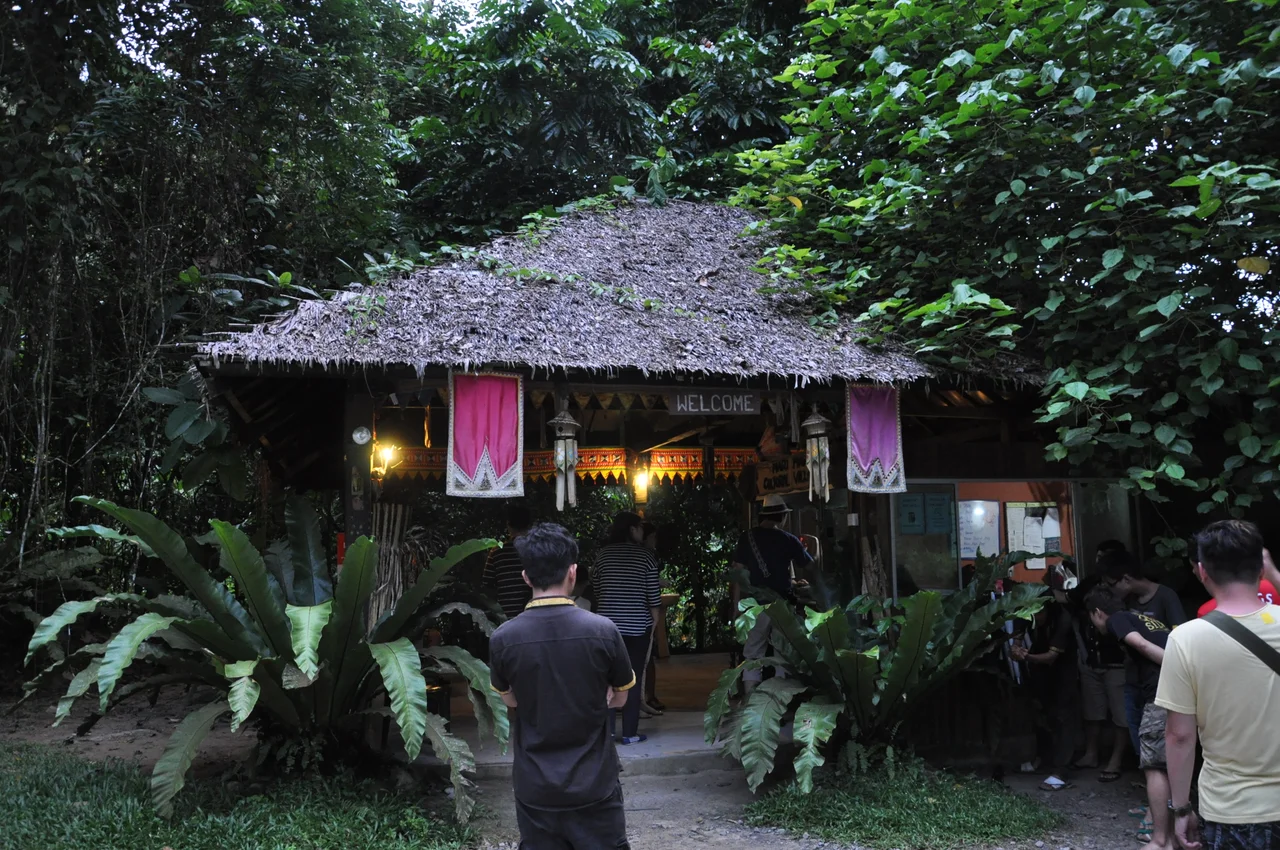
The village sits within dense tropical forest, and the walk to the entrance passes through a canopy that filters the equatorial sun into shifting patterns of light and shadow. This setting is not incidental. For all five tribes represented here, the rainforest was not scenery but home, pharmacy, construction supply, and sacred space. The humid air carries the scent of wood smoke and damp earth. Birdsong competes with the distant sound of gongs. In a world where indigenous cultures are too often reduced to photographs in a textbook or paragraphs in an encyclopedia, Mari Mari insists on the full sensory experience: the taste of traditional food, the shock of the trampoline floor, the weight of handmade bark cloth between your fingers. Come, come, the name says. And then: remember.
From the Air
Located at 5.97°N, 116.20°E in the rainforest north of Kota Kinabalu, Sabah. The village clearing is not easily visible from altitude due to dense canopy cover. Nearest major airport is Kota Kinabalu International Airport (WBKK). Best approach from the northwest over the South China Sea. Altitude of approximately 3,000-5,000 feet offers views of the surrounding forested hills and the coastal plain of western Sabah.
Nearby Stories
- Quailey's Hill Memorial 9.3 km away
- Cho Huan Lai Memorial 31 km away
- North Borneo 52 km away
- The Chimney of Labuan 53 km away
- Labuan War Cemetery 80 km away
- Jambongan Island 97 km away
- Tip of Borneo 116 km away
- Tango Maru 179 km away