
The Chimney of Labuan
Nobody knows what the chimney was for. That is the first thing the museum tells you, and perhaps the most honest thing any museum has ever admitted. The tower stands 32 meters tall in the jungle near Kubong, on the northern tip of Labuan island, built from more than 23,000 unplastered red bricks imported from Britain sometime in the early 1900s. It has two arch-shaped doors facing west and south, a hole in its side, and twelve layers of bricks buried beneath it that archaeologists discovered in 1997. What it lacks is a clear purpose. The British North Borneo Chartered Company mined coal from this area for over sixty years, and the obvious assumption is that the tower served the mining operation. But excavations found no tunnel beneath it, and no traces of smoke or burning inside. The chimney, it turns out, may never have been a chimney at all.
Black Gold at the Edge of Empire
Coal brought the British to Labuan. Following the Anglo-Brunei Treaty of 1847, the Sultan of Brunei ceded the island to Britain in perpetuity, and James Brooke, the White Rajah of Sarawak, became its first governor. The Eastern Archipelago Company received a Royal Charter that same year and acquired full rights to Labuan's coal deposits. A narrow-gauge railway, approximately eight miles long, was constructed by 1852 to haul coal from the mines at Tanjong Kubong to Victoria Harbour for export. The promise was enormous: a coaling station at the crossroads of Southeast Asian shipping routes. The reality proved stubborn. Multiple companies tried and failed to make Labuan coal profitable. By the 1880s, British administrators had grown broadly disillusioned with the colony. Mining operations continued fitfully until 1911, when the last company gave up. The coal seams that had justified an empire's interest in a small island simply could not compete.
A Tower Without an Explanation
The chimney survived long after the industry that supposedly built it collapsed. Its rectangular form and British architectural style mark it as colonial work, but colonial records offer no definitive account of its construction or function. The most intuitive theory, that it vented a smelting furnace or served as a ventilation shaft for underground mines, fell apart when archaeologists found neither tunnels nor soot. Alternative explanations have multiplied. Some researchers believe it was part of an unfinished mansion. Others point to its proximity to the old anchorage known as Raffles Anchorage and suggest it functioned as a lighthouse. A more elaborate theory proposes it served as an observation deck, from which incoming ship information could be relayed to Victoria Harbour using semaphore, the optical telegraph system that preceded the electric telegraph. The Malaysian press has called it simply 'Misteri Menara Chimney,' the mystery of the chimney tower.
Digging for Answers
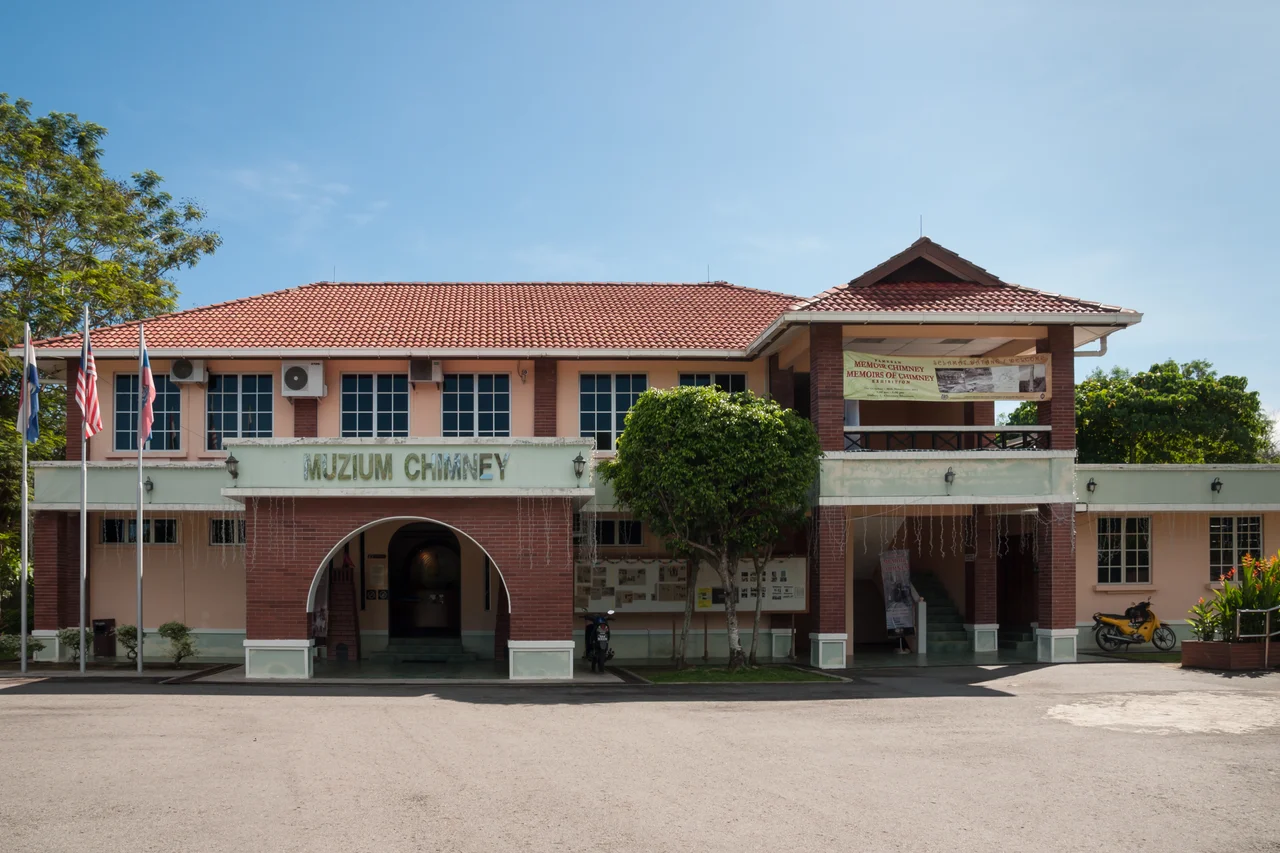
In 1997, archaeologists conducted extensive excavation work around the tower's base. The twelve layers of buried brickwork they uncovered suggested the structure was older and more substantial than it appeared above ground. Soil stabilization work was carried out the same year to prevent the tower from collapsing, along with restoration to return the visible portion to something like its original condition. The site yielded 612 historical artifacts, from mining tools to domestic objects, painting a picture of daily life at a remote colonial outpost where British ambition met tropical reality. The museum that now wraps around the tower opened in 2002, housing seven galleries and a discovery room. Exhibits cover the global history of coal mining, Malaysian mining sites, extraction methods, and the tools miners carried underground. The coal specimens on display are more forthcoming about their purpose than the tower that supposedly processed them.
Standing Watch Over Nothing
Today the chimney stands in a clearing surrounded by the regenerated jungle that reclaimed the mining district after the British departed. It is the most visible relic of Labuan's coal era, an industry that shaped the island's colonial history for six decades but left behind little else. The narrow-gauge railway is gone. The mines at Tanjong Kubong are closed and overgrown. Victoria Harbour still operates, but as part of a modern offshore financial center rather than a coaling station. The tower endures because brick and mortar outlast economic logic. Visitors who climb the surrounding site can peer through the arch-shaped doors into the hollow interior and see for themselves what the archaeologists confirmed: no soot, no furnace lining, no evidence that fire ever burned here. Whatever the chimney was built to do, it appears never to have done it. The mystery, in its own way, is more interesting than any answer would be.
From the Air
The Chimney Museum is located at Kubong on the northern tip of Labuan island (5.38N, 115.25E), in the South China Sea off the northwest coast of Borneo. From the air, the 32-meter tower is visible as a narrow vertical structure amid jungle canopy. The old mining district of Tanjong Kubong extends along the northern coastline. Labuan Airport (WBKL) is approximately 6 kilometers to the south. The island's flat terrain and small size make the museum site easy to locate from cruising altitude in clear conditions.
Nearby Stories
- Pelumpong Island: Brunei's Accidental Eden 6.7 km away
- Battle of Beaufort (1945) 9.1 km away
- Where the River Meets the Sea 36 km away
- De Fontaine Memorial 42 km away
- Brunei's Billion-Dollar Bet on Urea 78 km away
- Kinarut Mansion 98 km away
- Maliau Basin 140 km away
- Luconia Shoals 230 km away