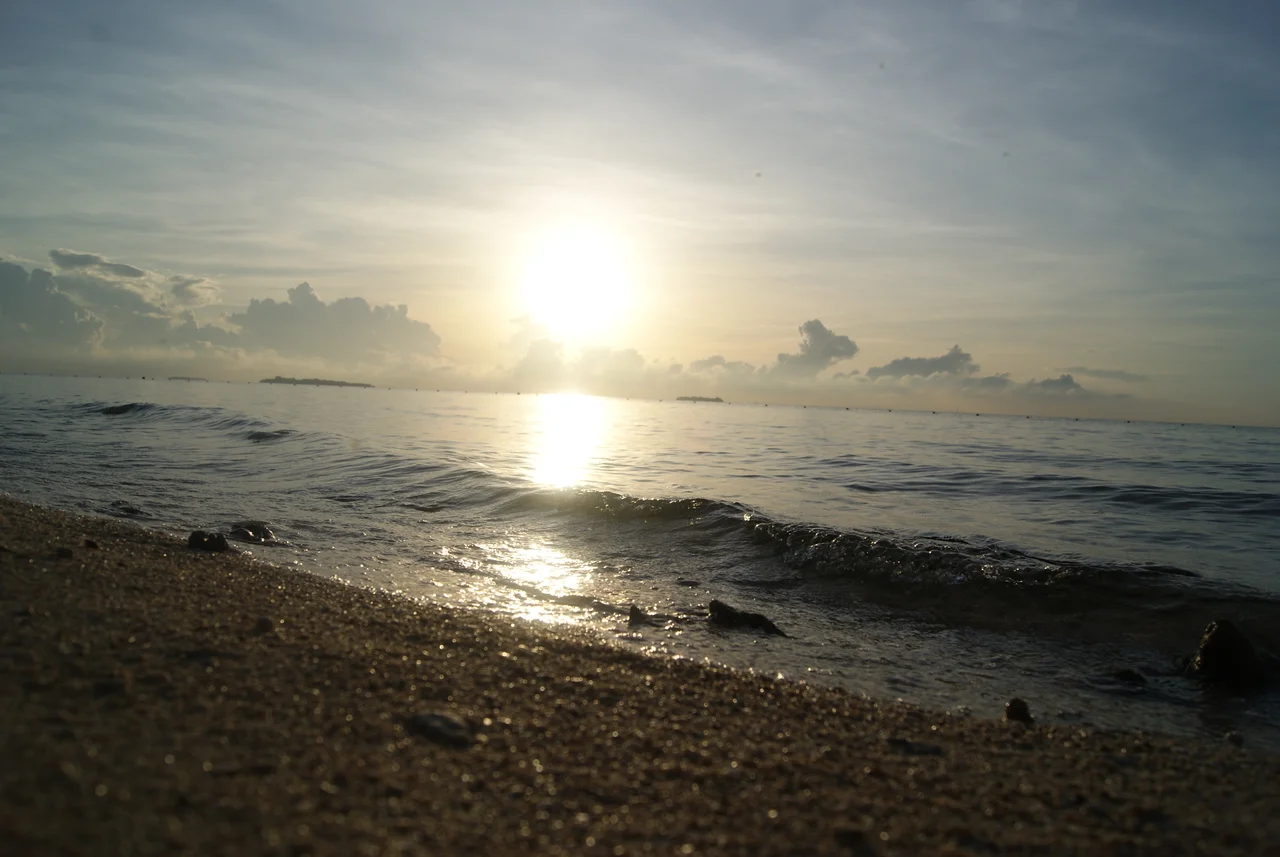

Turtle Islands National Park
Every night, without exception, green turtles haul themselves onto the beaches of Selingan Island. Not seasonally, not during particular moon phases -- every night. In peak season, as many as fifty arrive in a single evening, dragging their massive bodies across sand that has felt this ritual for 230 million years. The Turtle Islands, a scattering of three tiny islets in the Sulu Sea about 40 kilometers north of Sandakan, Sabah, hold one of the planet's most reliable wildlife encounters. And the conservation programme that protects them is the oldest of its kind anywhere in the world.
A Sanctuary Born from Urgency
On 1 August 1966, Malaysia's first turtle hatchery opened on Selingan Island, funded entirely by the Sabah state government. It was a response to a crisis that had been building for a century: human harvesting of turtle eggs was pushing both green and hawksbill populations toward collapse. Hatcheries on the remaining two islands, Little Bakkungan and Gulisaan, followed shortly after. By 1972, all three islands were designated as a Game and Bird Sanctuary, and in 1977 the status was upgraded to Marine Park. The name Turtle Islands actually refers to ten islands total -- three belong to Malaysia's park, and seven form the Turtle Islands Wildlife Sanctuary across the border in Tawi-Tawi province, Philippines. Together they constitute one of the most important sea turtle nesting grounds in Southeast Asia.
The Nighttime Ritual
Visitors to Selingan -- the only island with overnight chalets -- must follow strict rules. From sunset to sunrise, the beach belongs to the turtles. A ranger monitors the shore, and when a turtle begins laying, a single group of visitors is called to observe. They watch in near-darkness as the enormous creature excavates her nest, deposits eggs, and covers them with sweeping flippers. The eggs are then carefully collected by rangers and transplanted into man-made incubation chambers: sand pits between 60 and 75 centimeters deep, identical in structure to the natural nests but enclosed within a protected hatchery where monitor lizards and specialized crabs cannot reach them. Temperature determines sex -- part of the hatchery is shaded to produce males, while the rest bakes under open sun to produce females. Later that same night, visitors release hatchlings into the dark sea, timing the moment to give the tiny turtles their best chance at survival.
Predators and Balance
The park's rangers do not empty every nest. Some are left undisturbed, and this is deliberate. The island ecosystem depends on turtle eggs and hatchlings as a food source. Monitor lizards patrol the beaches. A specialized species of crab hunts hatchlings in the sand. Eagles circle overhead. Sharks wait offshore. Conservation here means something more nuanced than simply maximizing turtle survival -- it means maintaining the web of life that has existed on these islands for millennia. The programme's strength lies in its data. With the most detailed turtle statistics and research records of any conservation effort on Earth, Sabah's scientists can track population trends, nesting frequency, and survival rates with a precision that informs policy across the region.
An Ancient Lineage at the Edge
Marine turtles have existed for at least 230 million years, predating the dinosaurs and surviving every mass extinction event the planet has endured. Yet a single century of human activity -- egg harvesting, fishing bycatch, plastic pollution, habitat destruction -- has brought them closer to oblivion than any asteroid or ice age. The Turtle Islands represent a rare counterpoint to that trajectory. Here, within a park covering just 17.4 square kilometers of ocean and sand, the nightly procession continues. The coral reefs surrounding the islands shelter juvenile turtles. The beaches, kept dark and undisturbed, receive the adults. Administered by Sabah Parks, this small archipelago carries an outsized burden: proof that intervention, sustained over decades, can hold the line against extinction.
From the Air
Located at 6.15N, 118.05E in the Sulu Sea, approximately 40 km north of Sandakan, Sabah. The three small islands (Selingan, Little Bakkungan, Gulisaan) are visible from medium altitude as tiny green dots surrounded by coral reef shallows. Nearest major airport is Sandakan Airport (WBKS). The islands sit near the Malaysia-Philippines maritime boundary. Expect tropical weather year-round with thunderstorms common during monsoon season.
Nearby Stories
- Gomantong Caves 34 km away
- Jambongan Island 40 km away
- Tabin Wildlife Reserve 62 km away
- Nunuk Ragang 63 km away
- Quailey's Hill Memorial 72 km away
- USS S-36 124 km away
- Banggi Island 134 km away
- Tubbataha Reef 330 km away