
North Point Camp
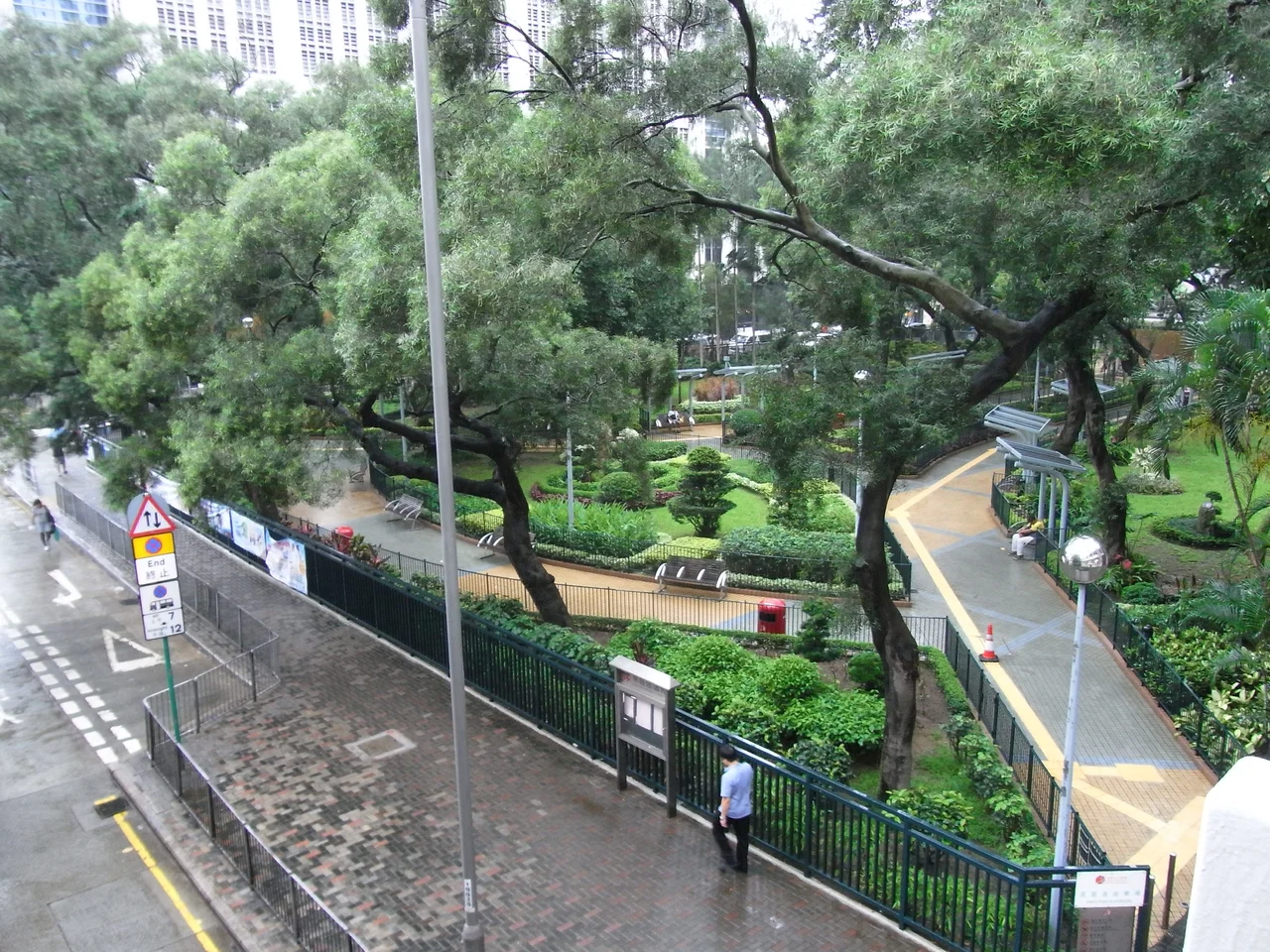
Children play football where the barbed wire once stood. King's Road Playground occupies part of the former North Point Camp site today, and nothing on the ground indicates what happened here. No plaque. No memorial of any kind. The camp that held thousands of Canadian and Allied prisoners of war during the Japanese occupation of Hong Kong has been entirely absorbed into the ordinary fabric of a busy urban neighbourhood — leaving those who know the history to carry it quietly past the swings and the running track.
Before the War: A Refugee Camp
The site was not built for prisoners. The Hong Kong government constructed it as a refugee camp before the war — a place to house the displaced civilians who were already arriving in Hong Kong as conditions deteriorated across China in the late 1930s. That original purpose did not outlast the invasion. On the night of 18 December 1941, Japanese forces crossed onto Hong Kong Island, and the camp at North Point was severely damaged in the fighting that followed. The Battle of Hong Kong was ten days old by then, and it would end on Christmas Day with the British surrender. The camp that had sheltered refugees was about to shelter prisoners.
The Prisoners Arrive
In the immediate aftermath of the surrender, non-Chinese civilians from the surrounding area were interned at North Point. The first military prisoners to arrive were men of West Brigade — soldiers captured at the beachheads, at Jardine's Lookout, and at Wong Nai Chung Gap, the strategic pass across the island's central ridge where some of the war's fiercest fighting had taken place. Royal Naval prisoners were held here as well, before being transferred to Sham Shui Po POW Camp across the harbour in Kowloon. Over the following months the camp became predominantly Canadian. The Canadians who came to Hong Kong in 1941 — members of the Royal Rifles of Canada and the Winnipeg Grenadiers — had arrived in November of that year, barely three weeks before the Japanese attack. They had almost no time to prepare before they were fighting, and almost no time to fight before they were captured. They would spend the next months at North Point.
Hunger and Disease
The conditions at North Point Camp were crowded and unsanitary from the beginning. Food was inadequate and irregular. Disease moved through the barracks — dysentery, beriberi, and diphtheria among the recorded causes of suffering. The two threats that proved fatal to the most men were starvation and illness, each feeding the other in the brutal arithmetic of captivity: weakened men could not resist disease; sick men could not absorb the little food available. Some prisoners died at North Point. Others survived to be transferred. On 26 September 1942, the remaining Canadian prisoners left for Sham Shui Po, and the camp was closed. Some of those men would later be shipped to labour camps in Japan and Manchuria, where conditions were, if anything, worse. Their captivity would not end until August 1945.
Forgotten Ground
What makes North Point Camp unusual among Hong Kong's wartime sites is not its history but its absence of commemoration. Stanley, the civilian internment camp on the island's southern tip, has a memorial garden. Sham Shui Po, where so many of the North Point prisoners were later held, has markers. At the former site of North Point Camp, there is nothing. The playground built on part of the old camp ground bears no inscription acknowledging what came before. The city grew over this place and moved on. The men who survived carried their memories home to Canada and Britain; those who didn't left no monument here. What remains is the knowledge that the ground beneath the playground held barbed wire, hunger, and human endurance in roughly equal measure — and that, for now, the city has chosen not to say so.
From the Air
North Point Camp was located in the North Point district of Hong Kong Island at approximately 22.289°N, 114.200°E. The site is now the King's Road Playground on King's Road. From the air, North Point occupies the northernmost projection of Hong Kong Island, a dense urban district facing Victoria Harbour toward Kowloon. The harbour crossing to Kwun Tong is visible to the northeast. Hong Kong International Airport (VHHH) lies approximately 22 nm to the west. Recommended viewing altitude: 2,000–3,500 ft to see the North Point coastline in relation to the harbour and the Kowloon waterfront beyond.
Nearby Stories
- Lok Ma Chau Loop 2.3 km away
- Portas do Cerco 2.3 km away
- Kweilin Incident 17 km away
- Wanshan Archipelago Campaign 34 km away
- Nanxiong Formation 115 km away
- Battle of Nanpeng Island 148 km away
- Heyuan 169 km away
- Cape Maobitou 632 km away