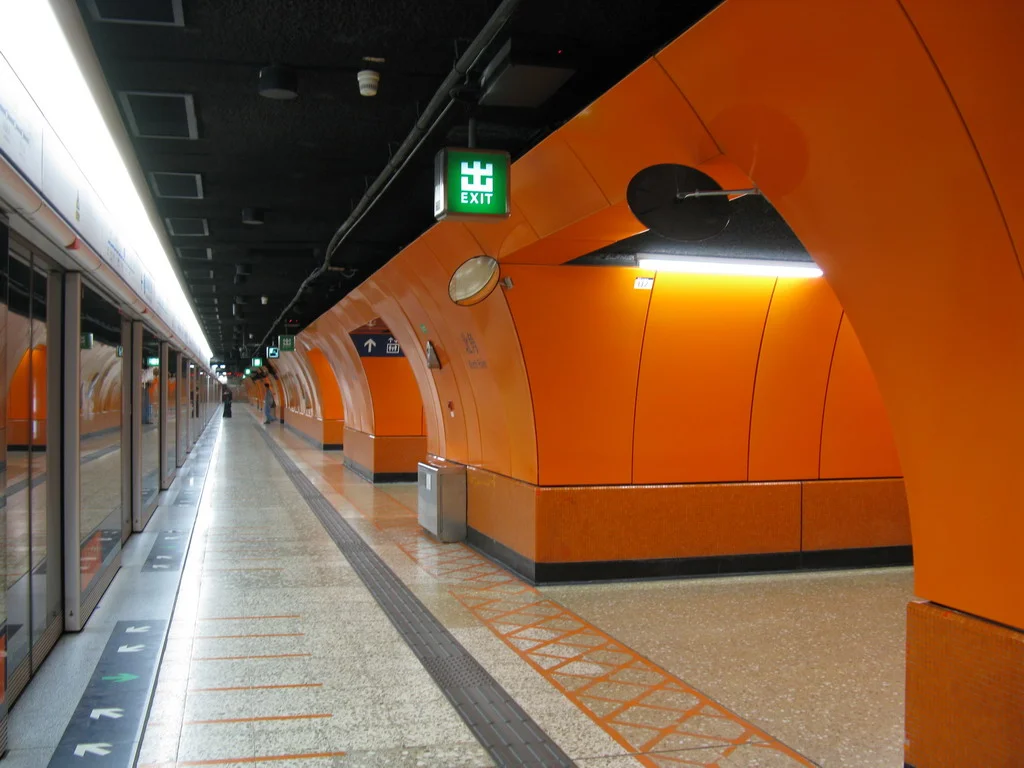

North Point
In 1950, people started calling it Little Shanghai. The name was not merely affectionate — it was a statement of grief and determination. Tens of thousands of wealthy and middle-class families had fled the Chinese mainland as the Civil War concluded, carrying whatever they could and settling in a cape-shaped district on the northeastern tip of Hong Kong Island. North Point had always been a secondary neighbourhood, slower to develop than the grand streets of Central and Sheung Wan. That changed when the refugees arrived. By the end of 1960, North Point held the distinction — grim, in its way — of being the most densely populated place on Earth, according to the Guinness Book of Records.
A Cape Cartographer Collinson Named
The name 'North Point' entered the official record in 1845, when Royal Engineer Lieutenant Collinson — who would later be promoted and forgotten by most — marked the northernmost promontory of Hong Kong Island on his survey map. Before the British arrived, the area around what is now North Point was home to Tsat Tsz Mui Village, most likely established in the early 19th century. The cape itself remained relatively undeveloped for decades, hemmed in by hills and lacking the flat land that made Sheung Wan and Central so attractive to colonial commerce. The first tentative development came in 1899 with the Metropole Hotel on Shaukiwan Road — a cheerful establishment described in advertisements as a 'popular resort occupying a charming seaside location.' The hotel changed names twice before closing in 1919, the same year the Hongkong Electric Company opened the territory's second power station on reclaimed land at North Point's waterfront, bringing its steam turbines all the way from Dawson City, Yukon.
Little Shanghai
When Shanghai fell to Communist forces in 1949, the city's professional class scattered. Many came south to Hong Kong, and a disproportionate number settled in North Point, drawn by affordable housing and a growing community of fellow Jiangzhe people. They brought their cuisine, their opera, their leftist political sympathies, and eventually their language. The first school in Hong Kong to use Mandarin as the primary medium of instruction — Kiangsu and Chekiang Primary School — was founded in North Point in 1953 by this community. The Sunbeam Theatre on King's Road, opened in 1972 with backing from leftist-aligned businesses, hosted Cantonese Opera for over five decades before closing its doors in March 2025 — purchased by a church for HK$750 million. The scale of the migration was staggering. By 1960, North Point held more people per square metre than anywhere else on the planet. That record has since passed to other crowded corners of the world, but the community the Shanghainese refugees built remains woven into the neighbourhood's DNA.
Little Fujian
The Shanghainese were not the last wave. From the late 1960s onward, a second migrant community reshaped North Point: Hokkien-speaking Fujianese, many of them displaced by political upheaval on the mainland. Most were transient — bound eventually for the Philippines, Indonesia, and other parts of Southeast Asia — but enough settled permanently that the neighbourhood earned a second nickname: Little Fujian. After Cantonese, Hokkien remains the most widely spoken language in North Point today. Numerous Hokkien associations, known as 閩南同鄉會, maintain offices in the area, serving as gathering points for people from the same towns and villages back in Fujian province. Several Southern-Min-speaking churches serve the Hokkien Christian community. North Point absorbed both migrations and emerged neither Shanghai nor Fujian, but distinctly itself — a place where dialects mix on the tram platform and ancestral ties run in several directions at once.
The Street Grid Today
Walking North Point now means navigating a grid of contrasts. Chun Yeung Street, where the tram runs straight down the middle of the road, is one of Hong Kong's last functioning tram-bisected market streets, its pavement stalls packed with seafood, vegetables, and plastic goods stacked head-high. The former site of the North Point Power Station became City Garden, a private housing estate of 14 towers built between 1983 and 1986, each 28 storeys tall. The North Point Ferry Pier connects to Hung Hom and Kowloon City by Sun Ferry, and to Kwun Tong by Fortune Ferry — a reminder that the harbour was once how everyone moved around. North Point station anchors two MTR lines here: the Island Line running east-west, and the Tseung Kwan O Line, for which North Point is the western terminus. The neighbourhood is denser now than ever, its lower streets commercial and chaotic, its hillside streets quieter and residential, the whole thing compressed between Braemar Hill and Victoria Harbour.
Layers That Don't Erase
What makes North Point unusual in Hong Kong's relentlessly forward-charging context is how much persists. The Sunbeam Theatre ran for 53 years before closing in 2025. Hokkien associations still hold meetings. The Fujianese temples — including the Teng Hai Temple, which originates in Jinjiang, Fujian — still draw worshippers. The Chinese International School on Braemar Hill, founded in 1983 with students from over 30 nationalities, adds yet another layer to the neighbourhood's international character. Belilios Public School, one of Hong Kong's oldest government secondary schools for girls, occupies a site that has educated generations of North Point students. The district did not become a museum of itself, which is precisely why it still feels alive. Each wave of newcomers settled into what the previous wave built and added something of their own. Little Shanghai became Little Fujian became North Point, which is its own thing entirely — irreducible, plural, and still very much changing.
From the Air
North Point sits at approximately 22.287°N, 114.192°E on the northeastern shore of Hong Kong Island, directly facing Victoria Harbour and Kowloon to the north. Approaching from VHHH (Hong Kong International Airport) to the west, the district is visible at 3,000–5,000 ft as a dense residential mass between the green slopes of Braemar Hill and the waterfront. The Island Eastern Corridor elevated highway traces the shoreline and serves as a visual landmark. Kowloon's skyline fills the background to the north across the harbour.
Nearby Stories
- Lok Ma Chau Loop 2.3 km away
- Portas do Cerco 2.3 km away
- Kweilin Incident 17 km away
- Wanshan Archipelago Campaign 34 km away
- Nanxiong Formation 115 km away
- Battle of Nanpeng Island 148 km away
- Heyuan 169 km away
- Cape Maobitou 632 km away