.jpg)
Old Acropolis Museum
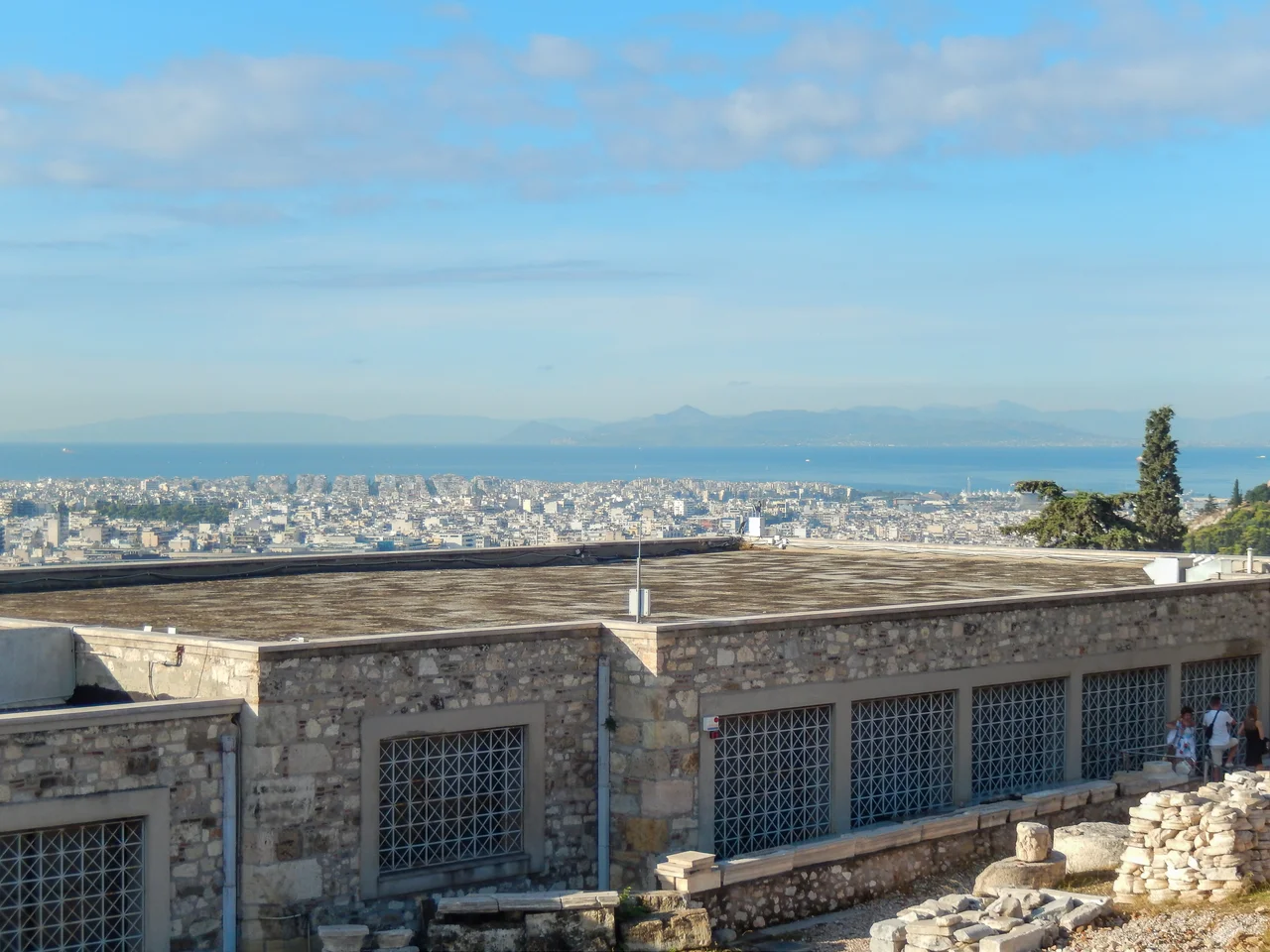
There was a museum on top of the Acropolis, and almost nobody noticed it. That was the point. Built into a niche at the eastern edge of the sacred rock, most of the Old Acropolis Museum sank below the level of the hilltop, deliberately hidden so it would not compete with the Parthenon for the eye or the sky. Visitors climbed past temples that had stood for two and a half thousand years, never realizing that the marble maidens and painted gods unearthed from those very ruins were resting, quietly, just beneath their feet.
Hidden in the Rock
The architect Panagis Kalkos designed the museum, and crews built it between 1865 and 1874, in the decades after Greece won its independence and began reclaiming its ancient past. The site itself dictated everything. There was simply no room on the crowded summit for a grand building, and no appetite for one that might overshadow the monuments. So the museum was wedged into the southeast corner and pressed down into the rock, low and discreet. In the 1950s the modernist architect Patroklos Karantinos expanded it. Even then it stayed modest - a vault more than a showcase, its low profile a kind of architectural humility on a hill that tolerated little of it.
The Treasures Inside
What it lacked in size it made up for in contents. The museum held the finest sculpture pulled from the Acropolis and the sanctuaries around it - works that define how we picture archaic and classical Greece. The Kritios Boy stood here, the marble youth whose shifted weight marks the moment Greek sculptors first made stone seem alive. So did the serene archaic Korai, smiling maidens in carved drapery, and the Moschophoros, a man carrying a calf across his shoulders. Fragments of the Parthenon frieze, the delicate relief of Nike adjusting her sandal, the Kritios Boy's archaic cousins - the gathered evidence of the rock's whole artistic history sat in those low galleries, recovered from the rubble that invasions and centuries had left behind.
A Costly Neighbor
Living so close to the monuments had a price - and the museum, it turned out, was helping to destroy what it protected. Drainage pipes running from the Old Acropolis Museum were blamed for channeling water into the rock and accelerating the decay of the very Acropolis it sat upon. The cramped niche that hid it so well also choked it: there was no space to grow, no way to show or store the swelling collection properly. As early as 1974 the prime minister Konstantinos Karamanlis called for a new museum, and the actress-turned-minister Melina Mercouri championed the cause, tying it to her famous campaign to reunite the Parthenon Marbles scattered abroad.
The Lights Go Out
The replacement rose at the foot of the hill, not on top of it. Designed by Bernard Tschumi with Michael Photiadis on Areopagitou Street, the New Acropolis Museum was built between 2002 and 2007 - a glass-and-concrete hall whose top floor is angled to frame the Parthenon itself. In June 2007 the old museum closed for good, and its treasures were carried down the slope to their new home, which opened to the public on 20 June 2009. The hidden vault in the rock fell dark. For more than 130 years it had kept the Acropolis's masterpieces safe in the shadow of the temples that produced them - an unseen guardian that finally, gracefully, handed over its watch.
From the Air
The Old Acropolis Museum sits at roughly 37.971 N, 23.728 E, tucked into the southeast corner of the Acropolis summit in central Athens - largely sunk into the rock and difficult to distinguish from the air. The Parthenon and the broad flat citadel are the navigational anchors; the New Acropolis Museum stands out as a modern glass building at the southern foot of the hill. Athens International Airport (LGAV) lies about 33 km east-southeast. Clearest in Attica's bright summer light; best viewed at low altitude over the city center.
Nearby Stories
- Great Sand Beach 5 km away
- Battle of Delium 7.7 km away
- Tower of Aliartos 9 km away
- HMHS Britannic 10 km away
- Saronic Gulf 15 km away
- Sousaki Volcano 17 km away
- Sanctuary of Apollo Maleatas 24 km away
- Skyros 66 km away