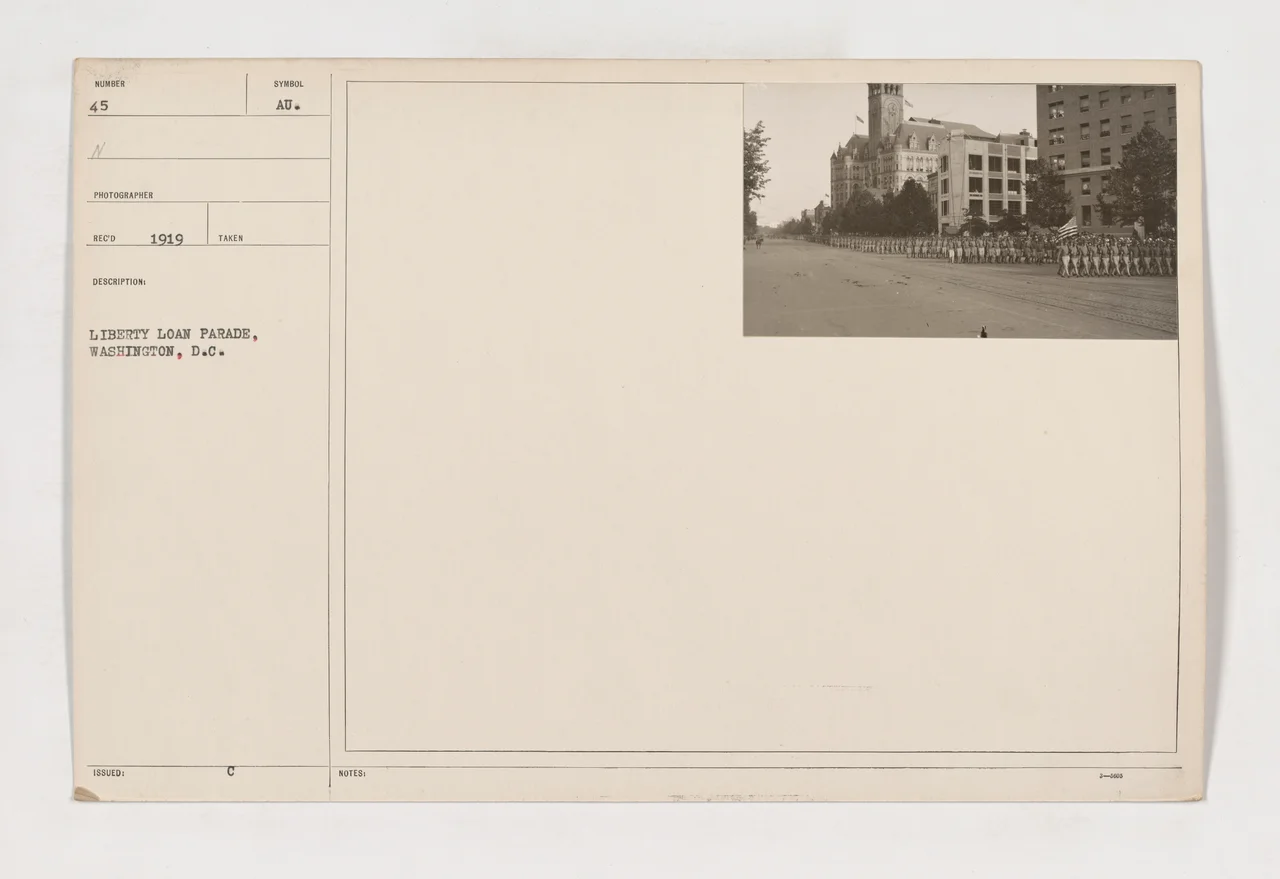

Old Post Office (Washington, D.C.)
On October 10, 1956, the cable holding the great mechanical weight that powered the clock in the Old Post Office tower snapped. The weight - several hundred pounds of cast iron - plunged through two floors of the building and came to rest a few feet from a man who had just stood up from his desk. The clock had run for 57 years on gravity, the cable rewound once or twice a day. After the accident, the mechanical clock was replaced with an electric one. The narrowness of the man's escape was, in retrospect, a fair summary of what the building had been doing throughout the twentieth century: nearly being destroyed and somehow surviving. The Old Post Office at 12th Street and Pennsylvania Avenue has been on the verge of demolition at least four times - in 1928, 1934, 1938, and 1970. Each time, it survived.
Edbrooke's Romanesque
Congress authorized the building on June 25, 1890. Senator Leland Stanford of California had chosen the site at the corner of Pennsylvania Avenue and 12th Street in 1888, hoping to revitalize the Murder Bay neighborhood between the White House and the Capitol - a notoriously violent slum nicknamed for its homicide rate. Willoughby J. Edbrooke, Supervising Architect of the Treasury Department, designed the Romanesque Revival structure in the manner of Henry Hobson Richardson - rusticated granite, round arches, a 315-foot clock tower that would be the tallest non-monument structure in the District until the Washington Monument's elevator opened. Construction ran from 1892 to 1899 at a cost of $3 million. At completion, the Post Office had the largest uninterrupted enclosed interior space in Washington. By the time it opened, it was also too small for the postal operations it was meant to house, and within fifteen years, the General Post Office had moved to a larger Beaux Arts building near Union Station. The 1899 building became, by default, the Old Post Office.
Federal Triangle's Inconvenient Survivor
When the Federal Triangle complex was planned through the late 1920s, the Old Post Office sat awkwardly inside the proposed footprint of the new Neoclassical office buildings. The 1928 master plan called for demolition to make way for a Circular Plaza inspired by the Place Vendôme. The Depression intervened. By 1934, much of the surrounding land had been cleared, but Congress increasingly resisted tearing down a structurally sound 35-year-old building during economic hardship. Another demolition push in 1938 was defeated by Senator Elmer Thomas, who attacked the proposed replacement Neoclassical office as financially unacceptable. The next demolition attempt came in February 1970 from the National Capital Planning Commission. Architectural critic Wolf Von Eckardt of The Washington Post immediately began campaigning to save the building. By early 1971, Nancy Hanks - chairwoman of the National Endowment for the Arts - had joined a citizen group called Don't Tear It Down, the predecessor of the D.C. Preservation League. The Nixon administration wanted demolition completed by the 1976 Bicentennial. The House Appropriations Committee voted down Nixon's demolition funding in June 1972. The Old Post Office was added to the National Register of Historic Places in 1973.
Festival Marketplace
The 1976 Public Buildings Cooperative Use Act let the GSA lease federal buildings and use the proceeds for renovations - and allowed commercial retail and restaurant uses within federal office buildings. The Old Post Office got a $66 million renovation completed in 1983, with the reopening dedicated by Vice President George H.W. Bush on April 19. The atrium roof was uncovered. The interior was transformed into a festival marketplace, designed by Benjamin Thompson and Associates of Boston, with retail and restaurant tenants below and federal offices above. Robert Irwin's installation 48 Shadow Planes hung in the atrium. The clock tower and observation deck reopened on May 1, 1984. The National Endowment for the Arts, the National Endowment for the Humanities, the President's Committee on the Arts and Humanities, and other federal agencies took the office floors. Each New Year's Eve from 1984 forward, a giant illuminated Love stamp - the Postal Service's annual stamp design rendered at 20 by 30 feet - was lowered from the tower spire at midnight.
Trump's Lease
By the late 2000s, the Pavilion was losing money for both its operators and the GSA. The agency issued a request for proposals in March 2011. Ten bidders responded. On February 6, 2012, GSA chose the Trump Organization, partnered with Colony Capital, which had pledged to invest $200 million to convert the building into a 250-room luxury hotel. After more than a year of negotiation, a 60-year lease was signed on June 4, 2013: $250,000 monthly rent with annual CPI adjustments, a $40 million personal guaranty from Donald Trump. The contract included a clause that no elected official of the government should be admitted to any share of the lease - a clause that became contested after Trump was inaugurated as president on January 20, 2017. The $200 million renovation began on May 1, 2014. The words OLD POST OFFICE were removed from the central arch of the entrance and replaced with TRUMP INTERNATIONAL HOTEL. The Trump International Hotel Washington, D.C. opened with a soft opening on September 12, 2016.
Emoluments and the Waldorf
Throughout Trump's presidency, the hotel attracted both political and legal scrutiny. CREW v. Trump and District of Columbia and Maryland v. Trump - lawsuits filed in 2017 - alleged that the hotel's continued operation by the sitting president violated the Constitution's Foreign Emoluments Clause, given that foreign governments routinely booked rooms and events at the property. The Supreme Court instructed lower courts to dismiss the cases as moot in January 2021 once Trump was no longer president. The House Oversight Committee, continuing its inquiry, publicly reported in October 2021 that the Trump International Hotel had received roughly $3.7 million from foreign governments during Trump's term - and had a net loss of more than $70 million during the presidency. Trump's holding company DJT Holdings had loaned the hotel more than $27 million to cover the shortfall. In 2022, the Trump Organization sold its lease to CGI Merchant Group. The hotel closed as the Trump International on May 11, 2022, and reopened on June 1, 2022 as the Waldorf Astoria Washington DC. The clock tower observation deck remained open throughout - still operated by the National Park Service, which had retained control of the tower as a condition of the lease. The bells of the tower still peal across Pennsylvania Avenue. The Romanesque tower that survived four demolition attempts continues to look down on the capital.
From the Air
The Old Post Office building stands at 38.8945 N, 77.0274 W, at 1100 Pennsylvania Avenue NW in the Federal Triangle. Best viewed from 1,500 to 2,500 feet AGL. The 315-foot Romanesque Revival clock tower is one of the tallest non-monument structures in central Washington, second only to the Washington Monument and Capitol dome in visual prominence at this end of Pennsylvania Avenue. The Capitol dome lies a half mile east. Reagan National (KDCA) sits two and a half nautical miles south. The site is inside the Washington Flight Restricted Zone; GA overflight prohibited. The clock tower observation deck remains open to the public via the National Park Service entrance.
Nearby Stories
- Gunston Hall 1.1 km away
- 2023 Baltimore Shooting 4.9 km away
- Battle of Middleburg 6.6 km away
- Crownsville Hospital Center 10 km away
- Battle of Loudoun Heights 13 km away
- First Battle of Rappahannock Station 20 km away
- Howard County, Maryland 21 km away
- Harriet Tubman Underground Railroad 50 km away