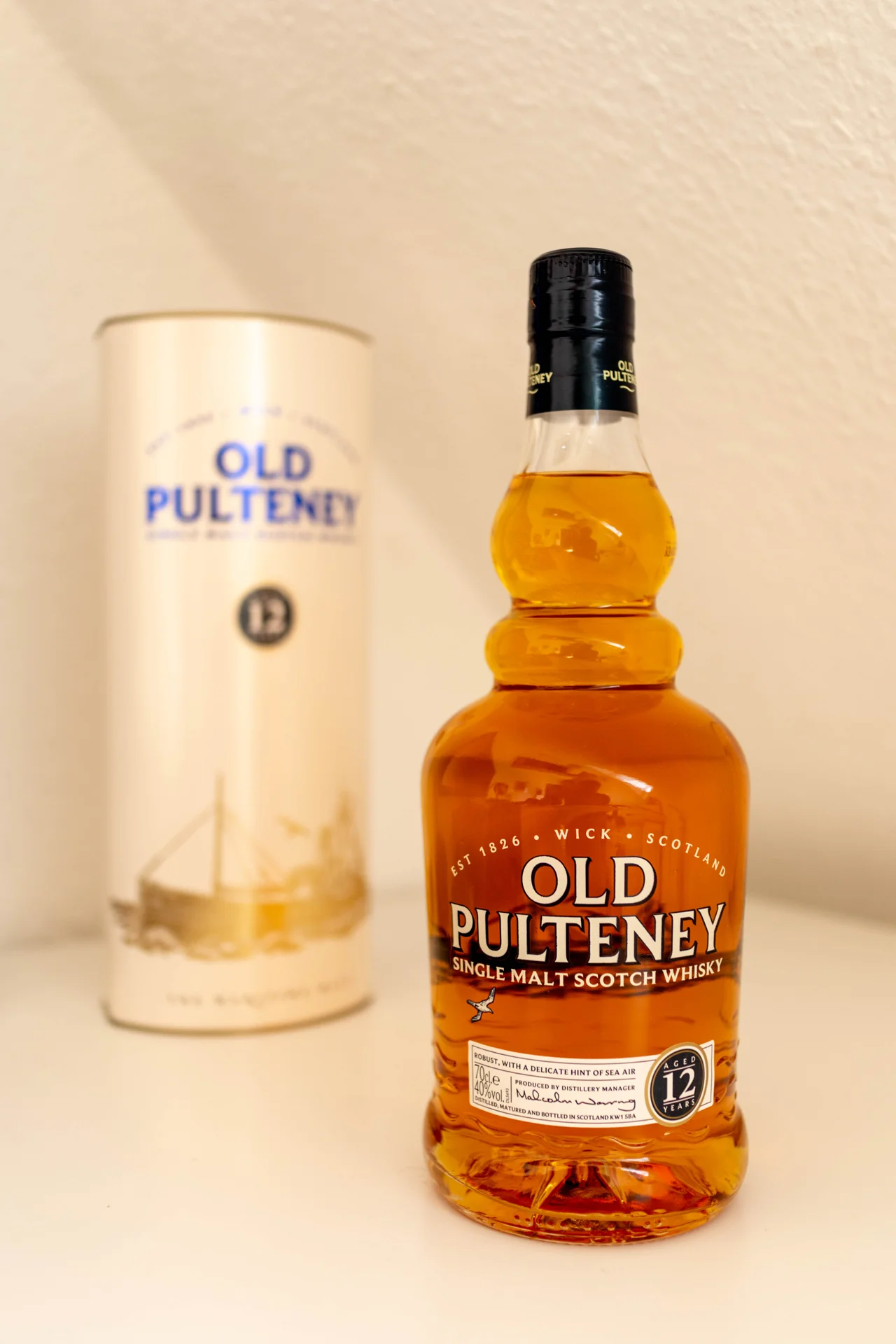

Old Pulteney Distillery
Wick was the herring capital of Europe in the 19th century, and the distillery at the centre of its planned harbour was built to serve - and to slake the thirst of - the men who hauled the silver fish ashore. Pulteney distillery, founded in 1826 in the Pulteneytown area of Wick, was named for Sir William Pulteney, the man whose money paid for the new harbour the engineer Thomas Telford had laid out a few years earlier. The same Telford built the mill lade that still feeds the distillery from Loch Hempriggs, three or four kilometres to the south. Two centuries on, the distillery is still here. The herring are gone.
The Telford Town
Pulteneytown was a Telford project from the ground up. The British Fisheries Society hired the great Scottish civil engineer in the early 1800s to plan a new fishing port at Wick - a grid of streets, a working harbour, and the infrastructure to support what would become one of the largest herring fisheries in the world. Sir William Pulteney, after whom both the town and the distillery were named, had died in 1805 before the project really took off, but his name stayed attached to it. When the distillery opened in 1826, it was the most northerly distillery on the Scottish mainland (a title since taken by Wolfburn near Thurso) and almost completely inaccessible by land. Barley came in by sea. Whisky shipped out by sea. The economics of the place were maritime through and through. Many of the workers at the distillery were also herring fishermen - the same hands that gutted fish in the morning could turn copper stills in the afternoon.
Prohibition in Wick
The story most distilleries tell about themselves runs along familiar lines: founded by Scotsman X, sold to company Y, expanded under Z. Old Pulteney's story includes an interruption almost nobody outside Wick has heard about. In 1922 the burgh of Wick voted itself dry under the Temperance (Scotland) Act 1913, and the local parish enforced the prohibition. By 1930 the distillery had closed. It stayed shut for 21 years. The vote was finally rescinded in 1947, the law abolished, and the distillery re-opened in 1951 - one of very few Scottish distilleries ever stopped by local prohibition rather than market forces. The herring fishing industry was already declining by then, and within another generation it would be gone entirely. The distillery, oddly, outlasted the fish.
Sea Air and Bow Wave
Pulteney was sold to John Dewar & Sons in 1924, and Dewars joined the Distillers Company the following year. Hiram Walker & Sons bought it in 1954. In 1961 it passed to Allied Breweries, and in 1995 Allied sold it to Inver House Distillers, who own it today. The distillery's flagship is the Old Pulteney 12 Year Old single malt, but the range stretches to 15, 18, 25, and beyond. In July 2023 Old Pulteney released its oldest expression to date - a 45-year-old single cask bottling called Bow Wave. The whisky is characteristically described as carrying flavours of sea air, salt, and brine, attributed to the distillery's coastal exposure during maturation. Whether the sea is in the spirit or only in the imagination of the drinker is one of those questions whisky lovers happily argue forever. What is undisputed is that Telford's mill lade still runs, the water still arrives from Loch Hempriggs, and the still house is still working two centuries after the first cask was filled.
From the Air
58.434N, 3.085W. In the Pulteneytown area of Wick, just south of the Wick River and the harbour. The distillery sits in a working district of late-Georgian/early-Victorian streets - look for the pagoda-topped malt kiln roofs typical of Scottish distilleries. Best at 1,000-1,500 ft AGL on an easterly track from the airport. Nearest airport: Wick (EGPC) 1.5 nm northwest. Watch for harbour traffic patterns and respect noise abatement over the residential streets of Pulteneytown.
Nearby Stories
- Battle of Harpsdale 4 km away
- Tomb of the Eagles 5 km away
- Helmsdale 11 km away
- SS St Petersburg 38 km away
- HMS King Edward VII 40 km away
- HMS Daring (H16) 46 km away
- Brora Distillery 55 km away
- Orcadian Basin 64 km away