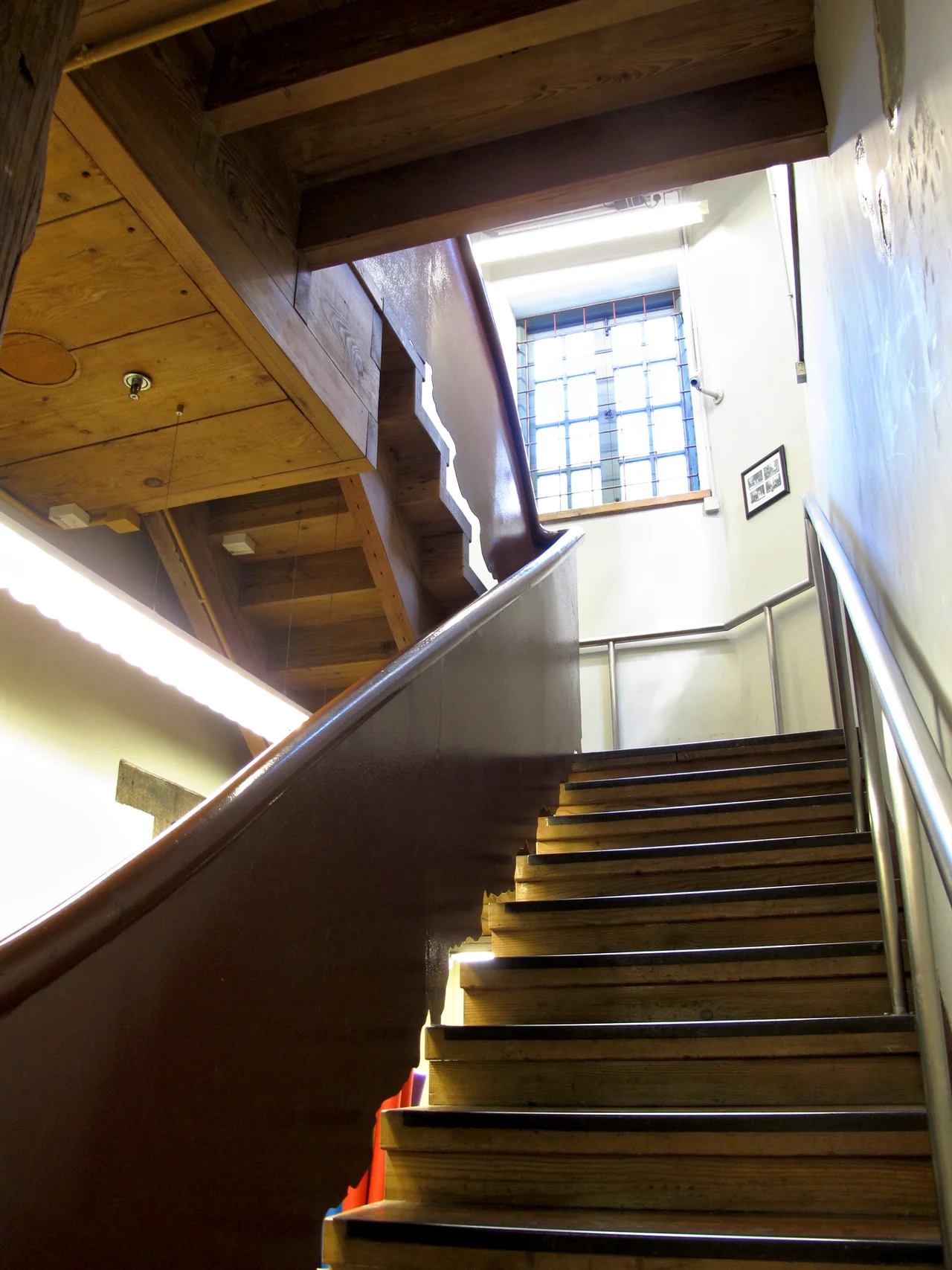

Old Stanley Police Station
The oldest police station building in Hong Kong now sells groceries. That single sentence captures something essential about how this city relates to its past: the structure survives, the function transforms, and the extraordinary settles quietly into the everyday. Built in 1859 when Stanley was among the few settled communities on Hong Kong Island's southern coast, the station has outlasted colonial governors, a brutal occupation, and the entire arc of British rule — and it is currently home to a Wellcome supermarket, which seems like either a great joke or a form of democratic preservation, depending on how you look at it.
The Most Southerly Outpost
When the station was constructed in 1859, Stanley occupied a strategic position that justified the expense. It sat at the southern tip of Hong Kong Island, the most remote settlement accessible from Victoria — close enough to maintain some connection to the colonial centre, far enough to require its own law enforcement. The British Army used the building intermittently alongside the police, valuing its position as the southernmost permanent outpost on the island. For anyone approaching Hong Kong Island from the open South China Sea, Stanley was the first community of any size they would encounter. The station's role was partly police work in the conventional sense and partly something older: the visible assertion of authority at the edge of territory that was still being defined and defended.
The Occupation and Its Mark
The Japanese occupation of Hong Kong, which began in December 1941 and lasted until August 1945, altered almost every institution in the territory. The Stanley Police Station was no exception. The Japanese Gendarmerie — the Kempeitai, a military police force with a brutal reputation across Asia — commandeered the building as a local headquarters. A mortuary was added to the structure during this period, a grim architectural annotation to the violence the occupation entailed. Stanley itself became notorious during the occupation as the site of Stanley Internment Camp, where thousands of Allied civilians were held in difficult conditions for nearly four years. The police station stood nearby, transformed from an instrument of colonial order into something far darker. After Japan's surrender, the building reverted to police use until 1974, but the mortuary wing remains — built into the structure, impossible to erase.
Declared a Monument, Occupied by Produce
The building was declared a monument on 15 January 1984, placing it among the most formally protected historic structures in Hong Kong. Declared monument status under the Antiquities and Monuments Ordinance is the highest level of statutory protection available, and in theory it should ensure the building's preservation and appropriate use in perpetuity. In practice, the station has cycled through a series of tenants since its policing days ended: a sub-office of the Southern District administration, then a restaurant, and currently a branch of the Wellcome supermarket chain. Heritage advocates have periodically argued that a declared monument deserves a more dignified purpose — one suggestion has been to convert it into a branch of the Hong Kong Police Museum — but commercial occupation has persisted. The walls, at least, have not been knocked down.
165 Years and Counting
Walk through Stanley Market on any weekend and the village's layers are visible: the waterfront restaurants, the market stalls selling everything from linens to souvenirs, the Murray House relocated from Central and reassembled here. The police station sits among all of this, its 1859 stonework older than almost every other structure on the island's southern shore. The staircase that has been photographed many times — the building appears regularly in architectural surveys of colonial-era Hong Kong — leads to rooms that have held constables, officers, occupation administrators, and diners. Now the refrigerators hum where the duty sergeant once kept the incident log. Hong Kong is a city that has rarely had the luxury of sentiment about its buildings. This one has survived anyway, which is more than most can say.
From the Air
The Old Stanley Police Station sits at 22.2183°N, 114.2131°E on the southern shore of Hong Kong Island, in the Stanley village area. From the air at 2,000 feet AGL, the Stanley peninsula is visible as a narrow strip of development between Stanley Bay to the west and the reservoir-backed hills to the north. VHHH (Hong Kong International Airport) is approximately 25 km to the west-northwest. The winding Tai Tam Road connects Stanley to the rest of the island through forested country park terrain. On clear days, the islands of the Po Toi group are visible to the southeast.
Nearby Stories
- Lok Ma Chau Loop 2.3 km away
- Portas do Cerco 2.3 km away
- Kweilin Incident 17 km away
- Wanshan Archipelago Campaign 34 km away
- Nanxiong Formation 115 km away
- Battle of Nanpeng Island 148 km away
- Heyuan 169 km away
- Cape Maobitou 632 km away