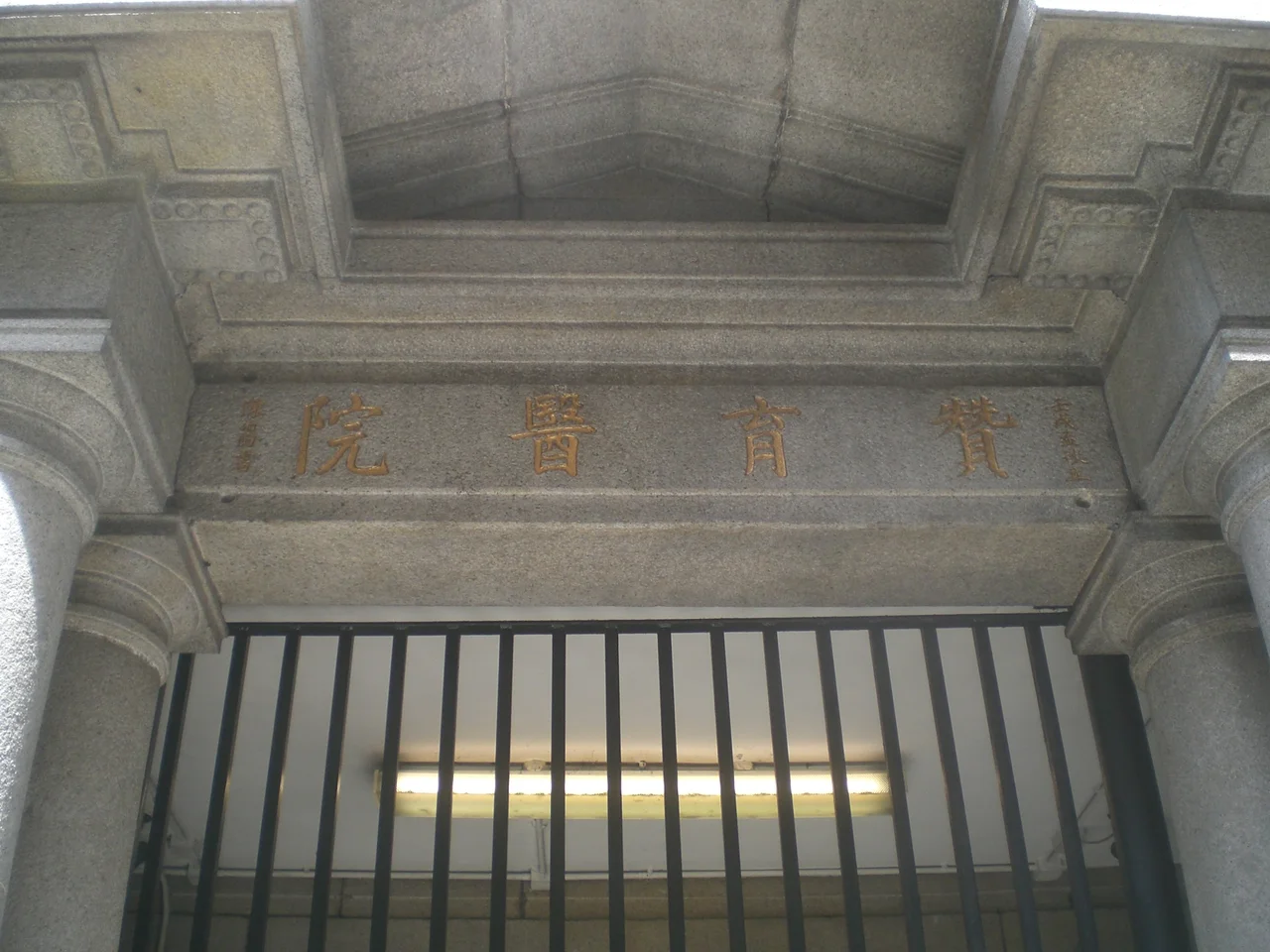

Old Tsan Yuk Maternity Hospital
On 17 October 1922, a doctor named Alice Hickling opened a maternity hospital on Western Street and became, by virtue of the moment, the first foreign female physician in Hong Kong. She had come from England, recruited by the London Missionary Society, and she arrived with a specific conviction: that the women of Hong Kong wanted to become professional midwives, and that a hospital committed to training them could change the standard of birth care across the territory. Tsan Yuk — the name means something close to 'nurturing the young' — began as both a clinical facility and a school, and the building on Western Street in Sai Ying Pun has carried that dual purpose, in various forms, ever since.
A Community Built the Hospital
The land on which Tsan Yuk was built was donated by the government, but the money for construction came from the community itself. The $94,000 construction cost was covered by H. M. H. Nemazee and the Sai Ying Pun Kai Fong Committee — the neighbourhood association of local residents — along with contributions from the Fishmongers' Guild and the Fruit and Vegetable Sellers' Guild. The thirty beds were donated by Tung Wah Hospital, the major Chinese-founded institution in neighbouring Sheung Wan. This fundraising pattern mattered. The hospital was not purely a colonial imposition or a missionary charity operating at arm's length from local life. It was built by the neighbourhood's merchants and guilds, with a mission of serving the women who lived among them. Dr. S.W. Tso, Chairman of the Chinese Public Dispensary Committee, championed Dr. Hickling's proposal to add midwifery training. The hospital was, from its opening day, a collaboration.
Training in the Colonial City
Before Tsan Yuk opened, professional midwifery training in Hong Kong was limited. Many births across the territory — particularly in the poorer communities of the Western District and surrounding areas — took place without trained attendants, with predictable consequences for maternal and infant mortality. Dr. Hickling understood this not as an abstract public health problem but as a practical one with a practical solution: train local women, ground the training in clinical practice, and build an institution that could sustain itself over time. Tsan Yuk evolved into one of Hong Kong's leading maternity teaching hospitals in the years that followed, its reputation built through the quality of the midwives it trained and the care it delivered. The colonial-era British-style building that housed all of this — three storeys, 1,100 square metres, with a basement, staff quarters, and servant accommodation — was functional rather than grand, built to work rather than to impress.
Closed by Occupation, Reopened by Need
The Japanese occupation of Hong Kong, which began in December 1941, closed Tsan Yuk in 1944. Most of its furniture and equipment was moved to Pamela Youde Nethersole Eastern Hospital during this period. The building survived the war intact, and the hospital eventually resumed operation, but by the early 1950s the original premises had become too small. The patient population had grown, bed space was inadequate, and the old building on Western Street simply could not expand to meet the demand. The Hong Kong Jockey Club stepped in with a donation of $3,570,000 to fund a new facility on nearby Hospital Road. On 13 June 1955, Governor Sir Alexander Grantham opened the new Tsan Yuk Hospital, and the original building in Sai Ying Pun transitioned to a new role as the Western District Community Centre — a repurposing that preserved the structure while serving a different kind of community need.
Heritage in Active Use
The Western District Community Centre that occupies the old hospital is genuinely active. Activity rooms, exhibition spaces, and lecture theatres house organisations ranging from the Hong Kong Committee on Children's Rights to the Scout Association. The building was classified as a Grade III historic building in 2009 and is one of 25 sites along the Western District section of the Central and Western Heritage Trail. In 2007, the Hong Kong Jockey Club — the same institution whose earlier donation had allowed Tsan Yuk to build its new home — donated HK$7.9 million to the Hong Kong Resource Centre for Heritage, part of which funded a 2008 renovation of the old hospital building. The result was a multi-purpose hall and activity rooms now used to advocate for cultural heritage conservation. Somewhere in that circularity — the Jockey Club building the future of Tsan Yuk, then helping preserve its past — is something that speaks to how Hong Kong's institutions have long operated: pragmatic, networked, and occasionally quietly generous.
From the Air
The Old Tsan Yuk Maternity Hospital sits at 22.2859°N, 114.1410°E in Sai Ying Pun, on the northwestern shore of Hong Kong Island. From 2,500 feet AGL, the dense residential towers of Sai Ying Pun and Kennedy Town are visible as a strip between Victoria Harbour and the green slopes of the Mid-Levels. VHHH (Hong Kong International Airport) lies approximately 25 km to the west on Lantau Island, and the approach corridor is visible on clear days. The building sits within walking distance of the University of Hong Kong's main campus to the east.
Nearby Stories
- Lok Ma Chau Loop 2.3 km away
- Portas do Cerco 2.3 km away
- Kweilin Incident 17 km away
- Wanshan Archipelago Campaign 34 km away
- Nanxiong Formation 115 km away
- Battle of Nanpeng Island 148 km away
- Heyuan 169 km away
- Cape Maobitou 632 km away