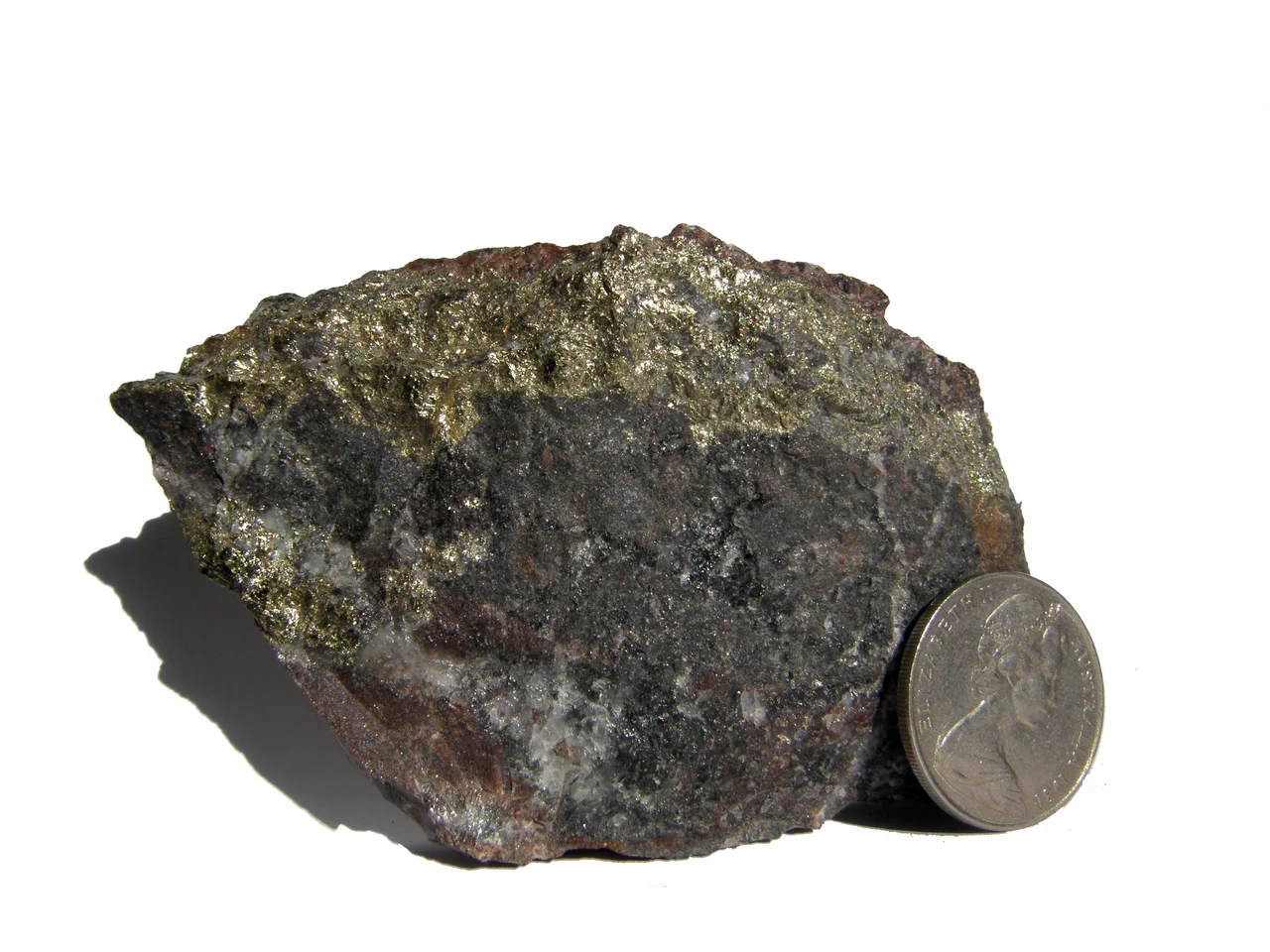

Olympic Dam mine
The most extraordinary thing about Olympic Dam is that you cannot see it. There is no towering open pit, no mountain of waste rock visible for miles. The ore lies some 350 metres beneath the flat red plain near Roxby Downs, reached by shafts and declines that drop into a labyrinth of tunnels carved through one of the richest single ore bodies ever found. Down there, in the dark, sits the largest known deposit of uranium on the planet, bound up with copper, gold and silver in quantities that have made this remote corner of the outback a fixture of global mineral markets and a flashpoint of Australian argument for more than forty years.
An Ore Body Without Equal
What WMC Resources stumbled onto in 1975, drilling near a sheep station, defies easy comparison. Olympic Dam is the world's largest known uranium deposit and ranks among the largest copper resources anywhere, an iron oxide copper gold body holding billions of tonnes of ore. Copper is the main earner, around 70 per cent of revenue, with uranium making up roughly a quarter and gold and silver the rest. The deposit formed deep in the ancient Gawler Craton, where mineral-rich fluids loaded the rock with metals more than a billion years ago. Production began in 1988, and the mine has grown by stages ever since into one of Australia's largest, exporting copper cathode and uranium oxide, the yellow powder known as yellowcake, through Port Adelaide to the world.
Whose Country This Is
The mine stands on the traditional lands of the Kokatha people, with the neighbouring Arabana also holding deep connection to this country. Their relationship with Olympic Dam has been fraught from the start. The legal framework that authorised the mine, the Roxby Downs Indenture Act of 1982, was set in place without the consent of the people whose land it covered, and Kokatha have described that original act as a mechanism that drove their people off country. After a two-decade struggle, the Kokatha were formally recognised as native title holders over much of the surrounding region in 2014. The story of Olympic Dam cannot be told as a simple tale of national wealth. It is also a story of land taken into industry over the objections of those who belonged to it long before the first shaft was sunk.
The Thirst of the Desert
A mine this size in a place this dry needs water, and Olympic Dam's appetite is staggering. It draws around 35 million litres of Great Artesian Basin water every day, pumped from bore fields up to 200 km away, which makes it the largest industrial user of underground water in the southern hemisphere. That demand carries a cost the desert cannot easily absorb. The Great Artesian Basin feeds the mound springs of the arid interior, the only permanent water for vast distances, and the slow refuges of rare species found nowhere else. Pumping on this scale has been linked to springs running low or drying out entirely. For Arabana and Kokatha people and for conservationists alike, the water has long been among the bitterest grievances against the mine.
Decades of Dissent
Opposition is woven through Olympic Dam's whole history. Even before the mine opened, anti-nuclear protesters held a vigil at the site through 1983 and 1984, and hundreds were arrested. When BHP, which took over in 2005, proposed a 30 billion dollar expansion to dig an enormous open pit, the fight reignited. In 2012, Arabana elder Kevin Buzzacott took the federal environment minister to court over the expansion's approval, and though his case and appeal failed, that same year more than 400 people gathered at the site for a protest pointedly named Lizard's Revenge. BHP shelved the expansion indefinitely later in 2012, citing cost. The mine keeps working, as does the debate, and beneath the quiet desert surface the argument over uranium, water and country goes on.
From the Air
Olympic Dam mine sits at approximately 30.44 degrees south, 136.87 degrees east, about 550 km north-north-west of Adelaide and adjacent to the town of Roxby Downs. Because the workings are almost entirely underground, the surface signature is the processing plant, tailings storage facilities, the township grid of Roxby Downs and the bore-field pipelines stretching north, rather than a pit; tall plant structures and evaporation ponds are the clearest landmarks. The mine is served by Olympic Dam Airport, ICAO YOLD (IATA OLP), a BHP-operated field with daily flights to Adelaide; Roxby Downs Station Airport, ICAO YRXB, lies nearby. Recommended viewing altitude is 4,000-7,000 ft AGL to take in the plant, township and surrounding mound-spring country. Expect clear, very dry conditions, strong daytime thermals and the occasional violent thunderstorm; the area has been hit by storms severe enough to topple the mine's power lines.
Nearby Stories
- Nilpena Ediacara National Park 65 km away
- Beltana Station 70 km away
- Marree Man 78 km away
- Prominent Hill mine 98 km away
- Adelaide–Darwin railway line 118 km away
- Strangways Springs 125 km away
- Wilgena Station 160 km away
- Flinders Ranges 162 km away