
Operation Chronicle
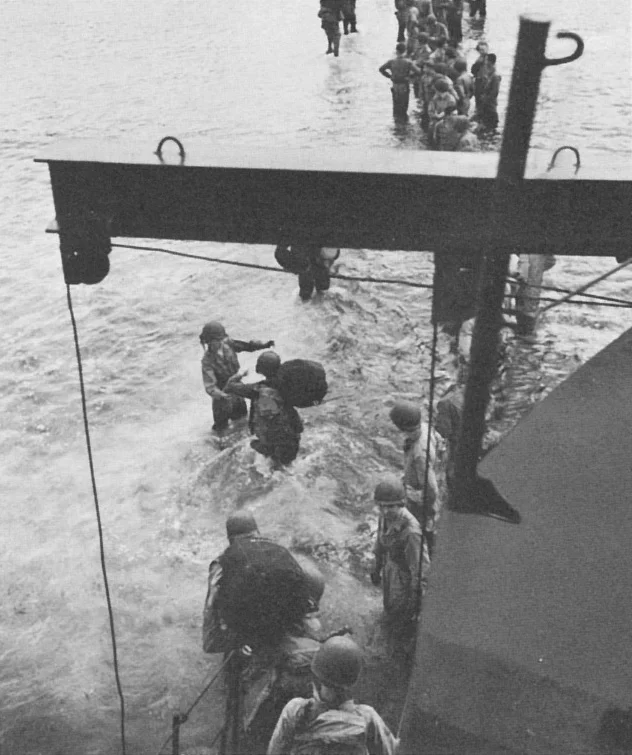
The first big amphibious landing the Allies undertook in the Southwest Pacific was, by design, uncontested. When 16,800 American and Australian personnel put ashore on Woodlark and Kiriwina on June 30, 1943, they found no Japanese waiting for them. There was no beach under fire, no firefight in the palm groves, no casualty count to radio back to headquarters. What there was - and this was the point - was a rehearsal. Generals Walter Krueger and Daniel Barbey wanted to test their tactics, their communications, their loading procedures, and their coordination of air, sea, and ground forces before the shooting war of Operation Cartwheel opened in earnest. Two small Papua New Guinean islands would serve as the chalkboard. The lessons learned on those beaches would shape every invasion that followed.
Two Islands in the Solomon Sea
Kiriwina is the main island of the Trobriand group, a flat coral atoll about 125 miles from Rabaul. Woodlark lies 200 miles from Bougainville, a larger island with some elevation and a natural harbor at Guasopa Bay. Neither held Japanese troops in the summer of 1943. Both held airstrip potential. That was what the Allied planners wanted: bases close enough to Rabaul, Imperial Japan's stronghold in New Britain, to increase bomber payloads and give their aircraft fighter escorts. General Douglas MacArthur assigned the landings to General Krueger and his Sixth Army, headquartered in Brisbane. Initial codename: Operation Coronet. Later renamed Chronicle. Krueger had responsibility for coordinating every moving piece - ground, air, and naval - an assignment that would require more detailed planning than any Southwest Pacific operation before it.
The Advance Party at Midnight
At sixteen hundred hours on June 22, 1943, an advance party of the 112th Cavalry Regiment left Milne Bay aboard the destroyer transports Brooks and Humphreys under Major D. M. McMains. They reached Guasopa on Woodlark at thirty-two minutes past midnight on June 23. Six landing craft ferried the troops ashore in darkness. An Australian coastwatcher stationed on the island, not informed that a landing was coming, nearly attacked the party with his locally recruited guerrilla force before the unmistakable sound of American accents stopped him short. The advance men spent the next week marking landing beaches, clearing obstructions, and setting up defenses. The reconnaissance parties that had visited the islands in May had reported no Japanese presence. The scouts on the ground confirmed it. By the time the main force arrived, the path was clear.
The Main Landings
Two thousand six hundred troops of Woodlark Force sailed from Townsville, Australia, on June 25 under Colonel Julian Cunningham - units of the 112th Cavalry Regiment, the 134th Field Artillery Battalion, the Marine 12th Defense Battalion under Lieutenant Colonel William H. Harrison, plus engineers, medics, quartermasters, and a naval construction battalion. Six tank-landing ships, a subchaser, and the destroyers Bagley and Henley escorted them. Rear Admiral Victor Crutchley's Task Force 74 stood as the covering force; Rear Admiral Daniel Barbey's Task Force 76 ran the amphibious landing. The Kiriwina force landed simultaneously. No Japanese resistance materialized. The soldiers walked off the beaches into the coconut groves and began setting up camp. On August 2 two Japanese aircraft attacked Woodlark and wounded four men of the 112th Cavalry - the regiment's first combat casualties of the war. The three RAAF fighter squadrons stationed on Goodenough Island to defend against an expected air campaign sat idle, much to their pilots' surprise.
Building Runways From Scratch
The real work began the day after the landings. On Woodlark, the 20th and 60th Naval Construction Battalions began clearing jungle on July 2. By July 14 they had laid a single 3,000-foot runway fit for C-47 Skytrains. A week later it was 5,200 feet with a coral surface, and the 67th Fighter Squadron came in on July 23. The strip ultimately grew to 6,500 feet with a parallel 6,000-foot runway and 110 hardstands. On Kiriwina the work went slower. Landing the heavy engineering equipment proved difficult, the rains were heavier, and Krueger grew unhappy with progress - unhappy enough that he replaced Colonel Herndon in command with Colonel John Murray. By July 20 a rough 1,500-foot strip had been graded. By month's end it was 5,000 feet long and ready for coral surfacing. No. 79 Squadron RAAF flew operations off Kiriwina starting August 18. PT boats based from Guasopa Bay ran patrols along the coast.
What Chronicle Taught
The strategic significance of Woodlark and Kiriwina turned out to be modest. The Allied advance moved rapidly westward, leaving these airstrips as rear-area facilities rather than the frontline bases planners had envisioned. The 112th Cavalry spent five months on Woodlark - during which most of the troopers never fired their rifles - and the regiment's experience on the island, while it improved amphibious skill, limited the other kinds of training the men needed for the battles ahead. But the operation itself had outsized influence. Operation Chronicle was the first Southwest Pacific landing conducted with detailed, comprehensive, coordinated planning across all services. The procedures that emerged - loading tables, communication protocols, air-sea coordination, beach organization - became standard operating procedure for everything that followed. When American forces stormed Saidor, Hollandia, and Leyte in the months and years afterward, they used the lessons learned on two small islands in the Solomon Sea, where the Japanese had not been there to teach them.
From the Air
The landings centered on Woodlark at approximately 8.61 degrees south, 151.11 degrees east, and Kiriwina roughly 70 nautical miles to the west in the Trobriand group. Recommended viewing altitude 6,000 to 10,000 feet to appreciate the coral atolls and surrounding reefs. Guasopa Airport (ICAO AYGP) on Woodlark and Losuia Airport (ICAO AYKI) on Kiriwina are the direct successors of the wartime airstrips. Rabaul in New Britain lies roughly 200 nautical miles to the north-northeast - the target that drew the 1943 planners. Expect typical Solomon Sea tropical weather with afternoon convective buildup. Morning flights offer the clearest views of the WWII runway traces still visible from the air.
Nearby Stories
- Japanese Submarine Ro-103 29 km away
- Battle of Goodenough Island 47 km away
- Goodenough Island 77 km away
- D'Entrecasteaux Islands 83 km away
- Woodlark Island 138 km away
- Misima Island 257 km away
- Battle of the Bismarck Sea 278 km away
- Battle of Wide Bay-Open Bay 378 km away