Operation Colorado
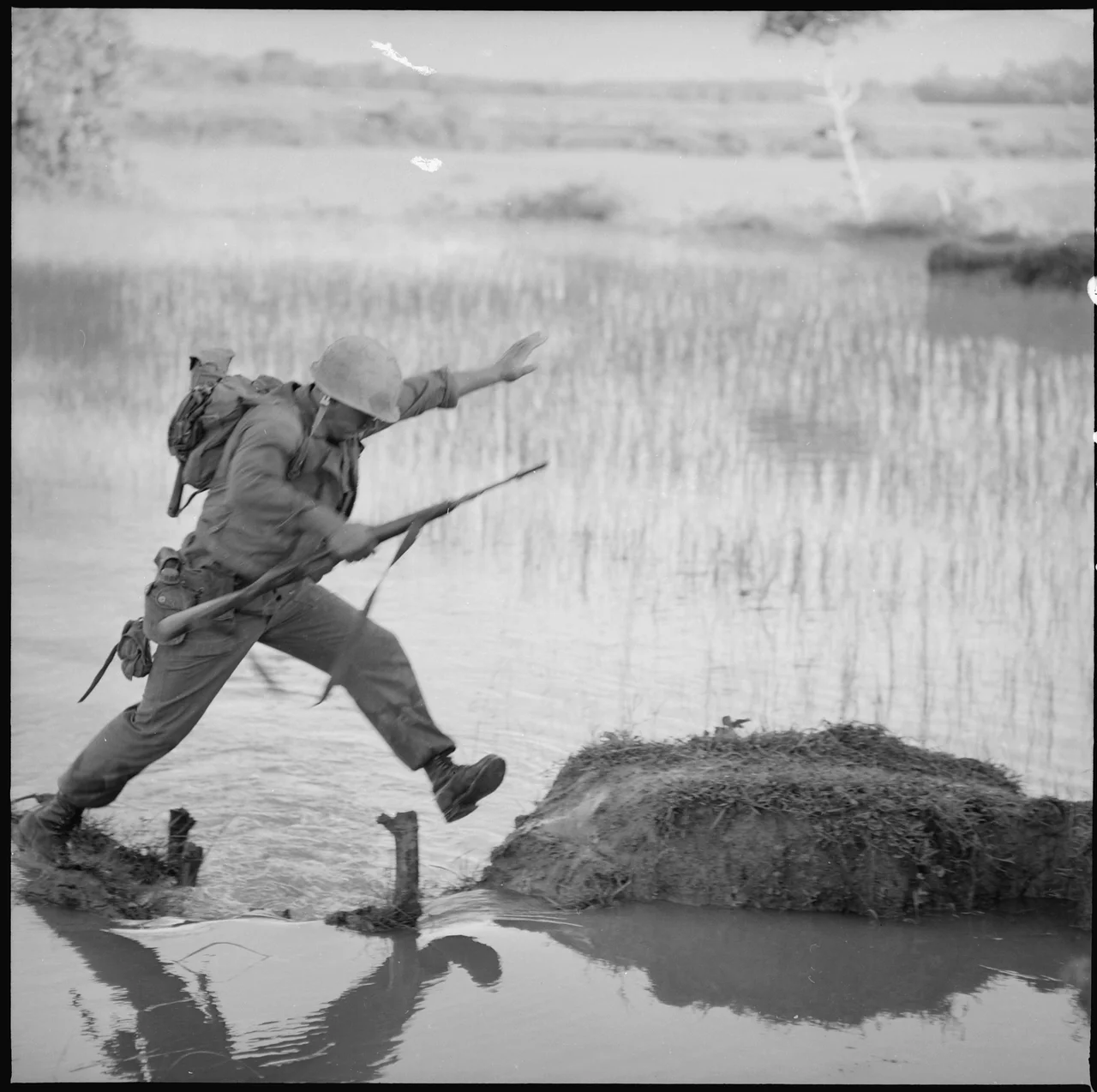
The monsoon rains that drench central Vietnam in August do not pause for war. Visibility drops to nothing. Helicopters cannot fly. Artillery cannot be called. And somewhere in the paddyfields near the hamlet of Cam Khe on 10 August 1966, a column of Marines from the 1st Battalion, 5th Regiment rounded a bend into a sudden, close-quarters firefight with North Vietnamese forces neither side could see clearly through the downpour. Operation Colorado — a seventeen-day joint search-and-destroy sweep through the Hiệp Đức District — had reached its most brutal afternoon.
Planning in the Hiệp Đức Valleys
Major General Lewis J. Fields, commanding the 1st Marine Division, authorized the operation on 30 July 1966. The objective: find and engage the People's Army of Vietnam (PAVN) 2nd Division in the Hiệp Đức and Song Ly Ly river valleys of Quảng Nam Province. The plan had the elegance of a geometric trap. South Vietnamese ARVN battalions, supported by armored cavalry, would push southwest from Thăng Bình toward Quế Sơn. Three South Vietnamese Marine battalions would set blocking positions to stop PAVN forces from slipping away. The U.S. 2nd Battalion, 5th Marines would land by helicopter southwest of Hiệp Đức and drive eastward — toward the ARVN lines, compressing the enemy in between. The 1st Battalion, 5th Marines would reinforce wherever needed. On paper, it was a textbook anvil-and-hammer operation. The reality, as always, would be shaped by rain.
The Fight at Thach Thuong
The operation began on 6 August, with helicopters from Marine Aircraft Groups 16 and 36 ferrying troops to their landing zones after preparatory air and artillery strikes. The South Vietnamese Marines made contact almost immediately: on landing, they engaged PAVN forces from the 1st Battalion, 3rd Regiment, killing 50 and capturing 20 before breaking off at nightfall. The following morning, they pushed north toward the hamlet of Thach Thuong, believed to be fortified by PAVN defenders. Heavy rain delayed the assault for hours, grounding the aircraft that would otherwise have softened the position. The South Vietnamese Marines attacked frontally and were driven back twice before withdrawing to let artillery do what air power could not. When they entered Thach Thuong on the morning of 8 August, the PAVN had already slipped away in the night, leaving 37 dead behind them. The hamlet was quiet, the victory undramatic, the enemy already somewhere else.
The Rainstorm Fight
The operation's most violent day came without warning. On 10 August, the 1st Battalion was moving east through the Quế Sơn Valley when it began taking harassment fire at 8:30 in the morning. By mid-afternoon, the column had pushed through the rain to the edge of Cam Khe when approximately thirty PAVN soldiers were spotted crossing a paddyfield at a run. Before the Marines could organize a response, the entire regiment was in close-quarters combat — fighting in a downpour that made it impossible to call in close air support or artillery. For hours, the battle was fought with small arms and whatever the men could bring to bear within the visibility of a monsoon storm. When the rains lifted at 5:30 that afternoon, UH-1 gunships from VMO-6 and A-4 Skyhawks from Marine Aircraft Group 12 began hitting the PAVN positions. By nightfall, the enemy had disengaged. The Marines counted 14 of their own dead and 65 wounded; over 100 PAVN soldiers were found dead.
Costs and Conclusions
Three days later, on 13 August, two full PAVN battalions engaged South Vietnamese Marines and ARVN cavalry near Vinh Huy in fighting that lasted the entire day. The South Vietnamese lost 26 dead and 54 wounded; over 140 PAVN bodies were counted when the enemy broke contact at nightfall. Operation Lien Ket — the South Vietnamese component of the operation — concluded the following day, with the Vietnamese Marines returning to Thăng Bình. The American component continued until 22 August. When the final accounting was made, the U.S. Marines had suffered 26 dead and 212 wounded. PAVN dead were tallied at 99 confirmed, with allied forces claiming total enemy casualties of 283. Behind those numbers were real people on every side: young soldiers from both nations caught in valleys they may never have heard of before their unit orders arrived, fighting in rainstorms over paddyfields and hamlets that would change hands, and change again, in the years that followed.
From the Air
The operation took place across the Hiệp Đức District and Quế Sơn Valley of Quảng Nam Province, centered around 15.67°N, 108.34°E. The terrain from the air is a patchwork of river valleys and paddyfields pressed against steep inland mountains — the contrast between the coastal plain and the Trường Sơn mountain range is dramatic at cruising altitude. Da Nang International Airport (VVDN) lies approximately 50 km to the northeast. Tam Kỳ Airport (VVTK) is closer, about 25 km to the south. The Quế Sơn Valley, where the heaviest fighting of Operation Colorado took place, is visible as a broad agricultural plain between ridgelines.
Nearby Stories
- Operation Lamar Plain 11 km away
- 1968 Kham Duc C-130 Shootdown 15 km away
- Hội An wreck 16 km away
- Lý Sơn Island 17 km away
- Bach Ma National Park 24 km away
- Battle of Nam Dong 51 km away
- Operation Masher / White Wing 134 km away
- Battle of the Paracel Islands 288 km away