
Operation Jaque
The helicopter landed and the helicopter was a lie. The pilots were Colombian Army. The men in Che Guevara T-shirts were Colombian Army. The aid workers were Colombian Army. The whole scene was scripted and rehearsed through a week and a half of acting classes. On the morning of July 2, 2008, along the Apaporis River in the department of Guaviare, two Mi-17 helicopters touched down in a clearing, took on fifteen handcuffed hostages - including Íngrid Betancourt and three American contractors - and spent exactly twenty-two minutes on the ground while the FARC commander known as César chatted with the crew and then, airborne, watched in astonishment as the soldiers around him subdued him, stripped off their costumes, and told his captives they were free.
Who They Were
Íngrid Betancourt, a French-Colombian senator and former presidential candidate, had been abducted on February 23, 2002, while campaigning in southern Colombia. She had spent more than six years in the jungle. Marc Gonsalves, Thomas Howes, and Keith Stansell were American defense contractors employed by Northrop Grumman; their plane went down in Caquetá in February 2003 and they were taken captive the same day. Eleven Colombian soldiers and police officers had been held for varying lengths of time: Lieutenant Juan Carlos Bermeo, Second Lieutenant Raimundo Malagón, Sergeants José Ricardo Marulanda and Erasmo Romero, Corporals William Pérez, José Miguel Arteaga, Armando Flórez, Jhon Jairo Durán, and Julio Buitrago, Lieutenant Vianey Rodríguez, and Subintendent Armando Castellanos. They were not symbols. They were specific people who had been separated from their families for years, moved through the jungle in chains, and forced to march at gunpoint.
The Long Setup
The intelligence gathering started long before the helicopters took off. According to one American official, Colombia placed a mole inside FARC at least a year before the operation. A colonel involved later said Colombia had located the hostages about four months before the rescue. Between that location and the mission, Colombian forces spotted five of the hostages bathing in the Apaporis and quietly installed motion sensors and video cameras along the waterway. At one point a guerrilla wandered into the jungle to relieve himself and accidentally kicked a hidden device. The operation held. By late May, the planners had settled on a scheme to trick FARC's 1st Front into regrouping the hostages for transport. General Freddy Padilla de León brought the plan to Defense Minister Juan Manuel Santos, who agreed quickly. President Álvaro Uribe, weighing the diplomatic risks, signed off.
Twenty-Two Minutes on the Ground
On the morning of July 2, the hostages were moved across the Apaporis to a landing zone, where their captors told them they would be transferred to a different location. Two Mi-17s came in. One held Colombian agents in Che Guevara T-shirts; four more soldiers wore the clothes of aid workers. They had taken acting classes for ten days to prepare for the role. The hostages were loaded aboard - handcuffed, under the pretense of standard transport. The local FARC commander, Gerardo Aguilar Ramírez ("César"), and one additional rebel climbed in with them, surrendered their pistols at the crew's request, and only realized they had been caught once they were in the air. Betancourt later told reporters she first understood she had been rescued when she saw her captor lying naked and blindfolded on the cabin floor. The helicopters flew out. Not a shot was fired. In case of failure, Colombia had prepared 39 helicopters and 2,000 troops, plus U.S. advisers, to extract the hostages by force.
The Aftermath and the Arguments
Uribe's approval rating jumped from 73% to 91%. Betancourt, interviewed in Paris, compared the operation to the Israeli raid at Entebbe. French President Nicolas Sarkozy thanked Uribe and flew Betancourt's family to Bogotá the same night. U.S. President George W. Bush, John McCain (then campaigning in Colombia), and Barack Obama all praised the rescue. Even Hugo Chávez in Caracas said Venezuela was overjoyed that the hostages had been freed without a drop of blood. The controversies came quickly. Radio Suisse Romande reported that the United States had paid $20 million for the release - a claim Colombian officials vehemently denied and that collapsed in credibility when César was extradited to the United States in 2009 to face cocaine trafficking charges (he was convicted and sentenced to 27 years). CNN reviewed unpublished photos suggesting Colombian intelligence had misused a Red Cross emblem during the rescue, and Revista Semana reported that the International Humanitarian Mission NGO the Army created as cover had copied its registration details from a real Barcelona organization, Global Humanitaria.
What Was Bought That Day
The operation returned fifteen people to their families. It also marked a turning point in Colombia's long war with the FARC. Within hours of the helicopters landing safely, Colombian forces cornered what remained of the 1st Front and offered amnesty to any member who surrendered. The success of a bloodless rescue - after decades in which hostage operations had failed spectacularly and fatally - shifted the political calculus around the conflict. Eight years later, the government of Juan Manuel Santos (the defense minister who had approved Jaque) signed a peace accord with the FARC in Havana. The fifteen people rescued at the Apaporis had spent between four and six years in the jungle. Betancourt wrote a memoir, No Hay Silencio Que No Termine. Gonsalves, Howes, and Stansell co-authored Out of Captivity. The Colombian soldiers and police officers went back to their families and, mostly, declined to become public figures.
From the Air
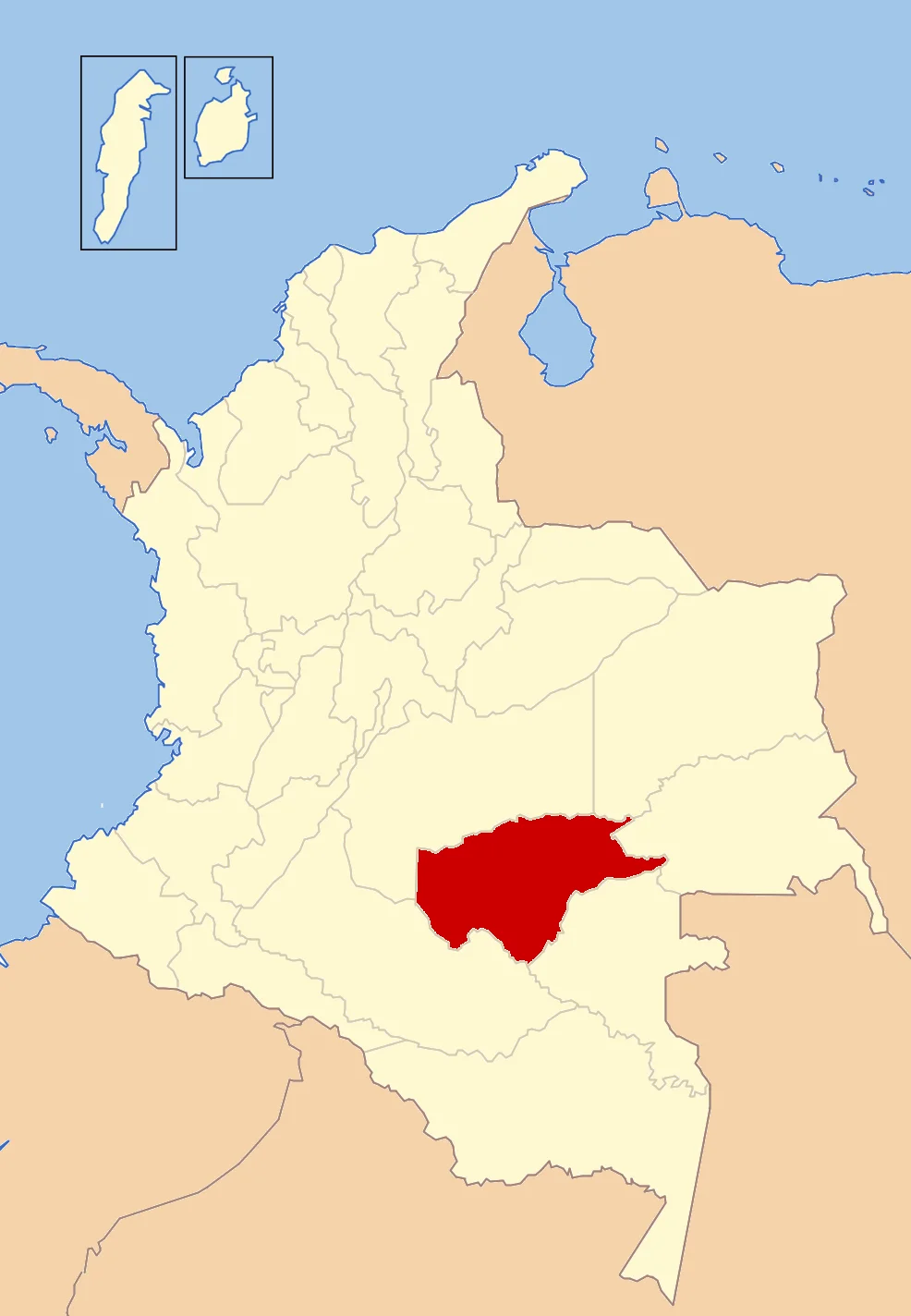
The rescue took place along the upper Apaporis River in Guaviare Department at 2.30°N, 72.05°W. This is deep Amazonian jungle - flat, tropical rainforest interrupted by meandering rivers. The nearest significant airport is San José del Guaviare (SKSJ), 250 km to the west. The landing zone was a small clearing cut into continuous canopy. Standard Amazonian weather - morning clarity, afternoon thunderstorms - would have concerned planners; the operation was timed for the mid-morning window.
Nearby Stories
- La Macarena 153 km away
- Villavicencio 215 km away
- Great Depression in Latin America 280 km away
- Une 307 km away
- Tariana people 311 km away
- San Agustín culture 430 km away
- Cuyabeno Wildlife Reserve 503 km away
- Orinoco Basin 587 km away