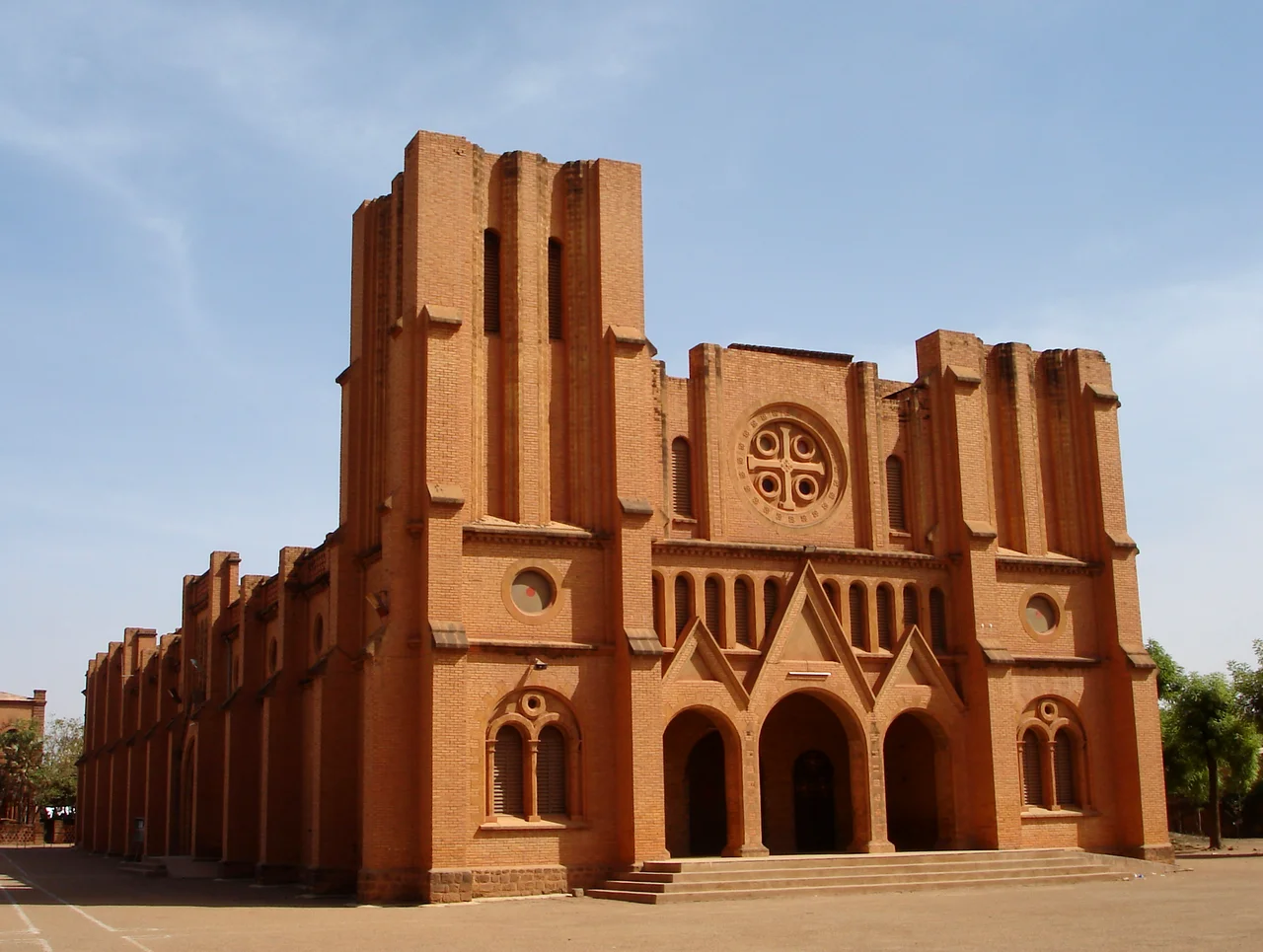

Ouagadougou
Locals don't bother with the full four syllables - to them it's just Ouaga, said with the easy affection of people who love where they live. Land here and the first surprise is the order of the place: a grid of streets, traffic lights that drivers actually obey, and a calm that catches first-time visitors to a West African capital off guard. The airport sits barely two kilometers from the United Nations roundabout at the city's heart, so you are downtown almost before you have finished negotiating your taxi fare.
Getting In and Around
Most travelers arrive at Ouagadougou's international airport, gateway for Air Burkina and for direct flights to Paris, Brussels, and East African hubs like Nairobi and Addis Ababa. A twice-weekly Sitarail train connects Bobo-Dioulasso to Ouagadougou - the onward link to Abidjan has not carried passengers for many years, so that leg requires a bus or shared taxi. Once in town, the green taxis are your workhorses: cheap, ubiquitous, shared, and entirely unmetered, so settle the price before you climb in. A short daytime run on a main road should run a few hundred CFA francs per person; rides at night, or to and from the airport, cost more, and drivers will quote foreigners high. Be friendly, be firm, and negotiate.
The Friday Ceremony
The single must-see costs nothing and lasts a quarter of an hour. Every Friday at 07:00, at the Moro-Naba palace in the center of town, the Mossi emperor performs a ceremony unchanged for centuries: appearing in red as if for war, then in white for peace, reenacting a legend of a king persuaded to spare a rival who had wronged him. Arrive early and quietly - this is a living tradition, not a show staged for visitors. It is one of the few places on Earth where you can watch a reigning monarch hold court in a ritual older than most of the world's current borders.
Markets and Makers
Ouaga rewards browsers. The Village Artisanal is the easy win - an open-air craft compound where you can buy bronze, leather, and textiles from a huge selection, with a shady café in the courtyard and far less hassle than the street. The Central Market, rebuilt after a 2003 fire, is still the place for textiles, while Gounghin Market is good fun for fabric and fruit. If your timing aligns, the SIAO craft fair fills ten days every even-numbered year and draws artisans from across the continent. Keep your wits at the Grand Marché, where touts and pickpockets work the crowds - go with a local if you can.
Eat, Drink, Linger
Street food is the cheapest joy here: a plate of rice and beans (benga), riz gras, or tofu brochettes for pocket change, with peanuts, dates, and dried mango sold on nearly every corner. For a sit-down meal, the city punches above its weight - Italian pizza places, Lebanese tables along Kwame Nkrumah Avenue, vegan spots near the pharmacies, and African restaurants in the leafy Zone du Bois. Café Zaka brings live bands most nights. The French Cultural Centre hosts concerts and theater and keeps an air-conditioned library where you can cool off with a newspaper. Ouaga is hot, dusty, and unhurried - and far more welcoming than its remoteness suggests.
From the Air
Ouagadougou lies at 12.369°N, 1.527°W, around 300 meters above sea level on the Sahelian plateau. Thomas Sankara International Airport (ICAO: DFFD; IATA: OUA) sits just south of the city center, under two kilometers from the Place des Nations Unies. The rainy season runs June to September; the rest of the year is hot and dry, with harmattan dust hazing the skies from December to March. The cooler months from November to February are the most comfortable for visiting.
Nearby Stories
- Republic of Upper Volta 13 km away
- Koudougou 32 km away
- Kaya 72 km away
- Tenkodogo 84 km away
- Yacouba Sawadogo 103 km away
- Gwollu Defence Wall 128 km away
- Royal Court of Tiébélé 145 km away
- Dori, Burkina Faso 189 km away