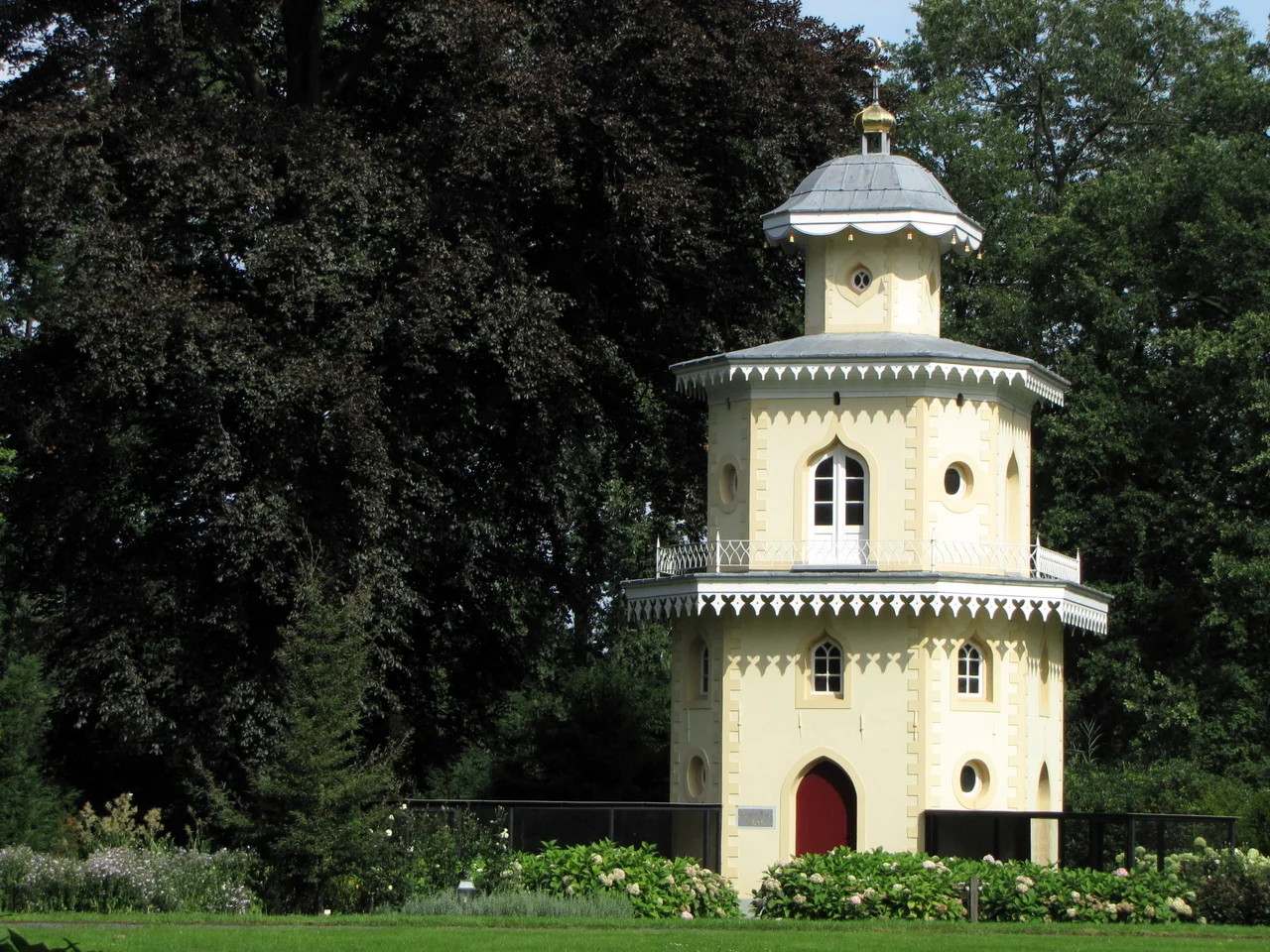

Oude IJsselstreek
Varsseveld is not a place you would expect to produce a global football manager. It is a village in the eastern Netherlands, surrounded by pasture and small towns, with a population that comfortably knows itself. And yet Guus Hiddink was born here in 1946. He went on to coach the Netherlands, South Korea, Australia, Russia and Chelsea, and his name now belongs to football history. The municipality that contains Varsseveld, Oude IJsselstreek, is a place that turns out unexpected people the way some places turn out apples. Olympic rowers, cyclists, a volleyball player, a baroness of Courland, the pilot of a famous wartime bomber. The list keeps going.
Iron in the Ground
Oude IJsselstreek was born administratively on 1 January 2005, when the former municipalities of Gendringen and Wisch merged into a single entity covering fifteen population centers. But long before that paperwork, what tied this stretch of the river Oude IJssel together was iron. The soil here is laced with bog iron, and from the medieval period onward people dug it up and smelted it. The largest of the local foundries was DRU, short for Diepenbrock en Reigers te Ulft, which became one of the great Dutch makers of cookware and stoves. DRU stopped production in Ulft in 1999. Rather than let the buildings rot, the municipality reopened them in 2009 as the DRU Industriepark, now a theater, library, vocational school, and the meeting place where the council itself holds its sessions.
The Three Bodies of a Municipality
Geographers describe Oude IJsselstreek as three distinct things stitched together. There is the urban belt along the river: Ulft on one bank with its ten thousand residents, Gendringen and Etten near it, Silvolde and Terborg on the opposite shore. Terborg is the only place in the municipality with formal city rights, an inheritance of medieval charter, even though Ulft is now larger. East of all this sits Varsseveld, the principal village of the rural interior. And around the edges lie the external villages, small clusters in fields. The merger of 2005 was meant to give these communities a single voice; the municipality now plans to make Ulft the practical center.
The Hiddink Effect
Guus Hiddink left Varsseveld as a young man, played more than three hundred club matches, then became one of the most well-traveled football managers of his generation. He took the Netherlands to a World Cup semifinal in 1998, did the same for South Korea on home soil in 2002, and qualified Australia for the 2006 World Cup. His cousin Rene Hiddink, who grew up in the same village, also became a football coach. Hans Westerhof of Terborg coached too. The municipality's roster of athletes is striking for a place of this size: Robert Gesink the cyclist from Varsseveld, Koen Bouwman from Ulft, the 800-meter runner Bram Som from Terborg, the volleyball player Lonneke Sloetjes from Varsseveld, the handballer Dione Housheer from Gendringen. The Olympic rower Herman Suselbeek of Silvolde took silver in 1968.
An Aristocrat Born in Terborg
Long before the football era, Terborg produced its own kind of celebrity. Countess Sophie Amalie of Nassau-Siegen was born here in 1650 and grew up to become, by marriage, the Duchess consort of Courland, a small but real Baltic duchy now divided between Latvia and Lithuania. Her brother, William Maurice, Prince of Nassau-Siegen, was born in Terborg in 1649. The Eighty Years' War sent another local son into history: Frederik van den Bergh, born in Ulft in 1559, served as a soldier in the long Dutch struggle against Spanish rule. And in 1943 the village of Klein-Netterden, on the edge of the municipality, became the place where Henry Eric Maudslay died. He was a pilot with No. 617 Squadron, the British dam-busters, killed during one of the war's most famous raids.
A Member of the Iron Ring
Oude IJsselstreek belongs to the Ring of the European Cities of Iron Works, a federation of former industrial towns that recognize a shared inheritance of foundries and forges. The municipality hosted the ring's annual convention in 2010. The choice was apt. Few places have done a better job of turning a closed factory into a living public building than the DRU Industriepark. Council meetings now happen in the same halls where molten iron once poured. Children attend vocational classes a few meters from where their grandparents made stoves. The Oude IJssel runs past, perfect for kayaking, lined with churches and windmills in the villages strung along its banks.
From the Air
Coordinates 51.87N, 6.38E. The municipality straddles the lower Oude IJssel river just before it joins the IJssel near Doesburg. From the air look for the curving river, the cluster of villages along it (Ulft, Gendringen, Terborg, Silvolde), and the larger town of Doetinchem just to the northwest. Nearest airports are Niederrhein (EDLV, ~30 km southwest) and Münster-Osnabrück (EDDG, ~85 km east). Düsseldorf (EDDL) is about 80 km south.
Nearby Stories
- Wittenborg University of Applied Sciences 0.7 km away
- Gronau, North Rhine-Westphalia 0.9 km away
- Vetera 5 km away
- 2009 CPISRA Football 7-a-side International Championships 6 km away
- Gerleve Abbey 14 km away
- Arena AufSchalke 14 km away
- Sallandse Heuvelrug National Park 15 km away
- Volkel Air Base 19 km away