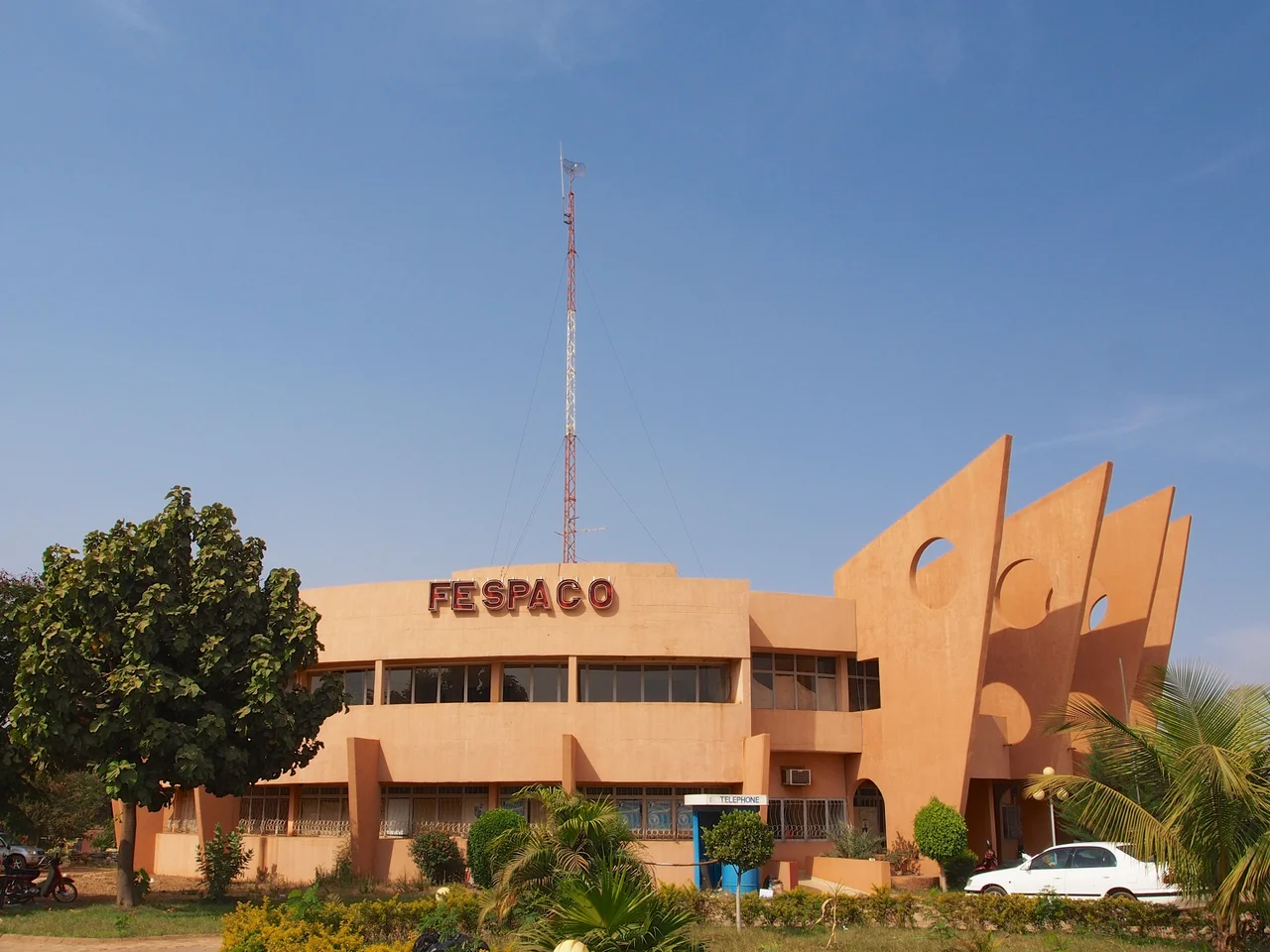

FESPACO: The Panafrican Film and Television Festival of Ouagadougou
The grand prize of Africa's biggest film festival is a stallion - cast in gold, named for a woman who, by legend, rode out of her father's kingdom a thousand years ago and founded a dynasty. The Étalon de Yennenga honors Princess Yennenga, the mythical mother of the Mossi people, and to win it is to be named the finest film on the continent. It is awarded in Ouagadougou, a city better known for drought and political upheaval than for red carpets - which is exactly what makes FESPACO so remarkable.
Born at Another Festival
FESPACO began, fittingly, at the movies. In 1969, at the Carthage Film Festival in Tunis, a group of African filmmakers and cinephiles resolved to build something of their own - a festival on African soil, for films made by Africans, about Africa. That same circle helped found the Pan African Federation of Filmmakers the following year. The new event took the name Festival Panafricain du Cinéma et de la Télévision de Ouagadougou, shortened to FESPACO at its third edition in 1972 and recognized as a formal institution by government decree that same year. From a single gathering of idealists, it grew into the main event of African cinema.
The Golden Stallion
In 1972 the festival established its highest honor, the Étalon de Yennenga - the Stallion of Yennenga - for the film most powerfully representative of African identity and African realities. The first winner was Le Wazzou Polygame by Oumarou Ganda of Niger. In the decades since, the golden stallion has gone to directors from Cameroon, Morocco, Mali, Nigeria, Ivory Coast, Algeria, Burkina Faso, Ghana, and the Democratic Republic of the Congo - a roll call that maps the breadth of a cinema the wider world too often overlooks. There are other prizes too: the Oumarou Ganda Prize for a director's first film, and the Paul Robeson Prize, named for the great American actor and activist, for filmmakers of the African diaspora.
A Festival That Endures
FESPACO runs biennially, opening with a ceremony in the national stadium, the Stade du 4-Août, and filling the city's screens with films that might never reach a multiplex elsewhere. Its stated mission is plainspoken: to expand and develop African cinema as a means of expression, education, and awareness. Sponsors and partners have included UNESCO, UNICEF, the European Union, and a string of donor governments, and in 2005 the festival opened a permanent headquarters near the African Cinematheque. Burkina Faso's turbulent politics have left their mark - a 2022 coup and the unrest around it cost the festival two downtown screening rooms - yet the festival has gone on. The 2025 edition was its twenty-ninth.
Ouagawood
Hollywood gave the world a template, and the world gave it back in pieces: Bollywood in Mumbai, Nollywood in Lagos. Ouagadougou got its own coinage too - 'Ouagawood,' first floated by a BBC journalist around 2011 to describe the African film industry that gathers here every two years. The nickname never really stuck, and perhaps that is for the best. FESPACO has never been an imitation of anywhere else. For more than half a century, in a landlocked Sahelian capital that the global film business might otherwise ignore entirely, it has insisted that African stories deserve their own stage, their own audience, and their own golden stallion.
From the Air
FESPACO is centered in Ouagadougou, Burkina Faso, near 12.364°N, 1.536°W, with opening ceremonies at the Stade du 4-Août. The city sits at roughly 300 meters elevation on the Sahelian plateau, served by Thomas Sankara International Airport (ICAO: DFFD; IATA: OUA) just south of the center. The festival is held biennially in late February and early March - the heart of the dry season, when harmattan haze can soften the light but the weather stays reliably clear.
Nearby Stories
- Republic of Upper Volta 13 km away
- Koudougou 32 km away
- Kaya 72 km away
- Tenkodogo 84 km away
- Yacouba Sawadogo 103 km away
- Gwollu Defence Wall 128 km away
- Royal Court of Tiébélé 145 km away
- Dori, Burkina Faso 189 km away