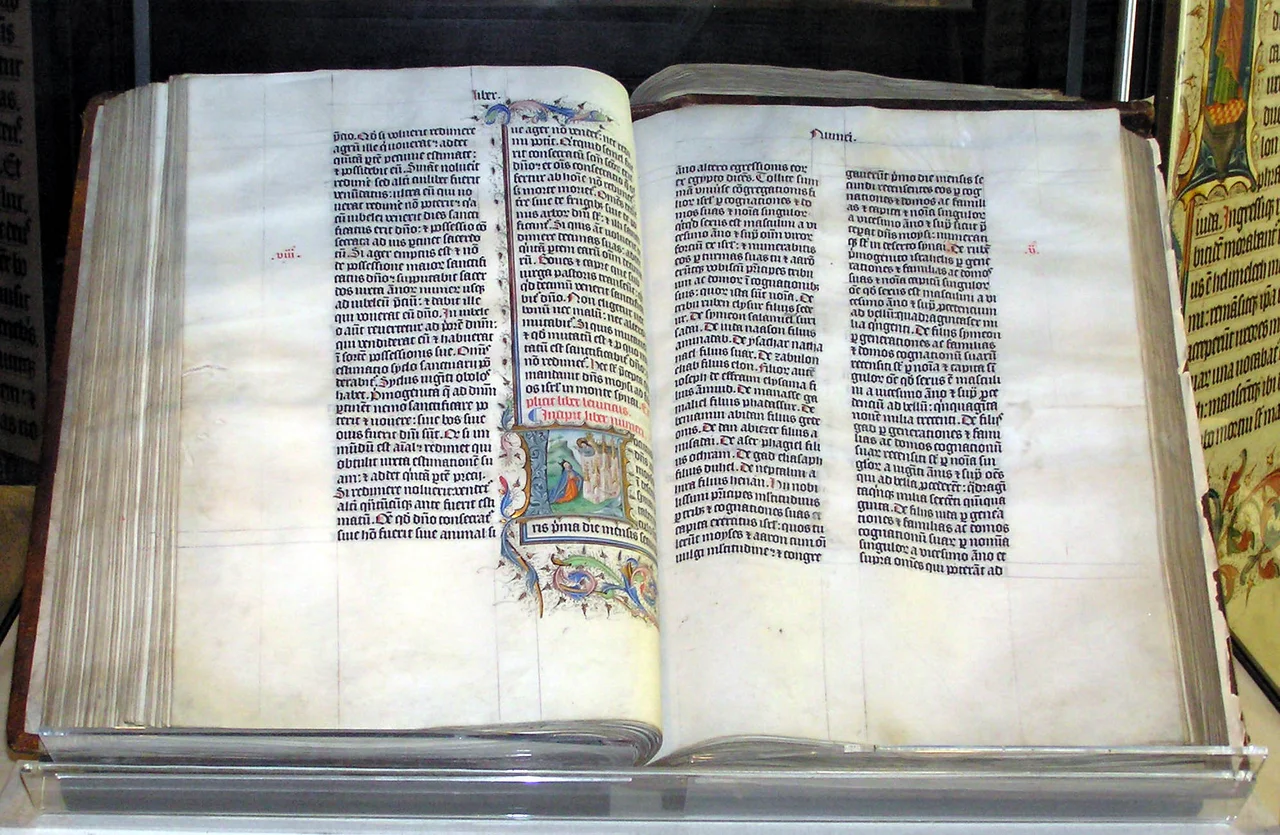

Pauline Epistles
Somewhere around AD 53, a letter arrived in Corinth. The city was a booming Roman port at the hinge of two seas, loud with the commerce of the Aegean and the west, home to a congregation that Paul had founded during an eighteen-month stay and then left. The congregation had grown difficult. There were factions, lawsuits among members, disputes about food sacrificed to idols, and troubling questions about the resurrection. Paul wrote back from Ephesus. His letter — First Corinthians — runs to sixteen chapters and contains, in its thirteenth, one of the most celebrated passages in any language: 'If I speak in the tongues of mortals and of angels, but do not have love, I am a noisy gong or a clanging cymbal.'
Letters from the Road
Paul wrote his letters as a traveller, not a scholar settled at a desk. He moved between cities — Corinth, Ephesus, Philippi, Rome — planting congregations and then maintaining them from a distance. The letters were his way of being present when he could not be. Most scholars today accept that Paul himself wrote seven of the thirteen letters attributed to him in the New Testament: Galatians (around 48–55 AD, with scholars divided between early and late datings), First Thessalonians (around 49–51), First Corinthians (around 53–54), Second Corinthians (around 55–56), Romans (around 55–57), Philippians, and Philemon. These seven form the core of the Pauline corpus. The remaining six — including the pastoral letters to Timothy and Titus — are disputed, with most scholars considering three of them pseudepigraphic: written in Paul's name by followers after his death, a common practice in antiquity.
The City That Received Two Letters
Corinth mattered to Paul more than almost any other city. He had lived there longer than anywhere else in his missionary journeys, working as a tentmaker alongside Priscilla and Aquila, arguing in the synagogue, and eventually establishing a house church. When conflict broke out in the congregation after he left, he did not abandon it — he wrote twice (at least twice; he references an earlier letter now lost, suggesting at least three and possibly four letters to Corinth in total). First Corinthians confronts a community tearing itself apart over status, spiritual gifts, and ethics. Second Corinthians is rawer, more personal — Paul defending his own authority, describing the sufferings of his mission, and pressing the congregation to renew its commitment. Together the two letters reveal a specific, quarrelsome, deeply human early Christian community in a specific city.
The Secretaries Behind the Letters
Paul did not always write his own letters in the physical sense. Several of the epistles include a note in which the scribe identifies himself — Tertius, for example, sends greetings in Romans 16:22. Scholars have argued that Paul likely dictated to secretaries, partly because biographic details in the letters suggest he may have had impaired vision or a physical disability that made sustained writing difficult. The question of who these secretaries were, and what creative role they played in shaping the letters, has become significant in recent scholarship. Historian Candida Moss has argued that the secretaries who produced early Christian texts — some of them enslaved people — played a formative but largely uncredited role in the production of texts that would shape Western civilisation. The letters attributed to Paul were, in a real sense, collaborative works.
How the Letters Were Gathered
The letters circulated individually before someone assembled them. Scholar David Trobisch has argued that Paul himself likely collected his letters for wider distribution — letter writers of the era routinely kept copies of their correspondence, and a collection of Paul's letters appears to have circulated separately from other early Christian writings before eventually being incorporated into the New Testament canon. The ordering in the New Testament is not chronological but by length, from the longest to the shortest, with the letters to congregations placed before those to individuals. The only anomaly: Galatians comes before the slightly longer Ephesians. The consistency of this arrangement across the manuscript tradition is striking.
Letters That Outlasted the Empire
What Paul wrote to small, embattled congregations in mid-first-century Roman provincial cities became the theological foundation for Christianity's expansion across continents and centuries. The logic of grace over law developed in Galatians and Romans; the account of the Eucharist in First Corinthians 11, which is the oldest surviving description of that ritual; the passage on charity in First Corinthians 13; the resurrection argument in First Corinthians 15 — all of these were composed in the language of the eastern Mediterranean's commercial world, addressed to specific communities with specific problems, and proved to be permanent. The Corinthians themselves were noisy gongs and clanging cymbals, by Paul's own account. The letter he sent them is still read.
From the Air
The Pauline epistles are anchored geographically to Corinth, located at approximately 37.933°N, 22.917°E in the northeastern Peloponnese. From the air, ancient Corinth's setting is striking: the limestone citadel of Acrocorinth rises sharply to the south while the flat coastal plain stretches between the Gulf of Corinth and the Saronic Gulf. The Apostle Paul sailed from Kenchreai (the eastern harbour, visible to the southeast) and arrived originally at Corinth's western port of Lechaion on the Gulf of Corinth to the northwest. Nearest major airport: LGAV (Athens International Eleftherios Venizelos), approximately 70 km to the northeast. Recommended viewing altitude: 4,000–6,000 feet to appreciate the isthmus, both gulfs, and Acrocorinth in a single view.
Nearby Stories
- Stymfalia 3 km away
- Sanctuary of Asclepius, Epidaurus 4.6 km away
- German Submarine U-133 (1941) 5.9 km away
- Battle of the Trench (1821) 6.7 km away
- 1981 Gulf of Corinth Earthquakes 12 km away
- Aigeira 13 km away
- Agios Thomas, Boeotia 14 km away
- Agios Georgios (island) 36 km away