.JPG)
Penlee lifeboat disaster
Trevelyan Richards. Stephen Madron. Nigel Brockman. John Blewett. Charles Greenhaugh. Kevin Smith. Barrie Torrie. Gary Wallis. Those are the names. Eight men from a Cornish fishing village - the coxswain, the second coxswain, the mechanic, the assistant mechanic, the crew - who launched the Royal National Lifeboat Institution's Solomon Browne into the worst storm to hit the south-west in living memory on the evening of 19 December 1981. They were volunteers. They left wives and children waiting in cottages along the harbour at Mousehole, and they went out because a ship called Union Star was being blown helpless across Mount's Bay toward the rocks. They got four people off. Then the lifeboat's lights vanished from the radar, and from the night, and they were gone.
The Union Star
The MV Union Star was a mini-bulk carrier registered in Dublin, on her maiden voyage from IJmuiden in the Netherlands to Arklow in Ireland with a cargo of fertiliser. Aboard were five crew - Captain Henry Morton, Mate James Whittaker, Engineer George Sedgwick, and Crewmen Anghostino Verressimo and Manuel Lopes - and three more souls: Morton's wife Dawn and his teenage stepdaughters Sharon and Deanne, sailing with him. Eight miles east of the Wolf Rock, on the south coast of Cornwall, her engines failed. The crew could not restart them. They did not, at first, make a mayday call. The wind was gusting to 90 knots - hurricane force 12 on the Beaufort scale - and the waves were running sixty feet high. The powerless ship was blown across Mount's Bay toward the rocks of Boscawen Cove, near Lamorna.
Rescue 80
The coastguard at Falmouth summoned Royal Navy helicopter Rescue 80 from RNAS Culdrose - a Sea King of 820 Naval Air Squadron flown by Lieutenant Commander Russell Smith, an American on secondment from the United States Navy, with Lieutenant Steve Marlow, Sub-Lieutenant Kenneth Doherty, and Leading Aircrewman Martin Kennie of the Royal Navy. They arrived over the Union Star and tried to winch the people off. The wind would not let them. The downwash from the rotors was meaningless against gusts that made the helicopter itself buck and yaw. Smith later described what he then watched the lifeboat do as the greatest act of courage he had ever seen, or expected to see. The Solomon Browne, a Watson-class lifeboat capable of nine knots, had launched at 8:12 pm from the slipway at Penlee Point with Coxswain Trevelyan Richards and a hand-picked crew of seven.
Eight Men
Richards chose his crew that night with deliberate care. He did not take more than one man from any one family. Charles Greenhaugh was the landlord of the Ship Inn in Mousehole. Kevin Smith was twenty-three, the youngest, only weeks back from sea. Nigel Brockman's son, Neil, wanted to come and was told no - Richards put him back ashore. Stephen Madron was the second coxswain. John Blewett worked at the telephone exchange. Barrie Torrie was a fisherman. Gary Wallis was twenty-three. Trevelyan Richards himself was the coxswain, leading the boat in seas that nobody alive had seen run that high in Mount's Bay. The Solomon Browne went out, manoeuvred alongside the helpless Union Star in seas breaking sixty feet over both vessels, and rescued four people. The lifeboat was bashed onto the casualty's hatch covers and bounced clear. "We got four... off," came the radio call from Richards, "male and female. There's two left on board." That was the last anyone heard. Ten minutes later the lights of the Solomon Browne went out.
The Other Lifeboats
Word went up the coast. The Sennen Cove Lifeboat tried to round Land's End to help and could not make headway. The Lizard Lifeboat came out into Mount's Bay and searched in vain; when she finally returned to her slipway there was a serious hole in her hull. Every soul aboard the Union Star died. Every man of the Solomon Browne's crew died. Sixteen people in total, including the eight lifeboatmen and the eight aboard the ship. The Union Star eventually washed onto the cliffs near Tater Du. Bodies came ashore for weeks. The Solomon Browne was never properly recovered - smashed to pieces on the same rocks the lifeboat had tried to save the Union Star from. The villages of Mousehole and Newlyn lost generations of fathers, husbands, brothers, sons in a single night.
The Lights of Mousehole
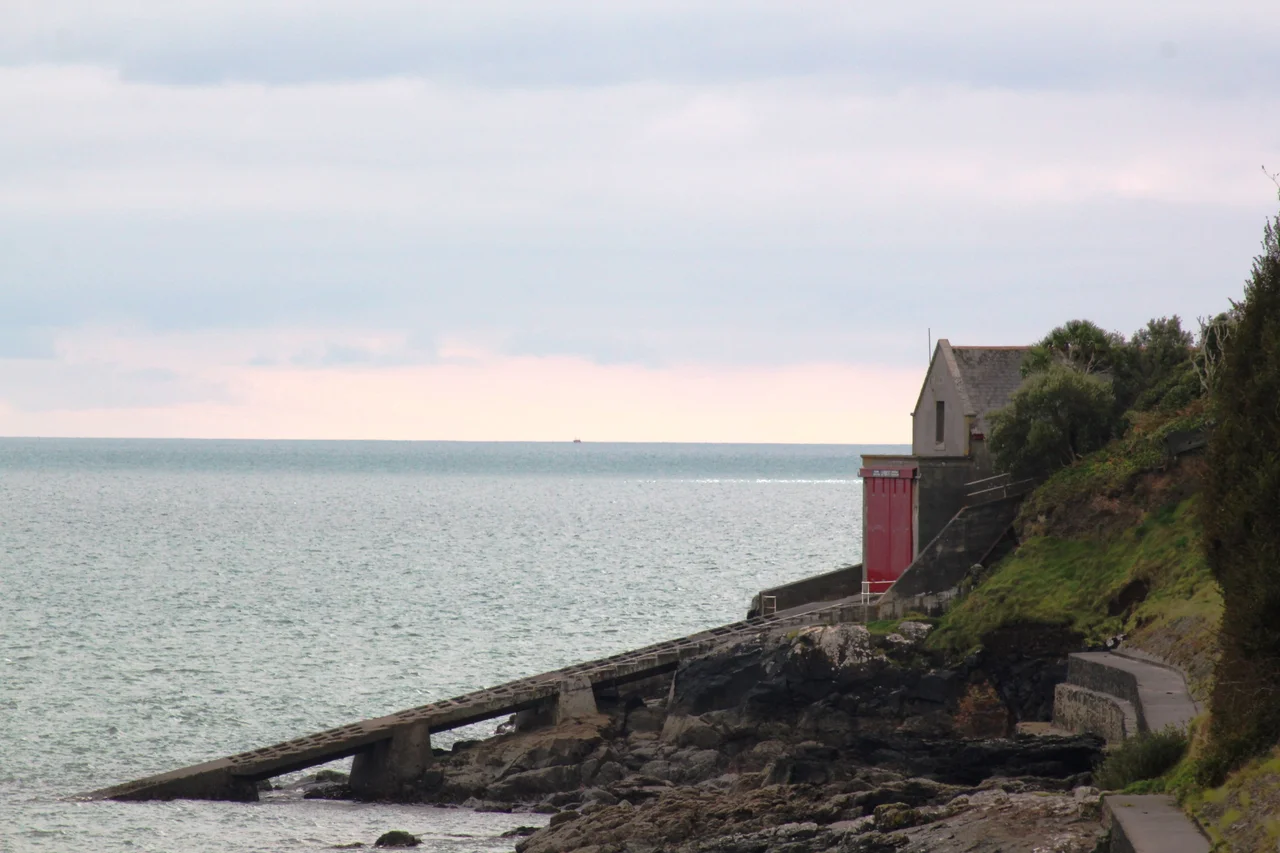
The British public's response was immediate and overwhelming. Donations poured in for the families - so many that when the government initially tried to tax them, the outcry was furious enough to force a reversal. Mousehole, famous for its harbour Christmas lights, has switched them off every 19 December since at 8:00 pm for one hour as an act of remembrance. The old boathouse at Penlee Point with its slipway is kept exactly as it was on the night the Solomon Browne launched - unchanged, unused. In 1985 a memorial garden was built beside it, names cut into the stone. Songs were written - Seth Lakeman's "Solomon Browne," the brass band test piece "Penlee" by Simon Dobson, Craig Weatherhill's "The Boys of Penlee" ending with the sailors' hymn line: For those in peril on the sea. In 2019 Great Western Railway named a train RNLB Solomon Browne with all eight names carried along its flank. A football stand at Mousehole FC bears the same name. The current lifeboat station, moved to Newlyn after the disaster, has launched into Mount's Bay every storm since, crewed by volunteers, including the sons and grandsons of the men who did not come back.
From the Air
Penlee Point (50.07 N, 5.55 W) and the wreck site near Boscawen Cove (50.05 N, 5.58 W) sit on the western shore of Mount's Bay near the village of Mousehole. Land's End airfield (EGHC) is 6 nm west; Newquay (EGHQ) is 27 nm to the north. RNAS Culdrose, from which Rescue 80 launched, lies 7 nm to the east-northeast near Helston. From 2,500 feet the old Penlee boathouse is visible at the headland between Mousehole and Lamorna Cove, set above its concrete slipway and now preserved as a memorial. The current lifeboat station is at Newlyn, a couple of miles to the north. The memorial garden beside the old boathouse and the small slate marker stones can be picked out by experienced eyes. South-westerly gales in winter are common; on the night of the disaster, winds reached hurricane force with sixty-foot seas in this same water.
Nearby Stories
- Seven Stones Reef 7.8 km away
- Lost Gardens of Heligan 8 km away
- Great Wheal Charlotte 15 km away
- SS Georgia (1890) 21 km away
- Caerhays Castle 26 km away
- SS Irma (1905) 34 km away
- 1979 Fastnet Race 77 km away
- HMS Affray 101 km away