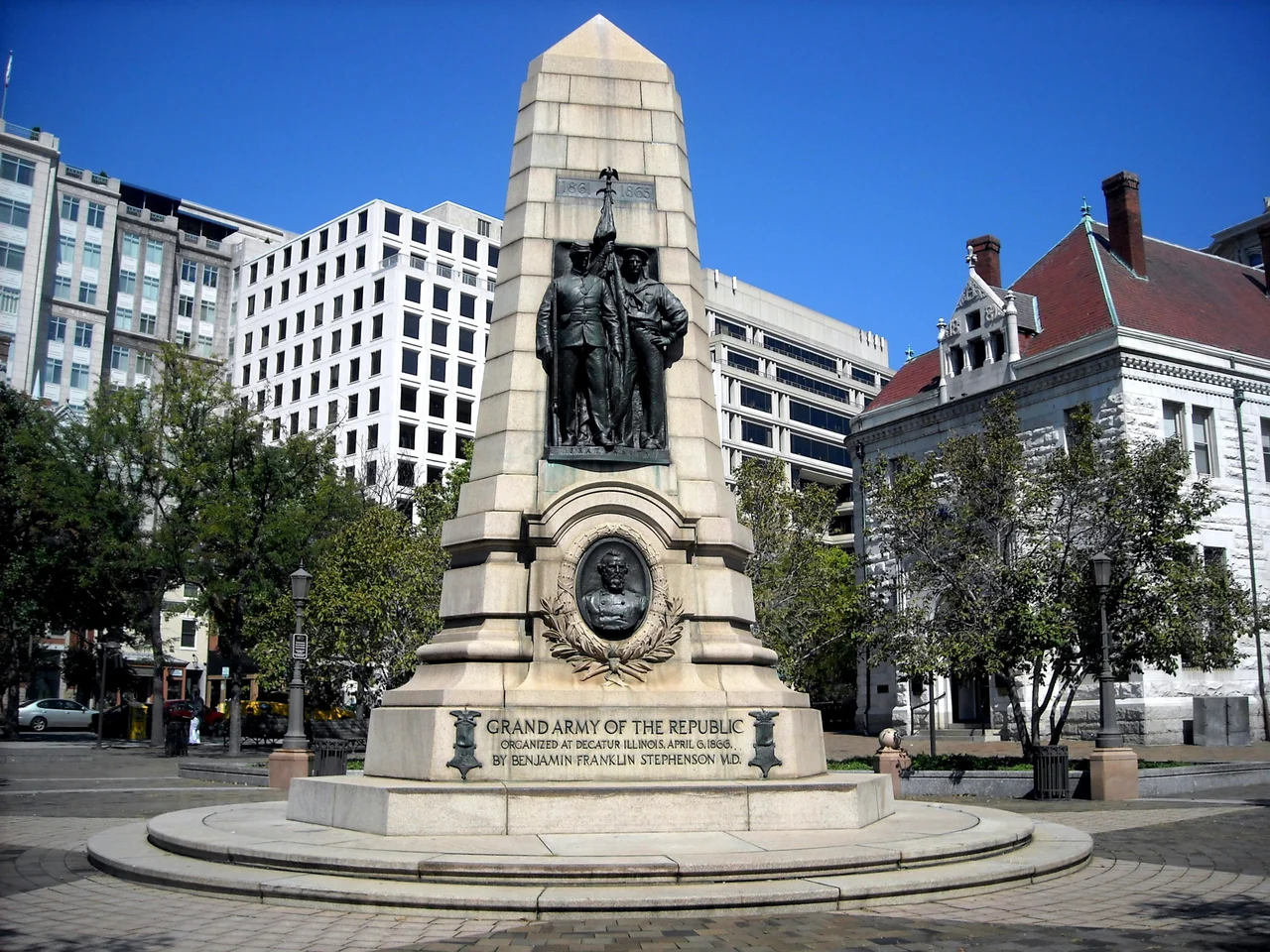

Penn Quarter
On the night of April 14, 1865, John Wilkes Booth walked into Ford's Theatre at 10th and F Streets NW, climbed to the presidential box, shot Abraham Lincoln in the back of the head, leapt to the stage shouting Sic semper tyrannis, and fled east through the alley behind the theater that now bears his name. Lincoln was carried across the street to William Petersen's boardinghouse and died there the next morning at 7:22 a.m. The streets where these events unfolded were, in 1865, the commercial heart of Washington - a dense neighborhood of theaters, hotels, restaurants, and the federal General Post Office building two blocks east. For most of the century after Lincoln's death, that heart slowly stopped beating. By the 1970s, the blocks around Ford's Theatre were one of the deadest commercial districts in any major American city - shuttered storefronts, empty offices, no pedestrians after 5 p.m. The neighborhood that emerged in the 1990s and 2000s, now called Penn Quarter, is one of the most successful downtown revivals in the country.
PADC's Plan
The Pennsylvania Avenue Development Corporation, created by Congress in 1972 after the abandonment of the demolition-heavy Pennsylvania Avenue plans of the 1960s, drafted a Pennsylvania Avenue Plan that called for a mixed-use neighborhood. The plan required new buildings to be developed and historic structures to be renovated for residences, theaters, cultural venues, shops, and restaurants. Hotels and office buildings were allowed only if they included ground-floor retail framing new parks, plazas, and upgraded pedestrian sidewalks along the Avenue. PADC began on the western end, around the FBI Building and east. The Willard Intercontinental Hotel was renovated and expanded between 14th and 15th Streets. National Place, including the renovated National Theater and the JW Marriott Hotel, rose between 13th and 14th. The 1001 Pennsylvania Avenue office building incorporated multiple historic structures. Pershing Park and Freedom Plaza were created or rebuilt. East of the FBI - in what is now properly Penn Quarter - PADC created Market Square Park around the U.S. Navy Memorial between 7th and 9th Streets, and John Marshall Park near the Canadian Embassy.
Lansburgh's and the Shakespeare
The most consequential single redevelopment within Penn Quarter was the conversion of Lansburgh's department store - which had occupied a full city block at 7th and E Streets since 1916 before closing in the 1970s - into a residential complex with a theater on the ground floor and retail along the street. The theater became home to the Shakespeare Theatre Company, an internationally recognized Shakespearean repertory company that anchored cultural activity in the neighborhood. The Harman Center for the Arts, completed in 2007 a block away, added Sidney Harman Hall as a second performance space. The Woolly Mammoth Theatre Company, founded in 1980, moved into new space on D Street NW in 2005. Three major theaters within walking distance of each other now anchor evening foot traffic that had simply not existed thirty years earlier. The neighborhood's other anchors include the National Portrait Gallery and Smithsonian American Art Museum (in the Old Patent Office Building) and the National Building Museum at Judiciary Square.
The Verizon Center
The single biggest catalyst for the neighborhood's revival was the opening of what is now Capital One Arena - originally MCI Center - on December 2, 1997. Sports developer Abe Pollin moved the Washington Capitals and Washington Wizards downtown from the suburban Capital Centre in Landover, Maryland. The arena anchored the neighborhood with approximately 200 events per year - basketball, hockey, concerts, college tournaments - and drew tens of thousands of visitors into a part of downtown that had previously generated zero evening foot traffic. The blocks surrounding the arena revitalized rapidly through the late 1990s and early 2000s, with restaurants and bars opening to serve game-day crowds, then staying open because the neighborhood was suddenly worth visiting at night. The Urban Land Institute recognized PADC and the Market Square development for their work. Penn Quarter became a national model that other cities studied when planning their own downtown revitalizations.
The Booth and the Hoover
Penn Quarter holds an unusual concentration of monumental and infamous federal buildings. The J. Edgar Hoover Building, headquarters of the FBI, occupies a full block on Pennsylvania Avenue between 9th and 10th - one of Washington's least loved structures, a Brutalist concrete fortress completed in 1975. The U.S. Navy Memorial occupies Market Square. Ford's Theatre, restored as a working performance venue and National Park Service site, sits on 10th Street. Petersen House across the street operates as the Lincoln assassination museum. The Surratt House - the boardinghouse run by Mary Surratt, who was hanged in July 1865 as a conspirator in Lincoln's murder - operates today as the Wok 'n Roll Chinese restaurant at 604 H Street NW. The Calvary Baptist Church, founded in 1862 by Baptist congregants who sided with the Union during the Civil War, stands at 8th and H. The Canadian Embassy sits on Pennsylvania Avenue at 5th. The neighborhood holds, in unusually compact form, monuments to four centuries of Washington power.
Farmers' Market and Beyond
On Thursday afternoons in spring, summer, and fall, a farmers market operates on the F Street sidewalk between 7th and 9th Streets, in front of the National Portrait Gallery. The market reflects the larger neighborhood's transformation - 8,000 residents now live in the apartment buildings and condominiums that fill the blocks where commercial-only buildings stood through most of the twentieth century. The neighborhood is served by four Metro stations: Archives-Navy Memorial-Penn Quarter, Metro Center, Judiciary Square, and Gallery Place-Chinatown - the last of which marks the boundary with Chinatown, the smaller historic neighborhood that overlaps Penn Quarter's northeast corner. The Friendship Archway over H Street at 7th, dedicated in 1986, marks Chinatown's symbolic center. The Newseum stood at 6th and Pennsylvania from 2008 to 2019, before its sale to Johns Hopkins University. The Old Patent Office, Madame Tussauds, the Marian Koshland Science Museum, and the National Museum of Women in the Arts round out the cultural infrastructure. Penn Quarter went from dead to alive in about twenty years - and is still, by some measures, just getting started.
From the Air
Penn Quarter is centered approximately at 38.8964 N, 77.0228 W, in downtown Washington. Best viewed from 1,500 to 2,500 feet AGL. The Capital One Arena's distinctive rounded glass facade anchors the neighborhood's northwest corner; the FBI Hoover Building is a prominent Brutalist concrete block on Pennsylvania Avenue; the Old Patent Office complex (housing the National Portrait Gallery and Smithsonian American Art Museum) is the most architecturally distinctive central element. The U.S. Capitol dome lies a half mile southeast. Reagan National (KDCA) is three nautical miles south. The area is inside the Washington Flight Restricted Zone; GA overflight prohibited.
Nearby Stories
- Gunston Hall 1.1 km away
- 2023 Baltimore Shooting 4.9 km away
- Battle of Middleburg 6.6 km away
- Crownsville Hospital Center 10 km away
- Battle of Loudoun Heights 13 km away
- First Battle of Rappahannock Station 20 km away
- Howard County, Maryland 21 km away
- Harriet Tubman Underground Railroad 50 km away