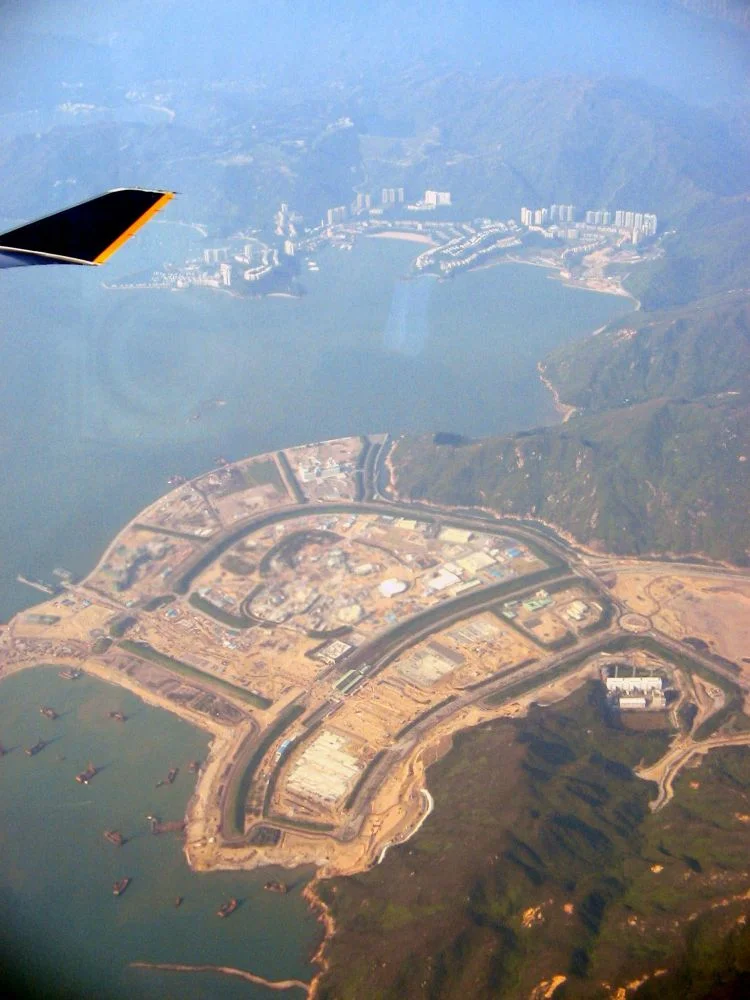

Penny's Bay
The ground beneath Hong Kong Disneyland was, not long ago, contaminated with dioxin. Before the rides and the hotels and the MTR station, Penny's Bay on the northeastern shore of Lantau Island was a working shipyard — Cheoy Lee Shipyard operated there from 1964 to April 2001. When the Hong Kong government acquired the land to build the territory's first Disney theme park, it discovered that decades of industrial operations had left 30,000 cubic metres of soil contaminated with dioxin, heavy metals, and hydrocarbons. The cleanup cost was estimated at HK$450 million. The government had not accounted for it at the time of acquisition.
A Port Since the Ming Dynasty
Long before the shipyard, long before the theme park, Penny's Bay — known in Cantonese as Chok Ko Wan — was a port. Records place it in use during the Ming dynasty, the period of Chinese imperial rule that stretched from the mid-14th to the mid-17th century. The bay's sheltered position on the northeastern shore of Lantau Island made it a natural stopping point for vessels working the Pearl River estuary. It is the kind of origin story that Hong Kong's landscape holds in many places: a geography of strategic harbours, fishing villages, and coastal trade that predates British colonisation by centuries, often invisible beneath the layers of what came after.
The Shipyard and What It Left Behind
Cheoy Lee Shipyard was one of Hong Kong's significant marine engineering firms, operating at Penny's Bay from 1964 through the end of the twentieth century. When the government acquired the land in the early 2000s for the sum of HK$1.48 billion — with an additional HK$22.7 million in compensation — it inherited a contamination problem that the acquisition price had not reflected. The contaminated soil was excavated, transferred to To Kau Wan on the north shore of Northeast Lantau for temporary processing, and ultimately incinerated at the Chemical Waste Treatment Centre on Tsing Yi Island. The incineration took place amid protests from Tsing Yi residents concerned about the disposal methods. The total remediation cost — HK$450 million — was in addition to the acquisition price, an expensive lesson in the hidden costs of industrial legacy.
The Dream That Replaced It
Hong Kong Disneyland opened in 2005 on the reclaimed bay, the result of a partnership between the Hong Kong government and The Walt Disney Company. The resort — which includes the theme park, Disneyland Hotel, and Disney's Hollywood Hotel, as well as Inspiration Lake — is connected to Sunny Bay station on the MTR by the Disneyland Resort line, a dedicated rail spur. The site is technically within Tsuen Wan District, with a small southern portion falling in Islands District. The transformation from shipyard to theme park required not just remediation but substantial land reclamation, reshaping the bay itself. What had been water became ground. The geography that Ming dynasty mariners navigated is now underneath a car park.
The Pandemic's Quarantine Camp
Between 2021 and 2023, Penny's Bay had one more chapter. During the COVID-19 pandemic, the government established a community isolation facility on the site — at one point requiring US arrivals to spend their first week of a mandatory 21-day quarantine there, regardless of vaccination or testing status. The facility had a total capacity of 1,916 people. In 2022, its use shifted to housing mild-symptom cases. Hong Kong's last remaining community isolation centre for COVID patients, it officially closed on 1 March 2023. The facility was a pragmatic response to a genuine public health emergency, but its location — on land that has hosted a Ming port, an industrial shipyard, a Disney resort, and a quarantine camp within living memory — is a reminder of how thoroughly and repeatedly Hong Kong reinvents its own landscape.
From the Air
Penny's Bay lies at approximately 22.3167°N, 114.0333°E on the northeastern shore of Lantau Island, adjacent to the Hong Kong Disneyland Resort. The Tsing Ma Bridge and Lantau Link are visible to the northeast, providing strong navigational landmarks. Hong Kong International Airport (VHHH) lies approximately 8–10 km to the southwest on the same island. Recommended viewing altitude 1,500–2,500 feet MSL for the Lantau coastline. The Disneyland Hotel and theme park structures are recognizable from the air; the MTR Disneyland Resort line spur is visible as it branches off from the main line near Sunny Bay.
Nearby Stories
- Lok Ma Chau Loop 2.3 km away
- Portas do Cerco 2.3 km away
- Kweilin Incident 17 km away
- Wanshan Archipelago Campaign 34 km away
- Nanxiong Formation 115 km away
- Battle of Nanpeng Island 148 km away
- Heyuan 169 km away
- Cape Maobitou 632 km away