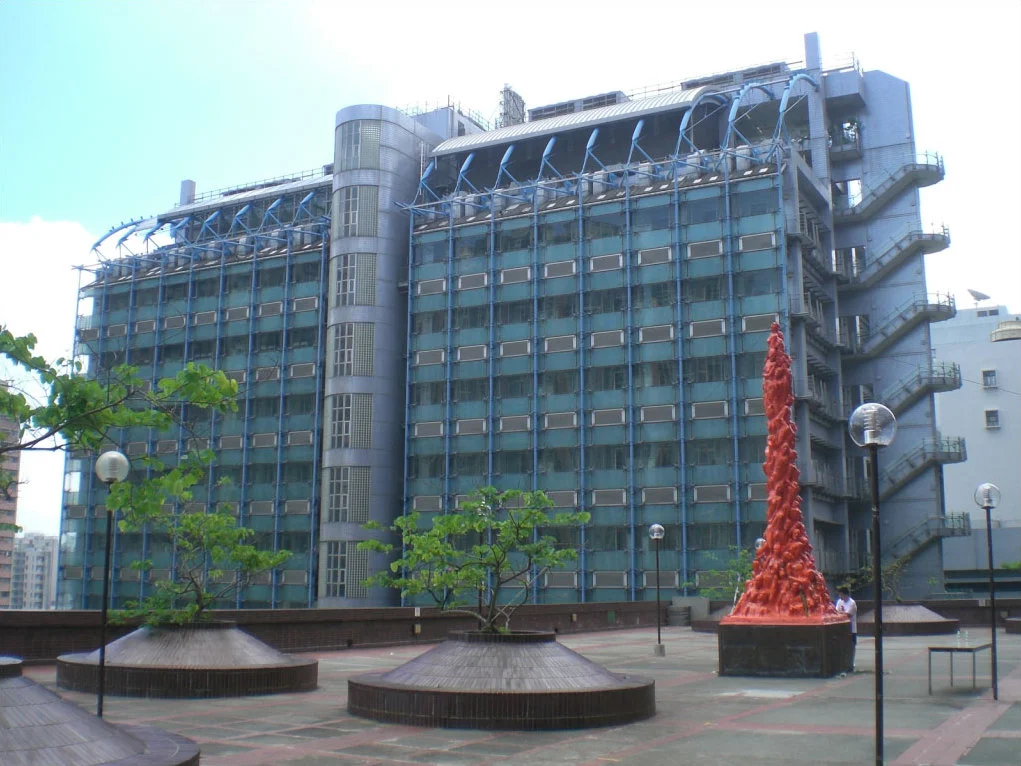

Pillar of Shame
At three in the morning on 4 June 1997, a group of Hong Kong university students moved a two-tonne copper sculpture onto the podium of the Haking Wong Building at the University of Hong Kong. They had spent the preceding hours at a candlelight vigil marking the eighth anniversary of the Tiananmen Square massacre, and when the vigil ended, they were not ready to let the memory disperse. The sculpture — a twisted pile of 50 human forms, bodies pressed together in agony and grief — had been created by Danish artist Jens Galschiøt for exactly this purpose: to make the event visible, to insist that it happened, to refuse the comfort of forgetting. The students carried it into place and it stayed for 24 years.
The Artist and the Sculpture
Jens Galschiøt is a Danish artist whose work has consistently engaged with human rights and political memory. The Pillar of Shame series began in 1996, when the first sculpture was inaugurated at the NGO Forum of the FAO summit in Rome. Each pillar is approximately eight metres tall, cast in bronze, copper, or concrete, and depicts a mass of torn and twisted human bodies. Galschiøt has described the work as a reminder of shameful events that must never recur. The torn bodies symbolise, in his framing, the degradation and devaluation of individual human life — the specific violence of a government turning on its own people. The Hong Kong version was a copper sculpture, first exhibited at Victoria Park on 3 June 1997, the eve of the eighth anniversary of the massacre in which the Chinese government deployed military force against pro-democracy demonstrators in Beijing. The number of people who died in that crackdown has never been officially disclosed by the Chinese government.
From Victoria Park to the University
The students who moved the sculpture that night in 1997 were acting without the university's permission. After scuffles with police and controversy with university leadership, they succeeded at 3 a.m. in getting the pieces onto the Haking Wong podium — though they could not assemble the full structure that night due to concerns about the floor's load-bearing capacity. The Pillar was re-erected on 16 June 1997. Over the following year, it toured six Hong Kong universities: the Chinese University of Hong Kong, Lingnan College, Hong Kong Baptist University, Hong Kong University of Science and Technology, Hong Kong Polytechnic University, and City University of Hong Kong. In September 1998, the Hong Kong University Students' Union held a formal vote on whether to make the placement permanent. Of 2,190 students who voted, 1,629 — nearly three-quarters — supported it. The Pillar was moved back to the Haking Wong Podium on 3 December 1998, where it remained on display for the next 23 years. Every year in May, the HKUSU and the Hong Kong Alliance in Support of Patriotic Democratic Movements of China held a silent tribute at the base.
A Decision in the Night
In October 2021, the University of Hong Kong formally requested that the Pillar be removed. The university was represented in the matter by law firm Mayer Brown, which subsequently withdrew from the case following pressure from 28 civil society groups and overseas intellectuals — though it retained the university as a client. No specific legal reason was cited in the removal request. The university's statement referred to the Hong Kong Alliance — the organisation that had maintained the sculpture — as "an external organisation" that had "publicly announced its disbandment." The Alliance had in fact dissolved under pressure from Hong Kong's National Security Law, enacted in 2020. Galschiøt urged the university to allow the statue to remain and expressed his hope to transport it out of Hong Kong "under orderly conditions." On 22 December 2021, the university blockaded the Pillar and the surrounding area. Near midnight, security guards and workers arrived with trucks and cranes. Journalists were blocked from approaching. By daylight on 23 December, the sculpture was gone. Within two days, the Chinese University of Hong Kong and Lingnan University had removed their own June 4th memorials.
Storage, Seizure, and What Remains
The university stated that the Pillar would be placed in storage at the Kadoorie Centre. In May 2023, Hong Kong's National Security Department seized the sculpture from that storage facility, reportedly for use as evidence in a subversion of state power case. Galschiøt, who had been denied entry to Hong Kong and so could not collect the work himself, expressed shock. He announced that he was relinquishing his commercial copyright over the sculpture — allowing anyone to make a copy, provided that all profits go to the Hong Kong pro-democracy movement. A replica was installed at the University of Oslo in May 2022. In March 2024, a smaller model was exhibited outside the European Parliament during debates on human rights in China and Hong Kong. On 4 June 2024, the 35th anniversary of the massacre, a 3D-printed replica was displayed in Taipei in front of the Chiang Kai-shek Memorial Hall. The words engraved on the base of the original sculpture — "The old cannot kill the young forever" — have continued to circulate.
What the Pillar Held
For 24 years, the Pillar of Shame at the University of Hong Kong was one of the only public memorials to the Tiananmen massacre in Chinese territory. Hong Kong's particular status — administered by China under the "one country, two systems" framework — had made it possible for the memorial to exist, and for tens of thousands of people to gather annually in Victoria Park on the anniversary of June 4th. The students who died in Beijing in 1989 were young people pressing for political participation and accountable government. They were met with armoured military force. The Pillar at HKU did not shout. It stood in a university courtyard, visited by students and curious passersby, present in the background of photographs, heavy with the knowledge of what it represented. Its removal in the dark of a December night, with journalists blocked from watching, was itself a kind of statement about what had changed in Hong Kong.
From the Air
The Pillar of Shame stood at the Haking Wong Building podium on the University of Hong Kong campus, Pok Fu Lam, Hong Kong Island, at approximately 22.2829°N, 114.1360°E. Victoria Park in Causeway Bay — where it was first exhibited and where annual June 4th candlelight vigils were held — is approximately 4 km to the east. Nearest major airport: Hong Kong International Airport (VHHH), approximately 25 km west. The University of Hong Kong campus occupies the mid-levels hillside above Pok Fu Lam Road; the main building's distinctive clock tower is a visual landmark from the harbour.
Nearby Stories
- Lok Ma Chau Loop 2.3 km away
- Portas do Cerco 2.3 km away
- Kweilin Incident 17 km away
- Wanshan Archipelago Campaign 34 km away
- Nanxiong Formation 115 km away
- Battle of Nanpeng Island 148 km away
- Heyuan 169 km away
- Cape Maobitou 632 km away