
Plataea
On a plain beneath Mount Cithaeron, in 479 BC, the allied Greeks broke the Persian army and ended the empire's dream of conquering the mainland. The battle took its name from the small city on whose soil it was fought: Plataea. For that single day the assembled Greeks swore a solemn oath to guarantee Plataea's freedom forever. It is one of history's bitter ironies that no city paid more dearly for being remembered. Over the next century and a half, Plataea would be razed, its people exiled, its survivors scattered, and its name invoked in courtrooms and propaganda, all because this tiny polis made one unshakable choice: it stood with Athens against its overbearing neighbor, Thebes.
A Small City Picks a Side
Plataea lay in Boeotia, hard against the Attic frontier, separated from mighty Thebes only by the river Asopus. Too small to resist Theban dominance alone, it sought protection from Sparta around 520 BC. The Spartans, Herodotus says, declined with cool pragmatism: they lived too far away, and Plataea could be enslaved many times over before help arrived. Better, they advised, to turn to nearby Athens. So Plataea did, and the alliance held with remarkable loyalty for the rest of the city's history. When the Persians landed at Marathon in 490 BC, Plataea alone sent a thousand men to fight beside the Athenians, sharing in a victory that became legend. A decade later, with the Persians swarming back into Greece, the Plataeans evacuated their families and watched their city burn before the great battle on their own plain delivered the country.
The Oath and Its Reward
Victory at Plataea brought the city honor and a sacred duty. The Greeks granted it 80 talents, used to build a temple to Athena, and charged the Plataeans with tending the tombs of the fallen warriors each year and celebrating the Eleutheria, a festival of freedom held every four years in honor of Zeus the Liberator. In return, the assembled Greeks swore to defend Plataea's independence. The oath did not survive the next war. When the Peloponnesian War erupted, Plataea's alliance with Athens marked it for destruction, and the very Spartans who had sworn to protect it would lead the siege that broke it. The temples Pausanias still saw in the 2nd century AD, to Hera, to Athena Areia, to Zeus Eleutherius, stood as monuments to promises that the powerful found convenient to forget.
Destroyed, Exiled, Rebuilt
What followed reads like a city sentenced to repeat the same loss. After the siege of 429 to 427 BC, the surviving defenders were executed, the women enslaved, and the buildings pulled down by Thebes. The exiles found refuge in Athens, which granted many of them citizenship. They were given the conquered town of Scione, then evicted from it, and returned to Athens again. The King's Peace of 387 BC let them rebuild their home, only for Thebes to expel them and raze the city once more around 373. Each cycle followed the same logic: whenever Plataea reached for Athens, Thebes struck. The wrongs were catalogued in a speech by the orator Isocrates, the Plataicus, delivered before the Athenian Assembly on behalf of a people who kept losing everything for refusing to abandon a friend.
What Remains on the Plain
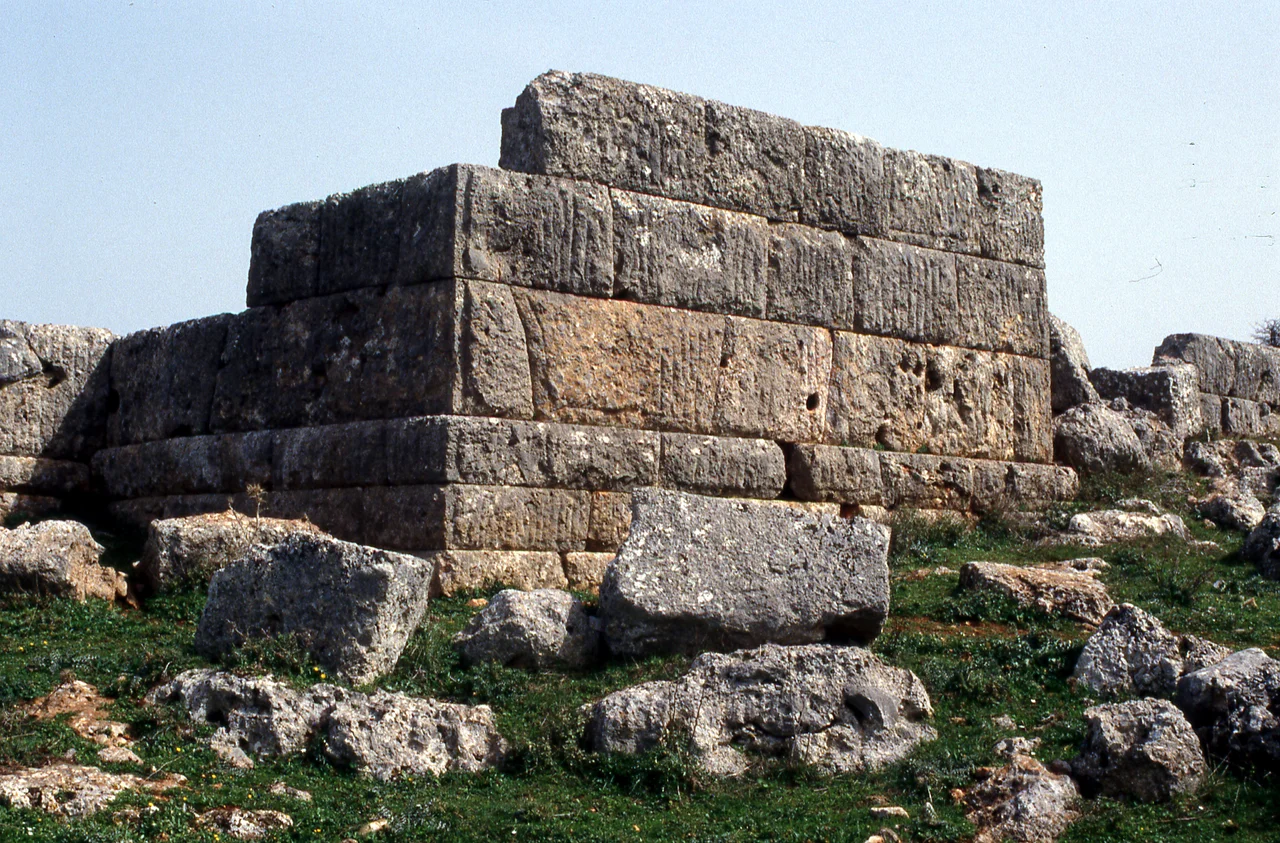
Plataea's long ordeal ended only when its tormentor fell. After Philip II of Macedon defeated Thebes at Chaeronea in 338 BC, he restored the Plataeans to their city. When his son Alexander destroyed Thebes itself in 335 BC, the threat that had haunted Plataea for two centuries finally vanished. The city endured for generations more; Pausanias admired its temples, the novelist Apuleius set scenes there, and the emperor Justinian restored its walls in the 6th century AD. Today the modern village of Plataies sits beside the ancient ruins, foundation stones still scattered across the ground. The plain below remains much as it was when the allied Greeks formed their lines, a quiet expanse of farmland that once decided whether Greece would be free, and whose name a small, loyal city paid for again and again.
From the Air
Plataea lies at 38.221 N, 23.274 E in Boeotia, at the foot of Mount Cithaeron, with the river Asopus to the north dividing its old territory from Thebes. The modern village of Plataies sits beside the ruins. Best viewed from 3,000-5,000 ft AGL, taking in the broad plain that was the 479 BC battlefield and the mountain wall rising to the south. Nearest major airport: Athens International (LGAV), about 60 km southeast. Spring and autumn give the clearest light over the plain.
Nearby Stories
- Spata 1.1 km away
- Helios Airways Flight 522 5.7 km away
- Anthedon (Boeotia) 6.1 km away
- Euboea 8.2 km away
- Salamis Island 9.9 km away
- Davleia 11 km away
- Corinthia 11 km away
- Mount Helicon 14 km away