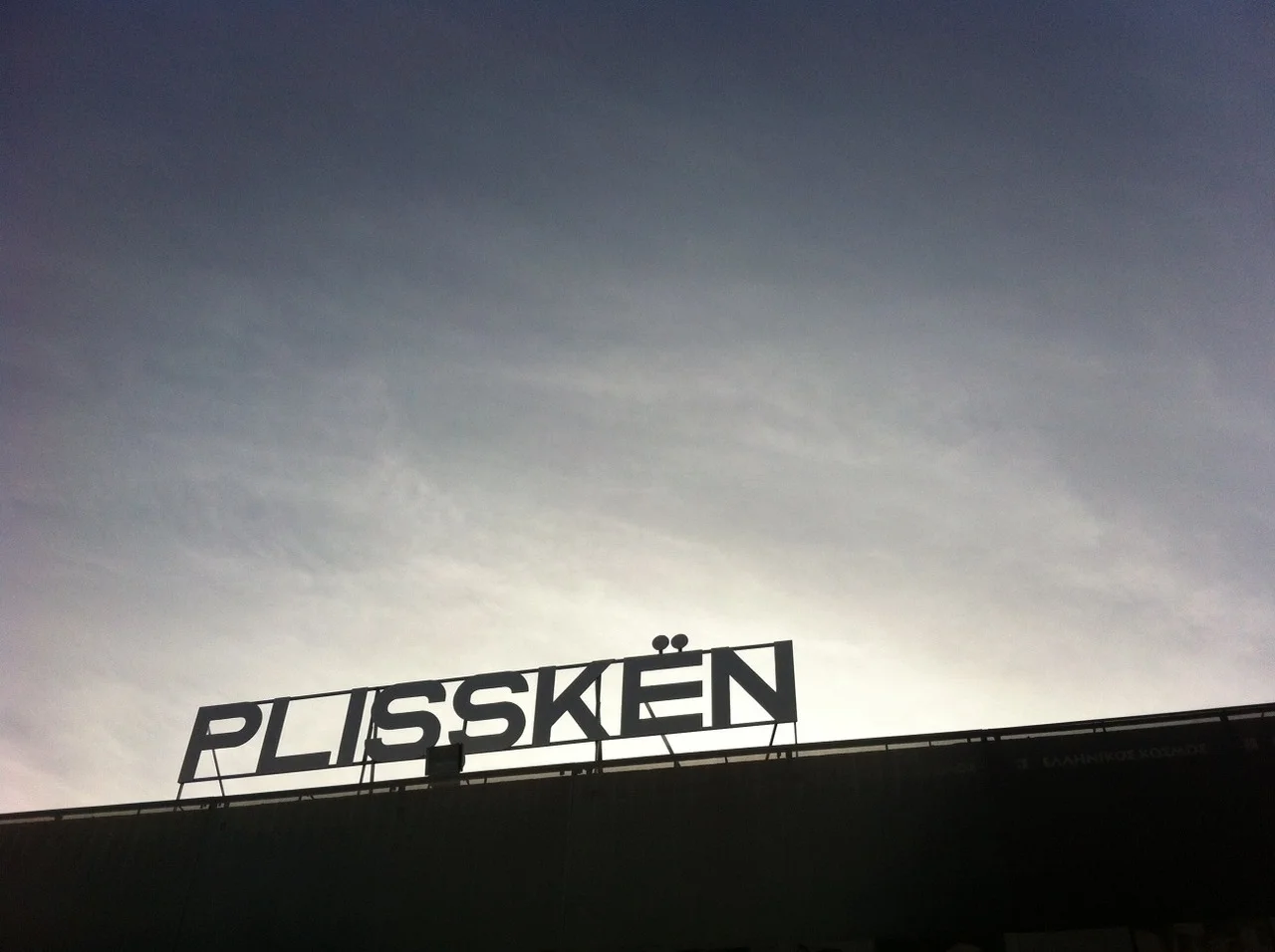

Plisskën Festival
The name is a provocation. Plisskën — spelled with the heavy-metal umlaut that signals nothing is meant to be taken at face value — is lifted from Snake Plissken, the antihero of John Carpenter's 1981 dystopia Escape from New York. Someone decided that a scrappy underground music festival launching in December 2010, in a country already reeling from the early shocks of its debt crisis, should carry the name of a fictional outlaw who refused to play by anybody's rules. It turned out to be exactly the right name.
Born in the Crisis
Greece's financial collapse hit in 2009. Austerity measures tightened through 2010. Public sector wages were cut, unemployment rose, and protests filled Syntagma Square. Into this atmosphere, a small group of Athenian music lovers decided to throw a festival. That decision — reckless by any conventional logic — became the whole point. Plisskën started at Building 56 inside Hellenic Cosmos, a cultural complex in the Tavros neighborhood of Athens, and its first edition in December 2010 already featured acts with enough international credibility to attract notice: Handsome Furs, These New Puritans, FM Belfast. The question every subsequent year was whether it could survive. Year by year, it not only survived — it grew.
A Festival Without Genre Walls
What distinguishes Plisskën from the festival circuit's more formulaic offerings is a stubborn refusal to program within genre lanes. A single edition might place Squarepusher's breakneck electronica alongside Mogwai's post-rock cathedrals, Lee 'Scratch' Perry's dub sorcery, and Sleaford Mods' furious working-class punk. The 2015 edition managed to fit Electric Wizard, Tony Allen, and Perfume Genius into the same bill — a feat of curation that sounds impossible on paper and works brilliantly in practice. By its seventh edition, the festival had featured over 350 international artists across both summer and winter editions, earning nominations for 'Best Indoor Festival' at the European Festival Awards. Pitchfork and The Guardian took notice; so did Resident Advisor and Crack Magazine. Athens was suddenly on the map as a destination for serious music listeners from across Europe.
The Lab and the Ethos
Plisskën isn't only about the performances. In 2012, the festival launched 'The Lab,' an annual workshop series offering young people hands-on education in how a festival actually works — the logistics, production, sustainability practices, and programming philosophy behind what audiences only see as a lineup. That emphasis on sustainability runs through the whole operation. The festival has maintained environmental commitments and earned recognition from A Greener Festival. There's a strong volunteer culture too, which gives the event a cooperative, anti-corporate texture that's rare at any festival that can book Giorgio Moroder and Tinariwen in the same summer. The 2019 edition also hosted the first ever Boiler Room event in Athens, a marker that the city's underground scene had accumulated enough credibility to attract one of the world's most recognizable platforms for dance music culture.
Winter and Summer, Athens and Thessaloniki
Most festivals happen once a year in warm weather and then hibernate. Plisskën expanded into winter. In December 2014, the festival launched its first Winter Edition simultaneously in Athens and Thessaloniki — a four-year anniversary edition that featured Swans at their most confrontational, alongside Lee 'Scratch' Perry and Simian Mobile Disco. Subsequent winter editions became their own distinct events, showcasing artists like Demdike Stare, Hieroglyphic Being, and Ellen Allien to audiences who understand the difference between ambient techno and trance. The dual-season format also gave the festival a continuity that single-event gatherings lack: Plisskën became something Athenians could count on returning, not just a summer anomaly.
Athens as Unexpected Cultural Capital
There's a persistent narrative that Athens, during and after the financial crisis, became fertile ground for creative experimentation precisely because the economic collapse had hollowed out conventional opportunity. Plisskën is one piece of evidence for that argument. When formal systems fail, informal culture sometimes rushes in to fill the space. The festival became a way for Athens to assert its place in a European conversation that had long dismissed it as peripheral. By 2022, when Bonobo, Caribou, and Princess Nokia appeared on the same bill, the festival had grown considerably from its scrappy 2010 origins — while still operating with the curatorial instincts of people who genuinely care about music rather than market share. The outlaw name still fits.
From the Air
The Plisskën Festival is held at Hellenic Cosmos in the Tavros neighborhood of Athens, approximately at 37.96°N, 23.69°E. Athens International Airport (LGAV / Eleftherios Venizelos) is located about 25 km to the east-northeast. Approaching from the north, pilots can see the urban sprawl of central Athens, with the Acropolis visible as a rocky prominence near the center of the city. The festival venue sits in the western industrial belt of greater Athens, not visually distinctive from altitude, but embedded in the urban fabric of one of Europe's oldest continuously inhabited cities. Best visibility over Athens typically occurs in late spring and autumn when the heat haze from summer subsides. Approach altitude for LGAV is typically around 3,000 feet on final from the northwest.
Nearby Stories
- Parnitha 3.4 km away
- Kea (island) 7.3 km away
- Sanctuary of Apollo Maleatas 11 km away
- Sousaki Volcano 12 km away
- Battle of Leuctra 14 km away
- Great Sand Beach 18 km away
- Agios Georgios (island) 23 km away
- Skyros 84 km away