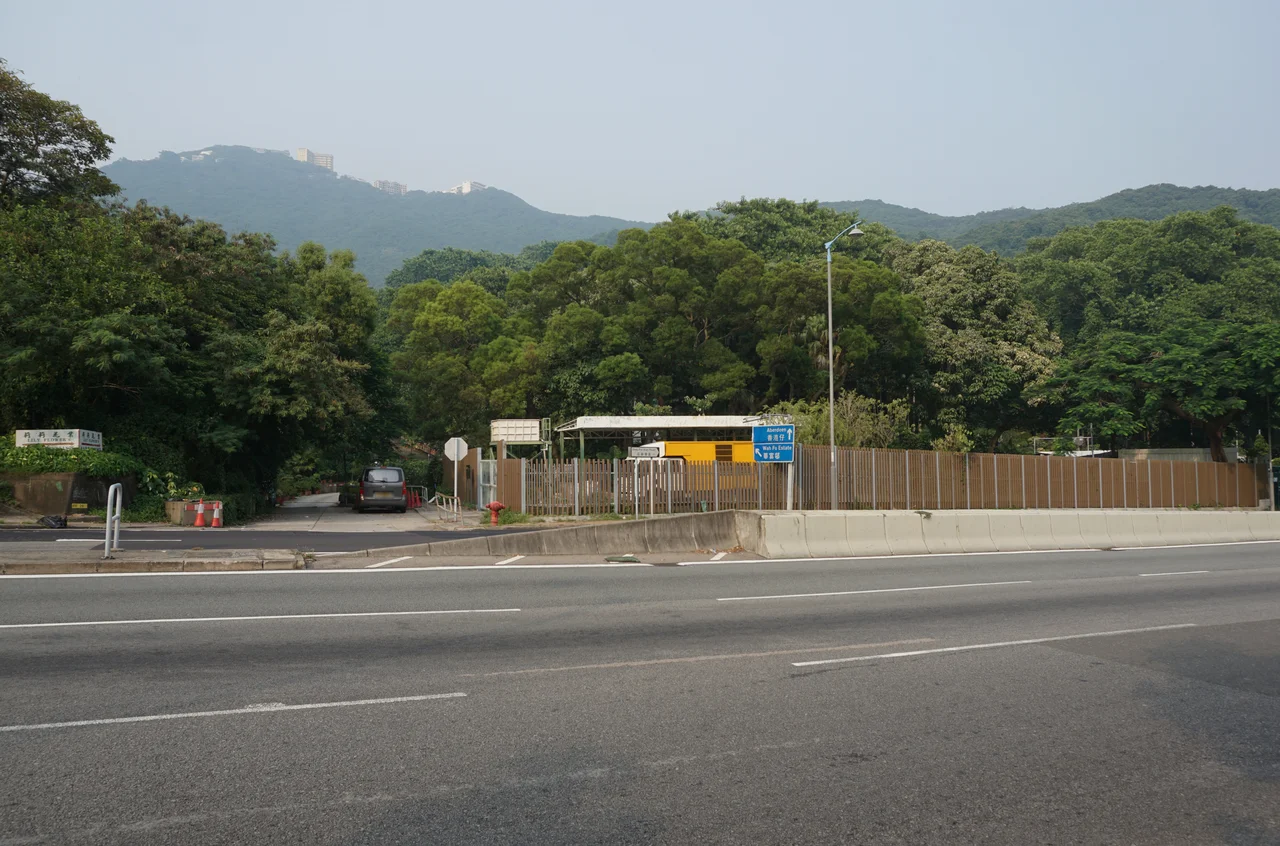

Pok Fu Lam
Pok Fu Lam keeps a remarkable list of firsts. Hong Kong's first reservoir was dug here, its first dairy farm grazed these hillsides, and its floral emblem — the Bauhinia blakeana — was first discovered in this valley. But the district's most telling distinction may be the one least celebrated on any official list: it is home to the only indigenous village remaining on Hong Kong Island, and that village has been here since the early 17th century, watching everything else change around it.
A Valley of Firsts
The geography helps explain the accumulation. Pok Fu Lam sits in a broad valley between Victoria Peak and Mount Kellett, sheltered from the city's noise on one side and open to the sea on the other. Five investors, among them Dr. Patrick Manson — later famed for his pioneering work on tropical medicine — established Hong Kong's first dairy farm here in 1886. That enterprise eventually became Dairy Farm International Holdings, a supermarket and retail conglomerate that operates across Asia today, though nothing of the original farm remains in Pok Fu Lam except two stone milking sheds, now administered by the Hong Kong Academy for Performing Arts.
Béthanie and the French Missionaries
The cow sheds sit alongside Béthanie, one of Hong Kong Island's most quietly remarkable buildings. Built between 1873 and 1875 as a sanatorium for French Catholic missionaries — the Missions Étrangères de Paris — Béthanie is a Neo-Gothic structure with a small chapel, stained glass windows, and original statuary that was removed during decades of institutional use and later carefully restored. University Hall nearby tells a similar story: it began as a merchant's residence, passed to the same French missionaries, spent nearly a century printing religious literature in its basement, and eventually was handed to the University of Hong Kong as a student residential hall. The chapel inside became the dining room. That compression of history into a single building's walls is distinctly Pok Fu Lam.
The Village the City Tried to Forget
At the physical centre of Pok Fu Lam stands the village — 薄扶林村 — the only indigenous settlement remaining on Hong Kong Island. The "Xinan County Journal" of 1819 described it as "built alongside the hill and the creek, its structures are quite elegant." Residents trace continuous habitation to the early 17th century, with a major influx during the Kangxi period of the Qing dynasty, when roughly 2,000 people fleeing mainland turmoil settled here. The government has repeatedly threatened demolition and rejected villagers' requests for the same land-use protections granted to New Territories settlements. The World Monuments Fund placed the village on its 2014 World Monuments Watch, recognizing it as a site under threat. It remains, for now.
The Dragon Comes Every Autumn
Each Mid-Autumn Festival, the village marks the season with Hong Kong's oldest Fire Dragon Dance. The dragon itself is 73.3 metres long, assembled from straw and thousands of burning incense sticks. Master craftsman Ng Kong-kin has built the dragon every year for more than four decades, volunteering his time for a creation that lives for a single night. His brother Ng Kong-nan trains the dancers. Every household in the village is blessed as the dragon winds through the lanes. Other festivals follow their own rhythms — Bou Chun Tin to honor Nüwa repairing the heavens, Fa San Fuk for Lunar New Year luck, Jip Nin Gang for calculating the auspicious moment to welcome the new year in feng shui. The village practices what the surrounding city has largely set aside.
Green Margins
Pok Fu Lam is quiet by Hong Kong standards — a qualification that matters in a city where quiet is relative. Expatriate families, many connected to the nearby University of Hong Kong, fill the high-rise estates that ring the valley. German Swiss International School maintains a campus next to the village; Kellett School sits at the road intersection below. Queen Mary Hospital anchors the lower slopes. The country park above holds the old reservoir. The physical geography of the valley imposes a kind of limit on density that most of Hong Kong Island lacks, and the result is a district that breathes differently — forested hills above, the sea to the west, and at the centre, a village that has been here longer than the colony that tried to erase it.
From the Air
Pok Fu Lam sits at 22.26°N, 114.138°E on the western slopes of Hong Kong Island, between Victoria Peak (552 m) and the coast facing Lamma Island. From 2,000–3,000 feet, the valley's green hillsides contrast with the dense urban grid of Kennedy Town to the north and Aberdeen to the south. The reservoir is visible as a dark water body in the upper valley. Hong Kong International Airport (VHHH) is approximately 22 km to the northwest. Lamma Island and its distinctive twin power station stacks lie 3–4 km to the southwest.
Nearby Stories
- Lok Ma Chau Loop 2.3 km away
- Portas do Cerco 2.3 km away
- Kweilin Incident 17 km away
- Wanshan Archipelago Campaign 34 km away
- Nanxiong Formation 115 km away
- Battle of Nanpeng Island 148 km away
- Heyuan 169 km away
- Cape Maobitou 632 km away