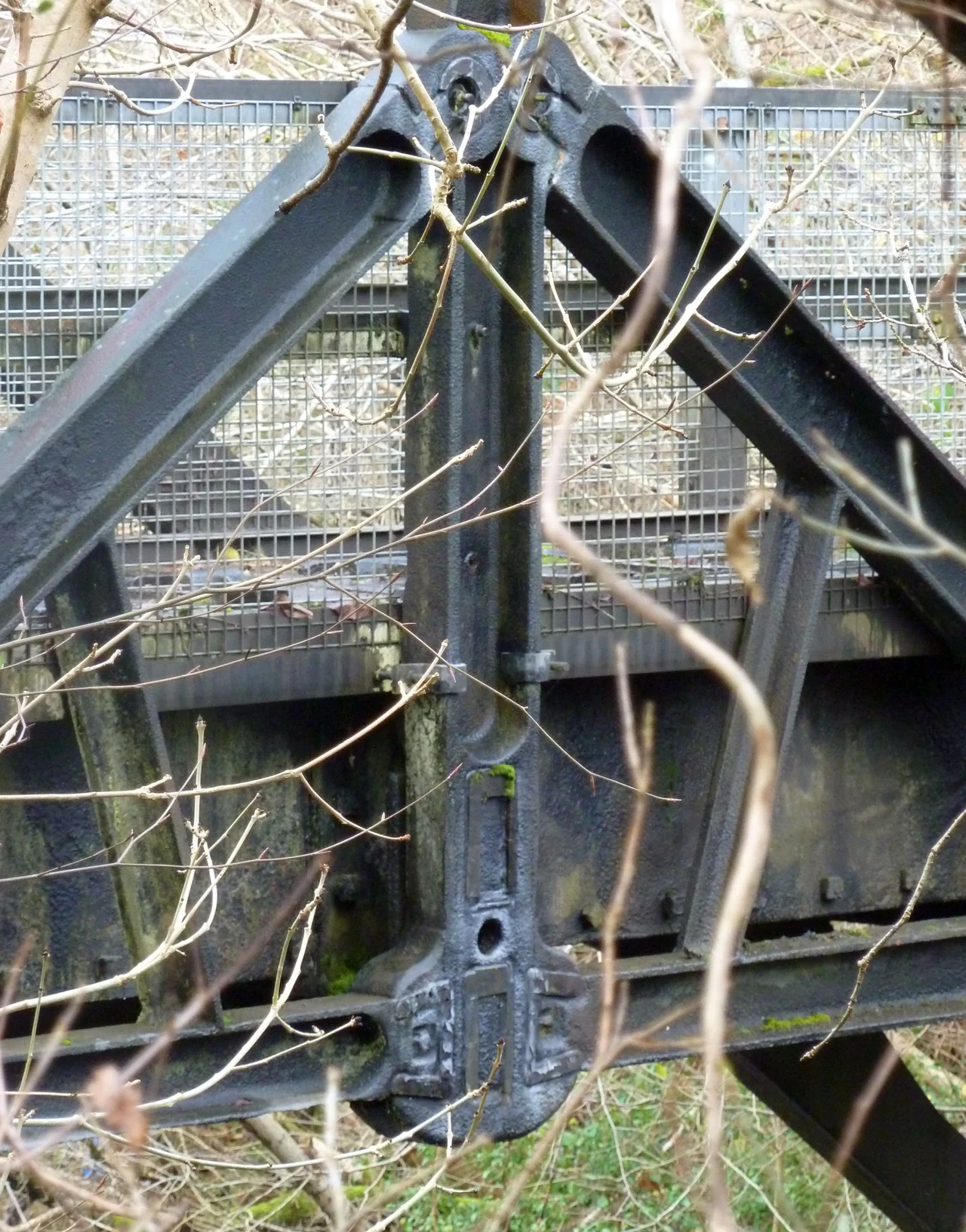

Pont-y-Cafnau
It is a small bridge. Just over fourteen metres long, two stories tall, made of cast iron painted black, sitting modestly over the River Taff at Merthyr Tydfil. From a distance you might walk past without noticing. But Pont-y-Cafnau, which means in Welsh roughly Bridge of Troughs, holds a quiet world title. It is the oldest surviving iron railway bridge anywhere on Earth. Built between January and June 1793 by a carpenter-turned-engineer named Watkin George, it predates Robert Stephenson's first iron railway bridge by thirty years, and it predates passenger railways themselves by more than a quarter of a century. It is the small, strange grandfather of every iron-truss railway bridge that came after it.
Three Bridges in One
Watkin George worked for the Cyfarthfa Ironworks, which by 1793 was rapidly growing into the world's largest iron producer. The works needed limestone for its blast furnaces, and a small-gauge tramway was being built to bring the limestone from quarries at Gurnos. It also needed water, lots of it, to power its enormous fifty-foot cast-iron waterwheel known as Aeolus. The Taff Fawr and the Taff Fechan met just upstream of the works, and water from both rivers had to be diverted, raised, and carried across the river to the wheel. George solved the problem with a single structure that did three jobs at once. Pont-y-Cafnau carries a tramway in the middle, with a stone trough below it carrying the Taff Fechan leat, and a second wooden trough on uprights above it that originally carried the Taff Fawr leat. Two A-frame cast-iron trusses hold the whole thing up.
A Carpenter's Joints in Iron
Watkin George had trained as a carpenter before he became an ironworks engineer, and you can see his roots in the structure. The members of the A-frame trusses are not bolted together, as a modern engineer would do, but joined by dovetails and mortise-and-tenon joints, the same joints used in wooden barns and church roofs for centuries. The iron has been cast and finished as if it were timber. The result is unmistakably industrial, and unmistakably hand-made. It is the bridge of a man who knew wood deeply, asked to do the same thing in iron, and refused to abandon what he had learned about how shapes should fit together. Cast iron is a brittle material in tension, and dovetails would not survive much pulling stress. But the bridge has stood for two hundred and thirty-three years, so the load paths must work.
What Crossed It
The tramway across the middle deck of Pont-y-Cafnau carried small horse-drawn wagons full of limestone, jolting in from the Gurnos quarry. The deck plates were cast with chairs for the rails already integrated into them, an early example of the integrated track-and-bridge design that modern railway engineering still uses. The Taff Fechan leat in the lower trough fed water to the Cyfarthfa brick works. The upper Taff Fawr leat powered the great wheel Aeolus, named for the Greek god of winds, which drove the bellows of the blast furnaces. So at any moment in the 1790s, three different things were crossing the Taff on this single structure: limestone in trucks, water in two channels, all going to feed the furnaces upstream that were turning iron ore into cannons that would later sail with Nelson at Trafalgar. The bridge was a small artery of an enormous heart.
Listed and Walked
The Cyfarthfa Ironworks closed in 1875, and the leats fell silent. The Taff Fawr trough on top of the bridge is long gone, but the wooden uprights that held it still stand. The lower stone trough is still there, dry but intact. On 22 August 1975, Pont-y-Cafnau was listed as a Grade II* building, the second-highest level of legal protection in Wales. It is also a Scheduled Ancient Monument. The local authority has refurbished it. It is open to walkers, a small black structure in the trees and rough ground above the Taff. People who know what they are looking at stop on the deck and place a hand on the cast iron and consider what was happening here when this bridge was new: the French Revolution still in its early years, George Washington in his first term, Mozart only two years dead. This bridge has stood through all of that, and is still standing now.
From the Air
Pont-y-Cafnau is at 51.755 N, 3.396 W over the River Taff just below the confluence of the Taff Fawr and Taff Fechan, on the north-western edge of Merthyr Tydfil. Best viewed from 2,000 to 3,000 feet, with the ruined Cyfarthfa blast furnaces immediately to the south-east and Cyfarthfa Castle on its parkland to the east of the river. Cardiff Airport (EGFF) is 25 nm south. The bridge itself is tiny from the air; look for the gap in the trees where the Taff narrows.
Nearby Stories
- Portishead Point Lighthouse 3 km away
- St Fagans National Museum of History 5 km away
- Museum of Cider 6.5 km away
- Monmouth 8.3 km away
- Carreg Cennen Castle 11 km away
- Builth Castle 14 km away
- Craig Gwrtheyrn 29 km away
- Ilfracombe Lifeboat Station 37 km away