
Porto Seguro
The name translates as 'safe harbor,' and Pedro Álvares Cabral meant it literally. When his storm-scattered fleet sighted this stretch of Bahian coast in April 1500, the calm anchorage between the cliffs and the reef gave his sailors their first dry feet on what would become Brazil. Five centuries later the town still trades on that founding moment, and the visitor who climbs the steep path from the bus station finds three small churches, a line of whitewashed colonial houses, and a view out to the Atlantic that has barely changed since the ships first came.
Getting to the Safe Harbor
Most travelers arrive by air into Porto Seguro Airport (BPS/SBPS) or by overnight bus from Salvador, a twelve-hour run up the BR-101 and BR-367. From Eunápolis, sixty kilometers inland, the highway peels east to the coast, where the town spreads along a flat shelf of beach beneath the hill that carries the Cidade Alta. The downtown core rewards walking: from the bus station you can drift down to the waterfront in minutes, and the historic center on the bluff is a short, breathless climb the other direction. Buggy rentals line the town center at reasonable rates, useful for beach-hopping north toward Santa Cruz Cabrália or south toward the ferry that crosses the Rio Buranhém to Arraial d'Ajuda.
What to See on the Hilltop
The historic quarter sits at the top of a long flight of stone steps. Three churches anchor the site, along with a scatter of the oldest houses the Portuguese built anywhere in Brazil. Local guides wait at the top of the stairs and give informal tours, though English-speakers are rare; Portuguese or a willingness to gesture goes a long way. Down at the waterfront, a full-scale replica of Cabral's ship stands on the beach, a reminder of the scale on which those first voyages were conducted - and the audacity. You can walk there from downtown along the promenade. If the replica itself is closed, the view from the sand tells most of the story.
Reefs, Beaches, and a Word of Warning
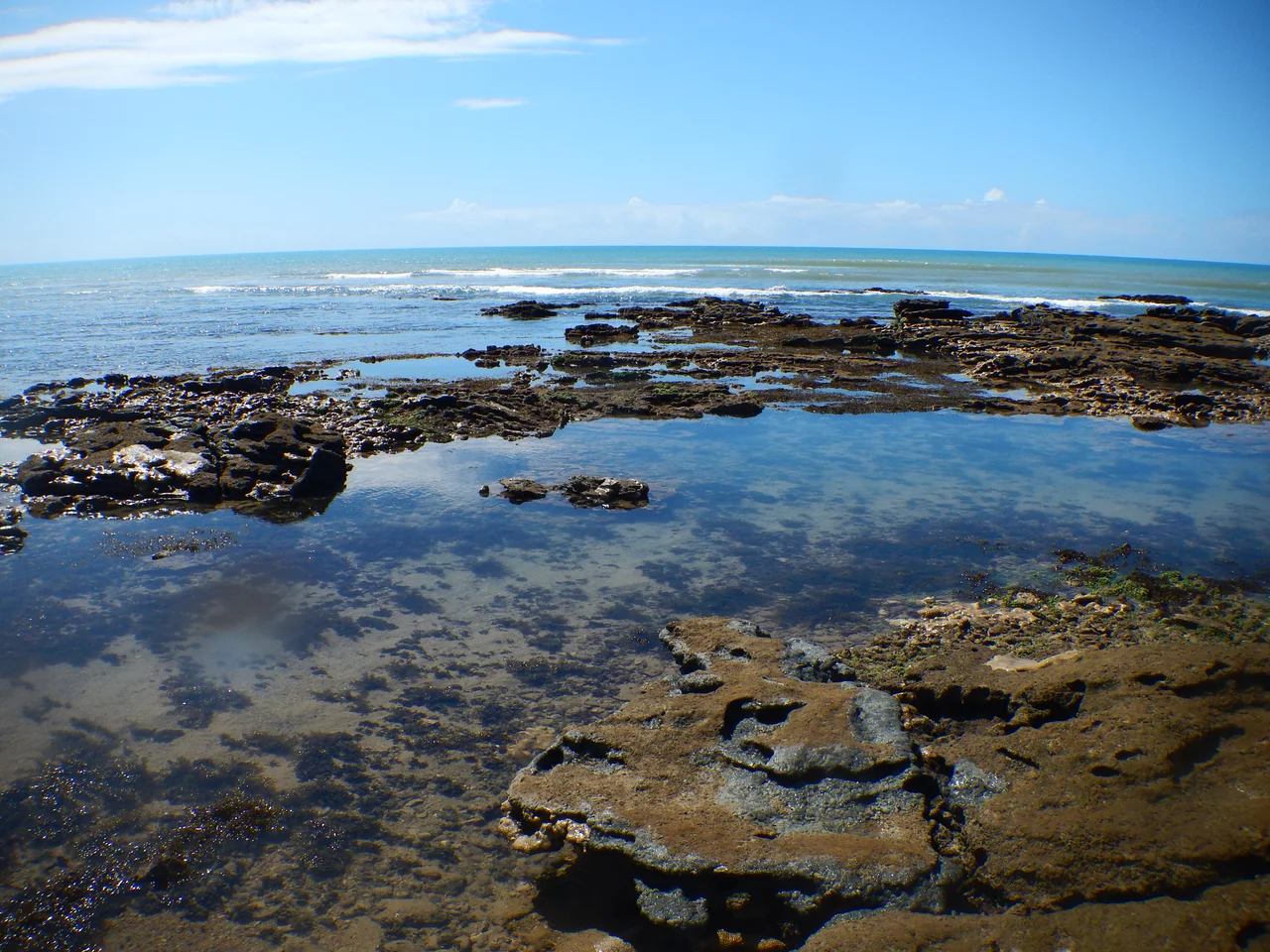
The most promoted day trip in town is the boat tour to Recife de Fora, a coral reef that emerges at low tide. Travelers with any conservation instinct should think twice. The standard tour has visitors walking on the reef itself, which damages the living coral beneath their feet; the decline is visible to anyone who returns year after year. Better options lie south. Praia do Espelho, near the village of Curuípe, ranks among the best-rated beaches in all of Brazil - red cliffs, tide pools that mirror the sky at low water, and a long crescent of pale sand. The road south passes an indigenous village and a small sanctuary where rescued sloths move through the branches at their own considered pace.
Going Further South
Porto Seguro is a hub, and most visitors use it as a base for the string of smaller coastal towns strung along this stretch of Bahia. Arraial d'Ajuda lies just across the river; take the ferry and catch a bus up the bluff. Trancoso, further south, has a grass-covered central square ringed by colonial houses painted in sherbet colors, and a beach that drops straight off the end of the town. Caraíva, further still, is accessible only by boat or a sandy track - a fishing village between the Caraíva River and the open Atlantic where the accommodations are pousadas rather than hotels and the evening entertainment is a drink at a thatched beach bar. The nightlife back in Porto Seguro itself centers on the Passarela do Álcool, a famous strip of open-air bars that runs loud into the small hours during high season.
From the Air
Porto Seguro lies at approximately 16.45°S, 39.06°W on the coast of southern Bahia. The town is served by Porto Seguro International Airport (ICAO: SBPS, IATA: BPS), located about 2 km north of the center, with regular flights from São Paulo, Rio de Janeiro, and Salvador. From 6,000-8,000 feet the coastline shows a distinctive pattern: a long shelf of white sand beach separated from deeper water by the offshore Recife de Fora coral reef, visible as a pale line under clear water. Monte Pascoal, the hill Cabral's lookouts sighted first in 1500, rises inland to the southwest. Trade winds are from the east; afternoon buildups and occasional squalls are common, with the wet season running November through March.
Nearby Stories
- Central Atlantic Forest Ecological Corridor 7.8 km away
- Jequitinhonha River 51 km away
- SS Principessa Mafalda 100 km away
- Mata Escura Biological Reserve 141 km away
- Nanuque 143 km away
- Vitória da Conquista 188 km away
- Battle of 4 May 330 km away
- 2019 Northeast Brazil Oil Spill 376 km away