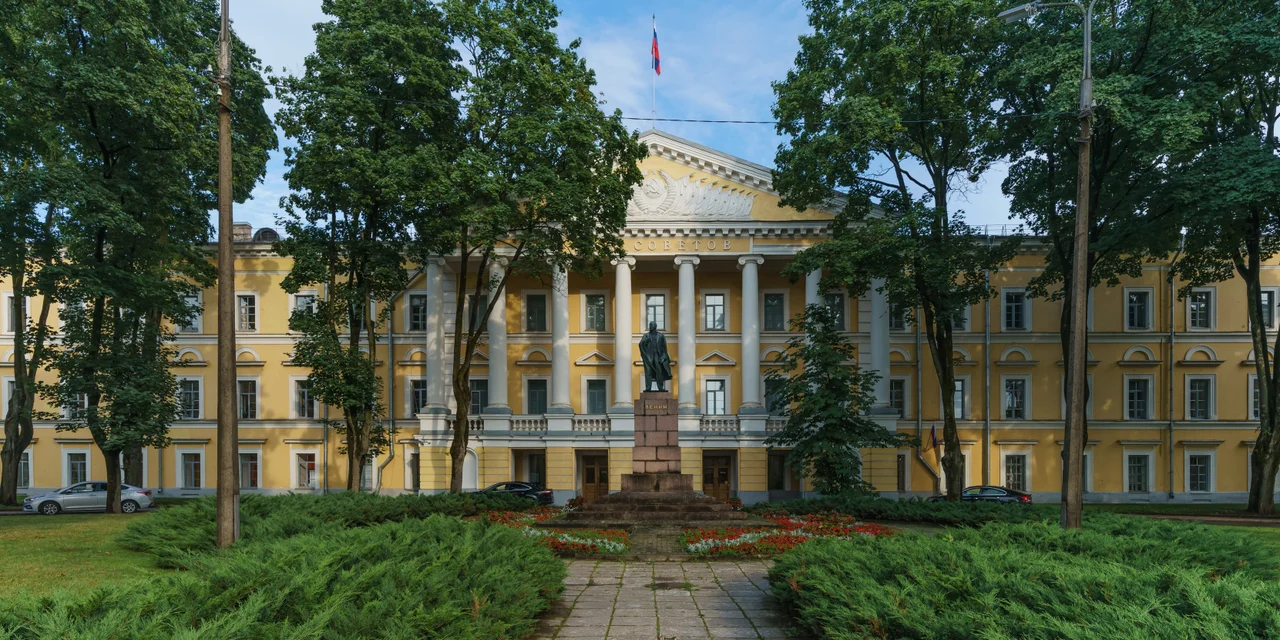

Pskov Oblast
From a population of 1.7 million in 1926 to fewer than 600,000 today: Pskov Oblast has lost two-thirds of its people in a single century. Forced collectivization, World War II, and the demographic crisis of the 1990s each took their share. What remains is a quietly beautiful corner of European Russia — westernmost of the country's mainland regions, bordering Estonia, Latvia, and Belarus. The land kept the Mongols out in the 13th century. It held off Polish armies in the 16th. It still holds the oldest churches and the most intact medieval architecture in Russia. And it holds the family estate where Alexander Pushkin wrote some of the lines that defined the Russian language.
Where Russia Begins
Look at a map of European Russia and Pskov Oblast occupies the far western edge — bordering Estonia along Lake Peipus to the north, Latvia to the west, and Belarus to the south. Kaliningrad sits further west, but as a Baltic exclave it doesn't count as contiguous Russia. Pskov is the front porch. Pskov was first mentioned in chronicles in the year 903, as the home town of Olga, the woman Igor of Kiev married — later canonized as Saint Olga of Kiev. Several variants of the great medieval trade route from the Varangians to the Greeks passed through this territory along the Velikaya and Lovat rivers. By the 14th century, Pskov was a republic — one of only two in old Rus, alongside Novgorod. The highest authority was the assembly of citizens, the veche, who passed a law code in 1397 that became one of the principal sources of the all-Russian code of 1497.
The Battle on the Ice
Pskov's location made it a permanent battleground. In 1242, on the frozen surface of Lake Peipus, Alexander Nevsky's forces stopped the eastward advance of the Teutonic Knights in a battle later mythologized in Sergei Eisenstein's 1938 film. During the Livonian War in 1581, the Polish army of King Stephen Báthory besieged the city of Pskov itself with 50,000 men, mounting some thirty-one separate assaults. The defenders, mainly civilians, repelled them all even after one of the city walls was broken. "A big city, it is like Paris," wrote Báthory's secretary about Pskov. Pskov independence had ended in 1510 when Vasili III of Moscow simply occupied the city — that older republic absorbed into the rising Grand Duchy. The new border position made Pskov a fortress town for centuries.
1941
World War II devastated this region in ways that statistics only begin to suggest. From autumn 1941 to spring 1944, German forces occupied the entire current area of Pskov Oblast. Pskov city itself was held from 9 July 1941 until 23 July 1944. The German army operated a forced labor camp in the city for Jewish men and women — most of whom did not survive. In February 1944, as Soviet forces advanced westward, Russian bombing killed thousands of people in the still-occupied city. The Pskov region was a major center of Soviet partisan activity throughout the occupation. Forced collectivization in the 1930s had already cut into the rural population. The war and its aftermath cut deeper. By 1950 the population had dropped from 1.7 million to barely over a million. The 1990s economic collapse cut deeper still. The region today has an annual death rate of 17.6 per 1,000 against a birth rate of 6.8 — among the most demographically distressed in Russia.
What the Mongols Missed
Because the Mongol invasions of the 13th century never reached this far northwest, Pskov preserves examples of pre-Mongol Russian architecture that no other region can match. The Christ's Transfiguration Cathedral of Mirozhsky Monastery, built in the 12th century, contains 12th-century frescoes that are extremely rare anywhere in Russia. The katholikon of the Ivanovsky Monastery in Pskov, built in the 1140s, is allegedly the oldest surviving building in the entire oblast. Around the city stand dozens of small white churches from the 15th to 17th centuries — the squat, picturesque local style that earned UNESCO World Heritage status for the Churches of the Pskov School of Architecture in 2019. The Pskov Kremlin still stands, walls and towers intact. Outside the city are the Izborsk fortress, the Pskov-Caves Monastery at Pechory, and Mikhaylovskoye — the Pushkin family estate where the national poet was banished for two years and wrote some of his most enduring work. He is buried at the nearby Holy Mountains Monastery. The region has barely any tourist infrastructure. The history is mostly there for those who already know to look for it.
From the Air
Pskov Oblast covers a substantial chunk of western European Russia, with its administrative center at 57.32°N, 29.25°E. The reference coordinate is roughly central, near the small town of Bezhanitsy. Lake Peipus along the Estonian border is the most prominent natural feature from altitude — a large freshwater lake that ices over each winter. ULOO (Pskov Airport, Kresty) is the only major commercial field in the oblast and serves Moscow Domodedovo and St. Petersburg Pulkovo. EETN (Tallinn) sits 250 km northwest. EVRA (Riga) lies 280 km southwest. ULLI (St. Petersburg Pulkovo) is 280 km north. The region is largely flat with extensive forests covering one-third of the territory. Restricted border zones near Estonia and Latvia require FSB permits to enter on the ground.
Nearby Stories
- Pskov 34 km away
- Siege of Pskov 56 km away
- Battle of Shelon 80 km away
- Pskov-Caves Monastery 105 km away
- Toropets Depot Explosions 131 km away
- Battle of Klyastitsy 139 km away
- Yuriev Monastery 147 km away
- First Battle of Polotsk 186 km away