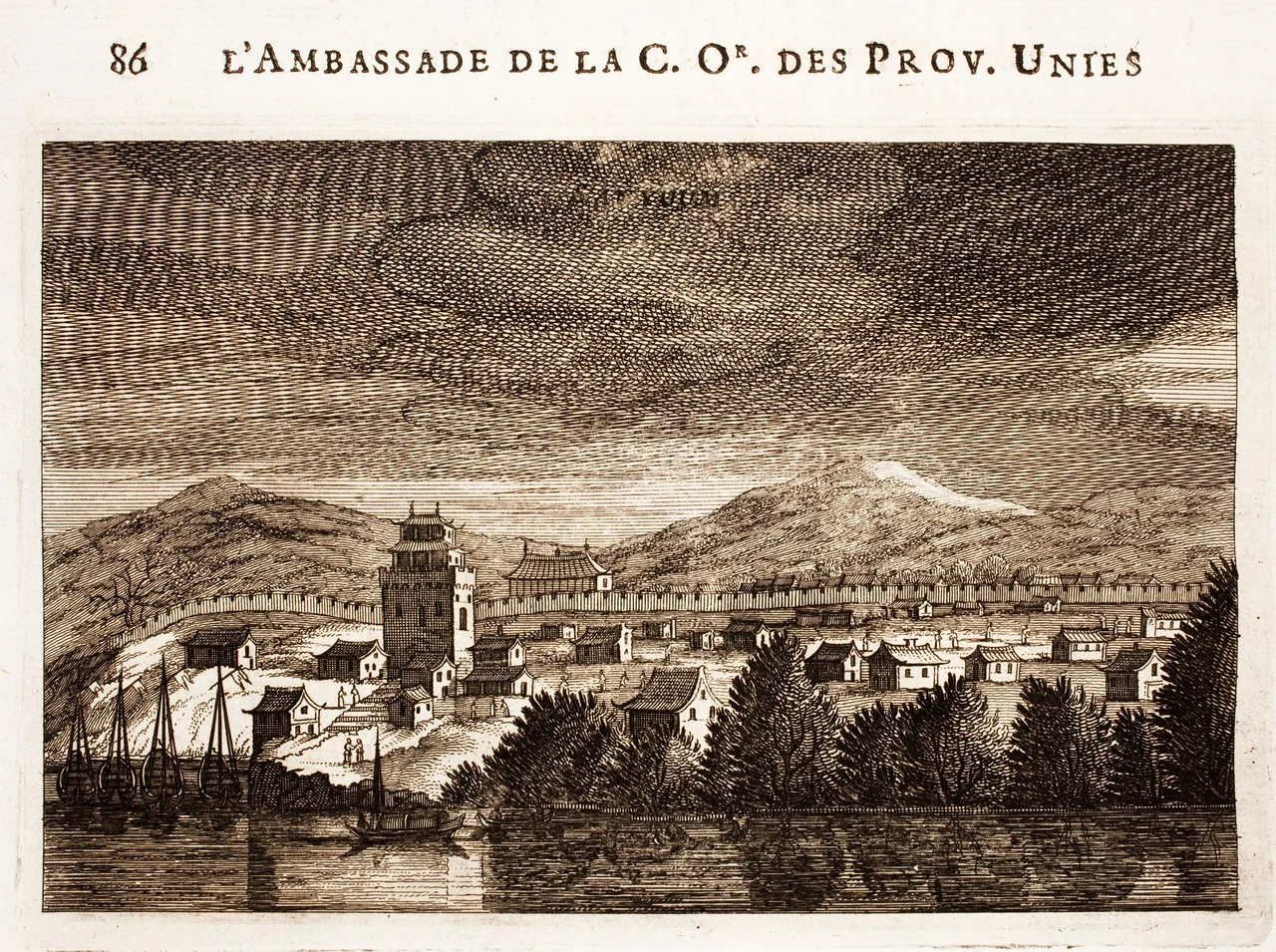

Qingyuan
Qingyuan doesn't try to compete with Guangzhou. Forty-five minutes up the intercity line from one of China's great megacities, this Cantonese-speaking prefecture-level city has chosen a different path — quieter, greener, more given to tea and chicken and limestone gorges than to skyscrapers and trade fairs. The name means 'clear and distant,' and on a good morning in the hills north of the city, with clouds sitting low on Shikengkong Mountain and the Bei River running jade-colored through the valley, it earns the name easily.
A City at the Edge of the Delta
Qingyuan became a prefecture-level city in 1988, but its landscape has been shaped over far longer timescales. The Pearl River Delta plain thins out here as the terrain rises toward the mountains of northern Guangdong. Subtropical monsoon climate delivers most of its rain in summer, filling river gorges and feeding waterfalls, then retreats to leave clear, mild winters. The city and its eight districts and counties fan north from the Bei River, each with a distinct character. Qingcheng District anchors the urban center. Yingde, 50 kilometers northeast, holds the Baojing Palace. Lianzhou, 150 kilometers north, conceals an underground river. Fogang County shelters Huanghua Lake. And remote Yangshan County, 100 kilometers north, brushes against Shikengkong Mountain — at 1,902 meters, the highest peak in Guangdong.
The Language of the Place
Cantonese is the daily tongue of Qingyuan, but not quite the Cantonese of Hong Kong or Guangzhou. Local speech carries a distinctive accent — vowel shifts and tonal variations that mark a speaker immediately as Qingyuanese. Younger residents are typically bilingual in Mandarin, navigating easily between both registers depending on who they're talking to. Lianshan and Liannan counties in the northwest are home to Zhuang and Yao communities, ethnic minorities with their own languages, festivals, and textile traditions. This diversity — Han Chinese majority alongside Zhuang, Yao, and others — is an old fact of the region, predating the establishment of the prefecture by centuries.
Canyon Rides and Hot Springs
Qingyuan's tourism offer leans decisively toward the physical. The city's river canyons are known for an unusual form of water recreation: cement slides built into mountain gorges, where two people sit in a small inflatable dinghy and careen down courses that require no paddling and no guiding — just hanging on. It is significantly more exhilarating than it sounds. Hot spring resorts cluster in Qingxin County just north of the city center, and the forests above them offer hiking, caves, and the kind of silence that feels increasingly rare this close to the Pearl River Delta. The new Qingyuan Chimelong Theme Park, connected by the city's maglev tourist line, has added a different flavor to the tourism mix since 2025.
A Table Worth Sitting At
Qingyuan is serious about its food. The city's chickens — 清远鸡, Qingyuan ji — have a reputation extending well beyond the prefecture: slow-growing, free-ranging birds with lean, flavorful meat, typically served white-cut with ginger and scallion dipping sauce. Each district has its own specialties: knife-cut glutinous rice cakes in Qingcheng, Shuangtan tofu in the new districts, sour tofu and taro black goose in Fogang County, Yingde black tea in the northeast. Yingde black tea, grown in the hills east of the city and processed since the 1950s for export, has developed an international following. Locally, tea culture runs from delicate Biluochun green tea to aged Puerh, with Tie Guan Yin oolong occupying the middle ground. Medicinal products — lingzhi fungus, deer wine — add another layer to the market stalls.
Getting There, Getting Around
Qingyuan Station sits 15 kilometers east of the city center, served by the Guangzhou–Qingyuan intercity railway — less than an hour from Guangzhou for ¥10 to ¥17. Buses fill the gaps: Shenzhen is 2.5 hours away, Hong Kong 4.5. There is no commercial airport in Qingyuan itself; Guangzhou Baiyun International (ZGGG) is 30 kilometers south, close enough that the city effectively shares it. Within the city, the maglev tourist line serves the Chimelong resort corridor. The city is most comfortable between April and October, though the subtropical winters rarely become genuinely cold.
From the Air
Qingyuan is centered at approximately 23.68°N, 113.05°E in northern Guangdong. The Bei River runs through the city from north to south, joining the Pearl River system downstream. At 5,000–8,000 feet, the transition from the flat delta plain south of the city to the green, rumpled hills of Qingyuan's north is clearly visible. Shikengkong Mountain, the highest peak in Guangdong at 1,902 meters, lies to the northwest. The nearest major airport is Guangzhou Baiyun International (ZGGG), approximately 50 km south. Flying north from ZGGG, the terrain rises steadily; limestone karst features become visible near Yingde in the northeast of the prefecture.
Nearby Stories
- Pearl River 21 km away
- South China Mall 42 km away
- Mount Luofu 59 km away
- Battle of Nanpeng Island 206 km away
- Temple of the Five Lords 461 km away
- China Airlines Flight 611 622 km away
- Taiwan Strait 706 km away
- Lugu Lake 1245 km away