
RAF Angle
Picture a runway that slopes downhill to a cliff edge. That was RAF Angle. The landing area ran out across a windy plateau and ended, more or less, at the mouth of the Bristol Channel. Strong gales routinely damaged the servicing hangars. Mechanics built earth banks around the aircraft to protect them and themselves from the worst of the weather. The station opened on 1 June 1941, the year after the Luftwaffe had bombed Pembroke Dock and Milford Haven essentially unopposed, and for five years it scrambled fighters - first Hurricanes, then Spitfires, briefly Whirlwinds - to defend convoys threading the Irish Sea and the docks at Pembroke.
A Reluctant Airfield
The Air Ministry chose the site in 1940 in response to a political furore. Pembroke Dock had been hit hard and the area had no proper air defence. Engineers came to the Angle Peninsula and started clearing - removing hedges, levelling, draining, and closing local roads - on a plateau half a mile south of Angle village. The airfield was incomplete in the summer of 1941 when the first squadron arrived, but flyable. Six fighter dispersal pens went in along the south-east side, each able to hold four Spitfires. The watchtower stood in a south-west-facing corner, looking out over the Bristol Channel approaches. From 1 December 1941 RAF Angle became the forward base under No. 10 Group, Fairwood Common Sector, responsible for the air defence of all of South and West Wales.
Squadrons in Rotation
No single squadron stayed long. The first arrivals - No. 32 Squadron from RAF Pembrey on 1 June 1941 - claimed a Dornier Do 17 four days later, a possible Heinkel He 111 the same day, and a confirmed Junkers Ju 88 on 10 June. They flew up to thirty sorties a day under Squadron Leader T. Grier, DFC. Five months later they moved to RAF Manston and No. 615 took over, led by Battle of Britain veteran Squadron Leader D. E. Gilliam DSO DFC and Bar AFC, flying long-range Hurricane IIb fighters on convoy patrols across the Irish Sea. They badly damaged a Junkers Ju 88 three days after arrival and, in December 1941, helped rescue a Royal Navy destroyer damaged off the Smalls lighthouse, escorting tugs that towed her into Milford Haven.
The Czech Squadron
On 24 January 1942 No. 312 (Czechoslovak) Squadron arrived from Fairwood Common with Spitfire Vbs and Squadron Leader H. Bird-Wilson DFC commanding. Most of its pilots were exiles - men who had fled occupied Czechoslovakia, found their way to Poland or France, retreated through France, and ended up flying for the RAF. While at Angle they logged 231 hours of operational flying, fitted bomb racks for ground-attack training with the Army, and on 16 February claimed a Junkers Ju 88. They left for Fairwood Common on 18 April. Half a century later, in 1992, Squadron Leader M. A. Liskutin DFC AFC - another 312 Squadron veteran - unveiled the airfield memorial. The cairn lists 312 alongside 32, 152, 263, 615, and the Royal Canadian Air Force's 412 and 421.
Whirlwinds and Coastal Trials
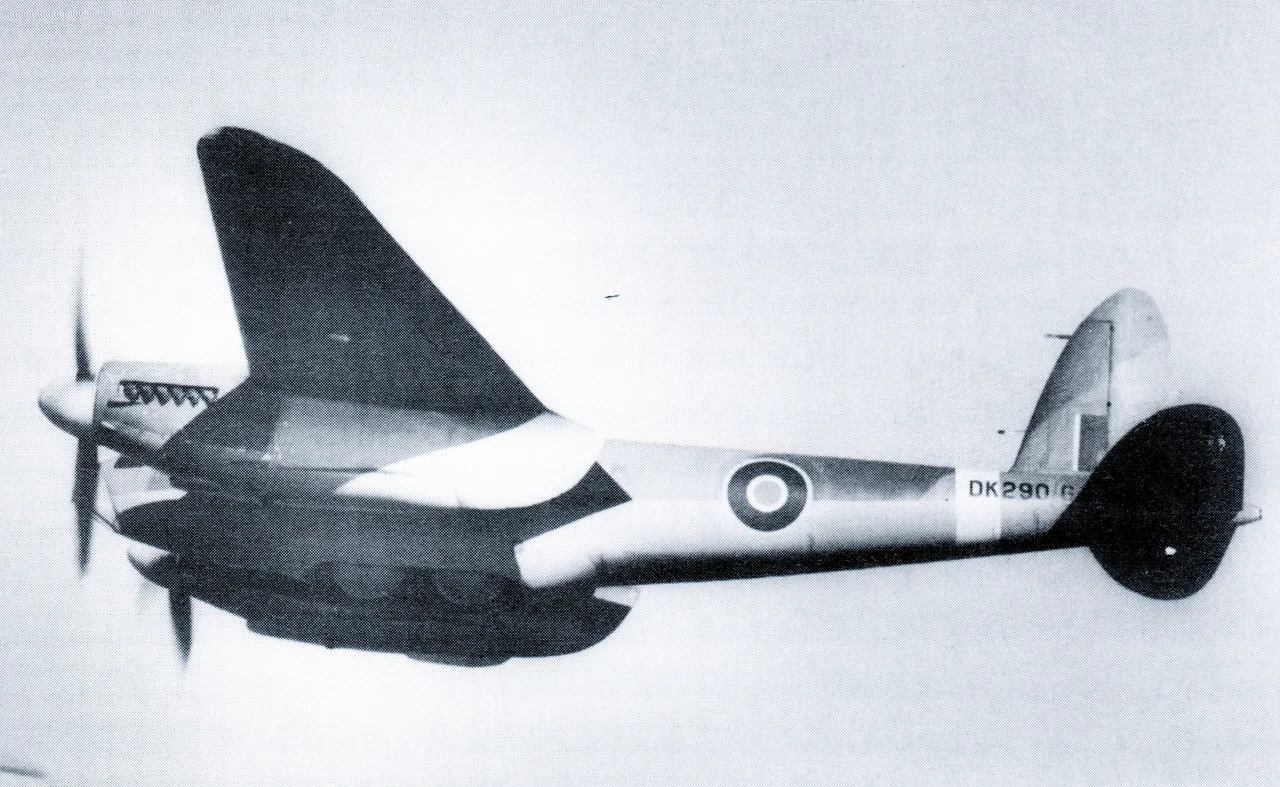
Between the Spitfire and Hurricane squadrons came something unusual. No. 263 Squadron operated the Westland Whirlwind - a twin-engined, cannon-armed fighter that only ever equipped two RAF squadrons. They arrived at Angle in April 1942 with Squadron Leader R. S. Woodward DFC. Ten Whirlwinds went on detachment to RAF Portreath for Ramrod missions over occupied France. On 23 July two of those Whirlwinds were shot down by Messerschmitt Bf 109s during a fighter sweep, killing both pilots. In September 1943, the Coastal Command Development Unit moved to Angle from RAF Dale. The CCDU's work was technical: service trials of ASV radar, audibility tests of aircraft from surfaced submarines - the science behind hunting U-boats. On 6 October 1943, Sqn Ldr Longbottom flew a No. 618 Squadron Mosquito out of Angle carrying a prototype Highball bouncing bomb, testing it against the south portal of Maenclochog Tunnel. Four of twelve bombs went through; two hit the portal.
Memory in Stone
The Royal Navy used the station too, briefly renaming it RNAS Angle - HMS Goldcrest - while 312 Squadron was based there. On 29 May 1943, a Short Sunderland of 461 Squadron Royal Australian Air Force, damaged on take-off, made the first ever dry airfield landing by a Sunderland flying boat, piloted by Pilot Officer Gordon Singleton with no further casualties. Sixty-five years later, in 2008, Singleton himself unveiled the restored airfield memorial. When he died in 2013, his ashes were interred at the site. RAF Angle closed on 1 January 1946 and was relinquished in 1953. The plateau reverted to farmland. A few huts and the perimeter track survive. A stone cairn in West Angle Bay, dedicated on 12 September 1992, lists the units that flew from here - Coastal Command, the Fleet Air Arm, fighter squadrons RAF and RCAF, and the men who took off into the wind.
From the Air
RAF Angle sits at 51.67 N, 5.09 W on the Angle Peninsula, just south of Milford Haven. Best viewed from 1,000 to 2,000 feet to follow the outline of the old runway and dispersals against the modern farmland. Freshwater West beach lies just south; the Castlemartin range is east. Nearest active aerodromes: Haverfordwest (EGFE) directly north, Pembroke (military), Swansea (EGFH) further east. Watch for strong westerlies - the cliff edge that defines the old airfield still produces the same vicious wind shear that damaged hangars in 1941.
Nearby Stories
- RAF Brawdy 3.2 km away
- Pendine Sands 16 km away
- S4C 17 km away
- HMHS Glenart Castle 24 km away
- Hartland Point Lighthouse 34 km away
- Johnstown Castle 77 km away
- Hook Lighthouse 107 km away
- 1979 Fastnet Race 128 km away