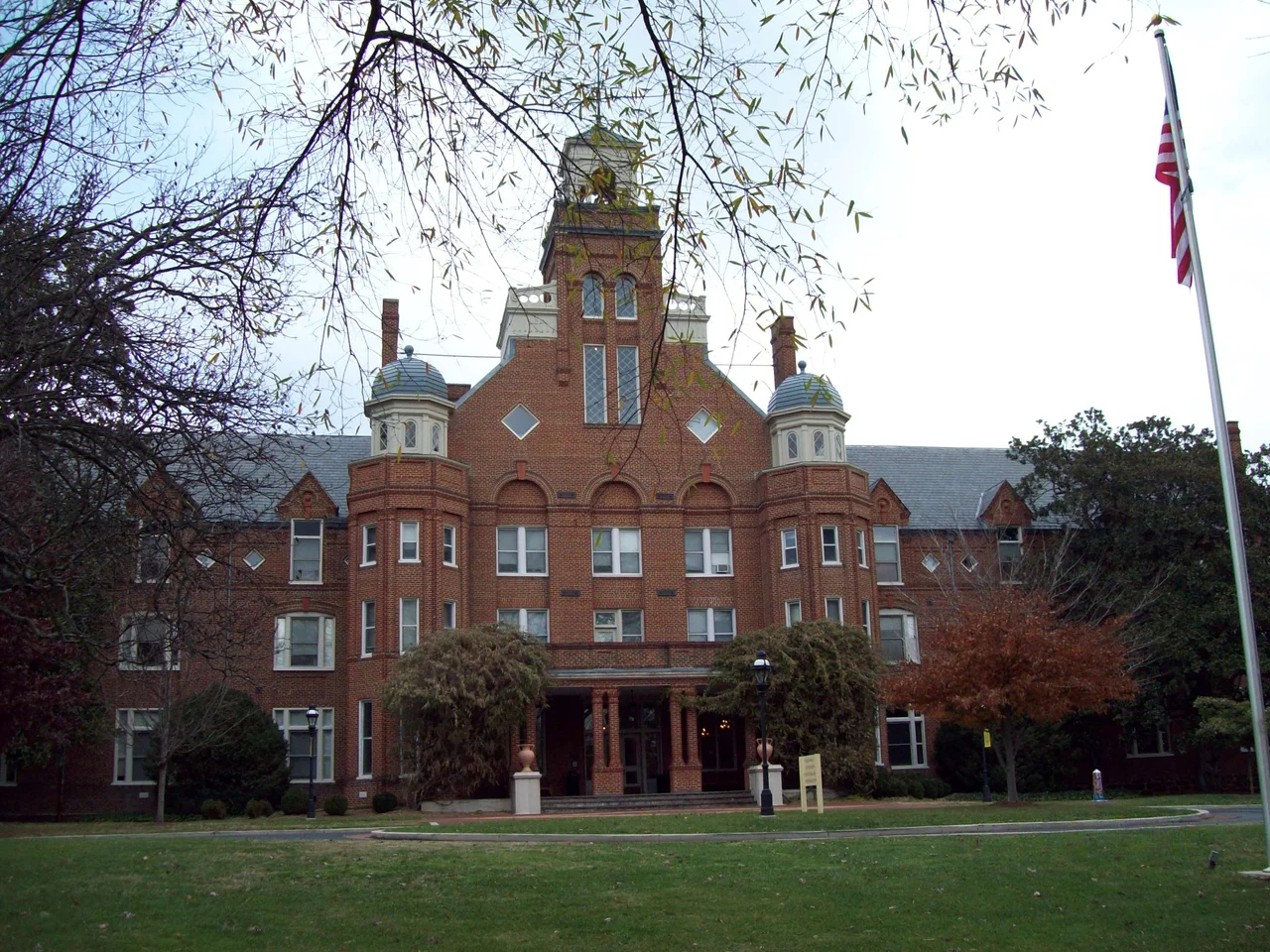

Randolph College
In August 2006, students returning to a hilltop campus above the James River in Lynchburg learned, only weeks into the semester, that the women's college they had chosen was about to admit men. The decision was not gentle in landing. Within days, protests filled the lawns of Randolph-Macon Woman's College, lawsuits were drafted, and alumnae who had crossed the same brick walks decades earlier began calling reporters. By the following July, the institution that had stood as a women's college since 1891 had a new name — Randolph College — and a future that almost nobody on campus had asked for.
Born of a Refusal
The college exists because Randolph-Macon College, the men's school down the road, said no. President William Waugh Smith spent years trying to convince his trustees to admit women. When they refused, he founded a separate institution under the same charter and went looking for a home. Lynchburg won the bidding by donating 50 acres on a Methodist-tied campus that opened in 1891. Main Hall, the great brick centerpiece with its dome and columns, rose that same year; it would be added to the National Register of Historic Places in 1979. By 1916, Randolph-Macon Woman's College had become the first women's college in the South to earn a Phi Beta Kappa charter, signaling that its students were every bit the equals of women at Smith or Wellesley.
The Eccentric Namesake
The Randolph in Randolph College is John Randolph of Roanoke (1773-1833), a planter and politician whose biography reads like fiction. He served in both houses of Congress, broke openly with his cousin Thomas Jefferson, and once fought a pistol duel with Henry Clay over a Senate floor insult. Both men survived; Clay's bullet went through Randolph's coat. In his will, Randolph freed the hundreds of people he had enslaved and provided land for them in Ohio - an act that had to be litigated for years before it took effect. The college named for him sits in a Virginia that he both shaped and embarrassed.
The Decision That Split the Campus
By 2006, the math had become unforgiving. Only three percent of college-age women said they would even consider a single-sex school, and Randolph-Macon Woman's College was competing for the same students as coed schools with deeper pockets. The trustees voted to admit men. Interim president Ginger Worden defended the decision in the Washington Post, but the response on campus was raw. Students said they had been recruited under false pretenses. Alumnae filed suit. The first male students, arriving in 2007, found their mailboxes vandalized and their dorm doors defaced. The last class to receive diplomas reading 'Randolph-Macon Woman's College' walked the stage on May 16, 2010 - a quiet end to 119 years of single-sex tradition.
The Maier Collection and the Sister-Classes
Some traditions held. Since 1920 the college has collected American art, and the Maier Museum of Art on campus now holds thousands of paintings, drawings, and photographs by 19th and 20th century American artists. The 'odd' and 'even' class rivalry - in which students of odd graduation years are paired with their odd-year sister classes, and the same for even years - still organizes much of student life. And from 1968 onward, generations of juniors decamped to live in Randolph-owned houses across from the University of Reading in England, a study-abroad tradition that ran until 2018.
What Endures
Randolph competes in NCAA Division III as the Wildcats, in the Old Dominion Athletic Conference, with nine intercollegiate sports. Notable faculty have included the cyberpunk novelist Rudy Rucker, who taught mathematics here in the early 1980s, and the educator Celestia Susannah Parrish, who helped pioneer experimental psychology in the American South. In 2021 the college rolled out TAKE2, a curriculum that splits each semester into two seven-week sessions, with students taking just two courses at a time. From the steps of Main Hall you can still see the Blue Ridge to the west - the same view Randolph's first students saw in 1891, when nobody at this school imagined men would ever walk these halls.
From the Air
Located at 37.44 degrees N, 79.17 degrees W on a hilltop campus above the James River in Lynchburg, Virginia. Main Hall's red brick and dome are visible against the Blue Ridge foothills. Nearest airport is Lynchburg Regional (KLYH), about 5 miles southwest. Best viewed from 2,000 to 4,000 feet AGL in clear conditions.
Nearby Stories
- Appomattox-Buckingham State Forest 4.8 km away
- Hollins University 12 km away
- Franklin County, Virginia 13 km away
- Buena Vista, Virginia 15 km away
- Smith Mountain Lake 24 km away
- Alleghany County, Virginia 26 km away
- Murder of Hannah Graham 36 km away
- Staunton River State Park 44 km away