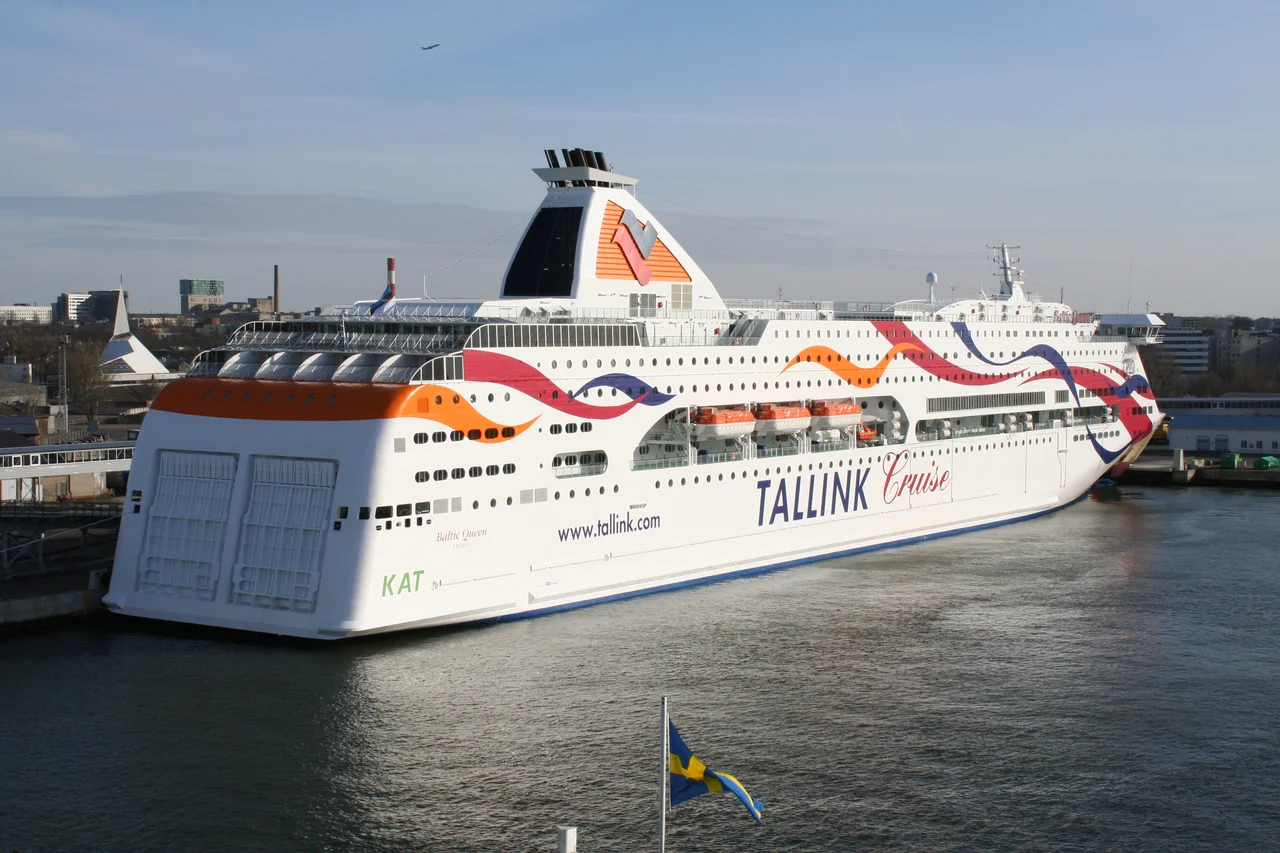

Rauma shipyard
In September 2013, STX Finland announced it was closing the Rauma shipyard, and six hundred people in a town of fewer than forty thousand were put out of work. Four months later the town bought the shipyard. The City of Rauma paid eighteen million euros in January 2014 for a facility a South Korean-owned corporation had just written off, which sounds either like sentiment or like recklessness. It turned out to be neither. Rauma has been building ships since the sixteenth century, and the people who knew how were all still standing on the same peninsula. By the end of 2025 the yard had four warships on the water or on the blocks and a contract worth 1.12 billion US dollars to build icebreakers for the United States Coast Guard.
Ships, Then No Ships, Then Ships
Shipbuilding in Rauma runs back to the 1500s and carried on until the sail era ended in the 1890s, at which point the trade essentially died. It came back in 1945 in the least joyful circumstances imaginable. Finland had lost its war against the Soviet Union and owed reparations, and reparations meant vessels: Hollming and Rauma-Repola began building ships for delivery to Moscow because the peace terms required it.
It is a strange origin for a modern industry — a generation of Finnish welders and platers learning their trade to pay a debt imposed by defeat. The yards kept the skills afterward and sold them commercially instead, which is why Rauma still knows how to build hulls that hold up in ice.
Where the Ships Ended Up
Follow Rauma-built hulls around the world and the map gets strange fast.
The research vessel Akademik Mstislav Keldysh, finished by Hollming at the end of 1980, later carried the deep submersibles Mir-1 and Mir-2, added in 1987. Those were the craft that took James Cameron down to the Titanic in 1996 and again in 2001 for Ghosts of the Abyss. The icebreaker Fennica, launched here in 1993, spent winters escorting Baltic traffic and summers on offshore contracts; in July 2015 it struck an uncharted rock, put into Portland, Oregon for repairs, and left again past Greenpeace climbers hanging from the St Johns Bridge and kayakers trying to stop it returning to Shell's Arctic drilling operation.
The polar research and supply ship S.A. Agulhas II came off the same slipway in 2012. Ten years later it was the mother ship for Endurance22, the expedition that found Shackleton's Endurance on the floor of the Weddell Sea, 3,400 metres down. The cross-Channel ferries Spirit of Britain and Spirit of France, and the Irish Sea giant Ulysses, were built here too.
Six Hundred Names
Hollming and Rauma-Repola merged in 1991 as Finnyards, which passed to the Norwegian group Aker Maritime and then, from 2008, to STX Finland, a subsidiary of South Korea's STX Corporation. Ownership moved further away with each transfer, and the 2013 closure decision was made a long way from Rauma.
Six hundred layoffs is a number that hides what it did. In a town this size a shipyard is not one employer among many — it is why a large fraction of households have an income, and why the vocational school teaches welding. Those six hundred were fitters, electricians and designers with decades in the trade and nowhere obvious to take it. The city's purchase was an attempt to keep them from scattering, and Rauma Marine Constructions was incorporated on 27 March 2014 to put them back to work. It employed 342 people at the end of 2025.
Grey Hulls
Rauma has been the Finnish Navy's yard for four decades. The Valas-class transports came in 1979–81, the Kiisla-class patrol boats in the mid-1980s, the Rauma-class missile boats in 1990–92 — Rauma, Raahe, Porvoo and Naantali — followed by the Hämeenmaa-class minelayers and then the Hamina-class missile boats, of which Hamina came first in 1998 and Pori last in 2006.
The current programme is a different order of thing. The four Pohjanmaa-class corvettes are 117 metres long and displace around 4,300 tonnes each, far larger than anything else in the Finnish fleet, and the whole project runs to roughly 1.3 billion euros with a shipbuilding contract of 647.6 million signed in September 2019. Steel cutting for the first ship began on 30 October 2023, her keel was laid in April 2024, and she went into the water on 21 May 2025. The second followed exactly a year later, to the day. All four are meant to be operational by 2029.
The Order From Washington
In October 2025 the presidents of the United States and Finland signed a memorandum of understanding covering medium icebreakers for the US Coast Guard, designated Arctic Security Cutters. Rauma Marine Constructions joined a consortium led by Bollinger Shipyards of Louisiana, and on 26 December 2025 the Finnish company was awarded a contract worth 1.12 billion US dollars — around 960 million euros — to build two of the cutters in Finland by 2028, with four more to be built in the United States.
It is a peculiar thing to contemplate from the quayside. American icebreakers ordered from a yard a foreign owner discarded as worthless, bought back by a town of thirty-eight thousand for the price of a modest office building. Nobody involved is being sentimental. Finland builds most of the world's icebreakers, and Rauma is one of the places that remembers how.
From the Air
The Rauma shipyard occupies the waterfront at 61.1235°N, 21.4616°E, on the southern side of the Port of Rauma. From 2,000–5,000 feet the site is one of the clearest industrial signatures on this coast: covered building halls, a long fitting-out quay, gantry cranes and — often — a large grey or white hull alongside. The buoyed fairway runs west toward Kylmäpihlaja Lighthouse, about 6 nm out, which makes a useful inbound reference. The UNESCO wooden quarter of Old Rauma lies roughly 3 km northeast of the yard, a dense grid of small red and ochre roofs. Nearest controlled fields are Pori (EFPO) about 22 nm north-northeast and Turku (EFTU) about 43 nm southeast; Eura (EFEU) sits about 20 nm east. Note that active shipyards and port areas may carry local overflight restrictions, and naval construction here can mean temporary limits — check NOTAMs before planning a low pass.
Nearby Stories
- Uusikaupunki Automobile Museum 9.5 km away
- Köyliönjärvi 11 km away
- Kurjenrahka National Park 17 km away
- Jusélius Mausoleum 17 km away
- St. Olaf's Church, Tyrvää 42 km away
- Archipelago Sea 58 km away
- Battle of Bomarsund 108 km away
- Härnösand Cathedral 218 km away