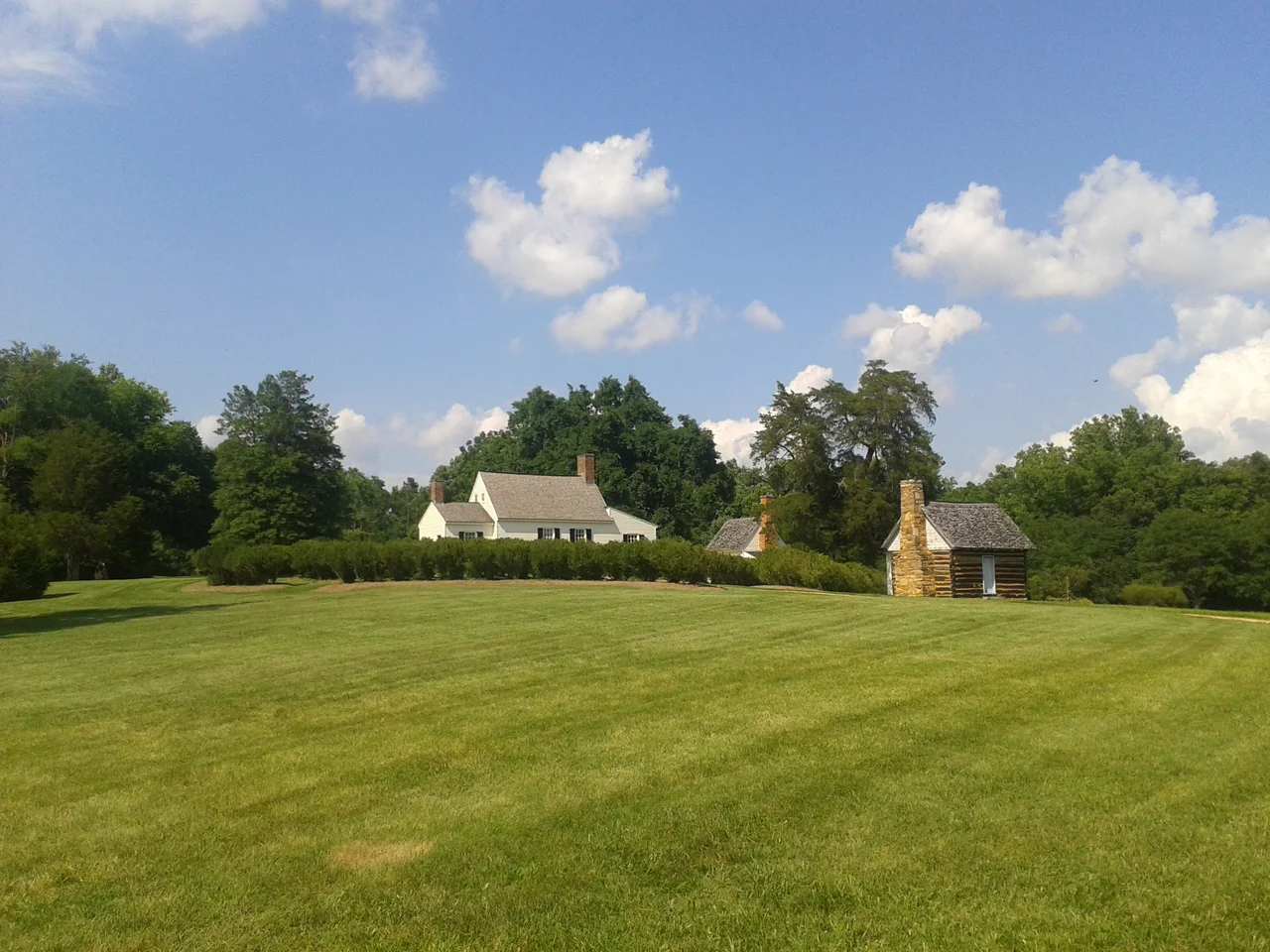

Red Hill Patrick Henry National Memorial
By 1794, Patrick Henry had given the most famous speech in American history twice over — once at St. John's Church in Richmond in 1775 when he asked for liberty or death, and a thousand times since when other people retold it. He was 58 years old, his health was beginning to fail, and he wanted to retire. He chose a plantation on the Staunton River in Charlotte County, called Red Hill. He brought his second wife Dorothea and their children. He set up a law office in a small outbuilding. He kept a 2,930-acre tobacco plantation running on the labor of enslaved people. And on June 6, 1799, after five years at Red Hill, he died here.
An Orator at Rest
Henry had been governor of Virginia five times, an early opponent of the federal Constitution who eventually accepted it, and a lawyer with one of the most resonant courtroom voices in the new republic. The Red Hill plantation gave him river access via the Staunton, a working tobacco operation, and a small wooden law office he still rode out to as a private attorney. The Patrick Henry Memorial Foundation, established in 1944, restored the law office and preserved his grave in the 1950s and 1960s. The original Red Hill mansion that Henry knew burned in 1919; the present house is a reconstruction. A museum opened on the site in 1976 to interpret his life. Among the artifacts on display is the paper cutter — really a small letter knife — that Henry held while delivering his Give me liberty or give me death speech. The last letter he ever wrote is here too. So is Peter F. Rothermel's monumental 1851 painting Patrick Henry Before the Virginia House of Burgesses, donated to the foundation in 1959.
The Quarter Place
Henry was a Founding Father. He was also, like Jefferson and Washington and Madison, a slaveholder. The 2,930-acre plantation he ran at Red Hill in the 1790s depended on the labor of enslaved African Americans who lived in housing near the main fields. In 2018, the Patrick Henry Memorial Foundation acquired a stretch of land it calls the Quarter Place, where the enslaved community at Red Hill had lived in Henry's time and where free Black residents continued to live after the Civil War. The Quarter Place contains one of the largest intact cemeteries for enslaved people in Virginia. One hundred and forty-seven people are buried there. Most of their names are unknown to history. The foundation's stewardship of the Quarter Place is a relatively recent commitment to telling the whole story of Red Hill — the orator and the people whose labor made his retirement possible.
From National Monument to National Memorial
Congress authorized a Patrick Henry National Monument on August 15, 1935, contingent on the Secretary of the Interior acquiring the property. The acquisition never happened. The enabling legislation was repealed on December 21, 1944 — and almost immediately replaced by the founding of the private Patrick Henry Memorial Foundation, which took over preservation of the site. Red Hill Plantation was added to the National Register of Historic Places on February 14, 1978. Congress authorized the site as a National Memorial on May 12, 1986, but ownership stayed with the foundation. Red Hill operates today as a house museum and an affiliated area of the National Park Service — the foundation can request NPS assistance with preservation and interpretation, but the foundation runs the place.
The Osage Orange and the Long View
Two figures dominate the grounds. One is the grave of Patrick and Dorothea Henry, set in a small enclosed plot near the reconstructed house. Henry's epitaph reads: His fame his best epitaph. The other is a tree. The Osage orange at Red Hill is nearly 350 years old — meaning it was already a mature tree when Henry was a child — and it is recognized as a National Champion, the largest of its species on the National Register of Champion Trees. The foundation manages about 1,000 acres of Henry's original holdings today. Roughly 3,000 objects in the collection trace his life and the life of the plantation. The bateaux that once carried Henry's tobacco down the Staunton are gone. The 19th-century railroad flag stop that briefly served the property is gone. The walking trails the foundation added with 2006 grant money trace what is left.
From the Air
Red Hill sits at 37.032°N, 78.898°W in rural Charlotte County, about 7 miles southeast of Brookneal along the Staunton River branch of the Roanoke. Nearest airport: Lynchburg Regional (KLYH), about 25 nm north-northeast. The wooded plantation grounds are visible from low cruise altitudes of 3,000-5,000 ft AGL along the river corridor.
Nearby Stories
- Smith Mountain Lake 8.5 km away
- High Bridge (Appomattox River) 8.7 km away
- National D-Day Memorial 10 km away
- Appomattox Historic District 13 km away
- Long Grass Plantation 21 km away
- Staunton River State Park 22 km away
- Francisco's Fight 35 km away
- 2014 Dan River Coal Ash Spill 37 km away