
Remembrance Day bombing
Gordon Wilson lay in the rubble holding his daughter Marie's hand. Marie was twenty years old, a student nurse home for Remembrance Sunday with her father. She squeezed his fingers four times. She told him she loved him. She died there, in the dust on Belmore Street, before the ambulances could reach them. That evening, from his hospital bed, the BBC's Mike Gallagher asked Gordon Wilson what he felt towards the people who had planted the bomb. Wilson paused, breathing carefully through broken ribs, and said: 'I bear no ill will. I bear no grudge. Dirty sort of talk is not going to bring her back to life. She was a great wee lassie. She loved her profession. She was a pet. She's dead. She's in heaven, and we shall meet again. I will pray for those men tonight and every night.' Within hours those words were on every news service in the English-speaking world. The Troubles had thirty years of horror in them by then. They had never produced anything quite like this.
The Morning Itself
It was a Sunday, 8 November 1987, the morning of the annual Remembrance Sunday service at the County Fermanagh War Memorial on Belmore Street in Enniskillen. The town was wreathed for the eleven o'clock silence. A parade of Ulster Defence Regiment soldiers was approaching the cenotaph. Civilians gathered along the route: three married couples standing together, retired teachers, a young nurse home for the weekend, a builder, an off-duty RUC officer. The bomb had been planted in the empty Reading Rooms above the gable end of the building behind them. At around 10.43 a.m., before the service could begin, the bomb detonated, collapsing the wall and burying the people who had been standing in front of it. Eleven died at the scene. Sixty-three were injured. One of the injured, Ronnie Hill, a school headmaster, never woke from his coma. He died in December 2000, after thirteen years of his wife Noreen sitting beside his bed. The Wikipedia entry lists him as the twelfth fatality.
The Eleven and the One
Their names are not statistics. Wesley Armstrong, aged 62, and his wife Bertha, 55. Kit Johnston, 71, and his wife Jessie, 62. William Mullan, 74, and his wife Agnes, 73. John Megaw, 67. Alberta Quinton, 72. Samuel Gault, 49, an off-duty RUC reservist. Edward Armstrong, 52, no relation to Wesley and Bertha. And Marie Wilson, 20, a trainee nurse at Belfast's Royal Victoria Hospital. Ronnie Hill, 67, would die thirteen years later. All those killed were Protestant civilians, most of them elderly, all of them simply there to remember the British war dead of 1914 and 1939. The IRA released a statement saying the bomb had been intended for the parading soldiers and that civilian deaths were a mistake. The detail did not console anyone. A second, larger bomb planted that same morning at a Remembrance ceremony in Tullyhommon, near a parade of Boys' Brigade and Girls' Brigade children, failed to detonate. Its existence emerged in the next day's police reports and changed nothing about anyone's understanding of what had been planned.
What Gordon Wilson Did
Gordon Wilson was a draper from Cooper Crescent in Enniskillen. He had taken Marie to the service that morning because she was home from Belfast and they wanted to go together. After his BBC interview that evening, condolences arrived from heads of state and from people who had never been to Ireland in their lives. Queen Elizabeth referenced his words in her Christmas message. Margaret Thatcher cried while reading the transcript. President Reagan sent a letter. Wilson did not, in any practical sense, ask people to forgive the bombers. He simply refused to be made bitter by them. He went on to become a peace campaigner, a member of Seanad Eireann, and a private and dogged advocate for reconciliation, meeting clandestinely with senior IRA figures in 1993 to plead for a ceasefire. He never received the answer he wanted. He died in 1995, four years before the Good Friday Agreement made his hope into something resembling policy. Marie's photograph still sits on his desk in the Wilson family home.
What the Bombing Did to the Bombers
The bombing destroyed support for the IRA in ways that no British army operation had managed in fifteen years. Sinn Fein's electoral support collapsed across the Republic of Ireland and did not return to its 1985 levels until 2001. The Republic's parliament passed the Extradition Act within weeks, making it far easier to extradite IRA suspects from the south to the north. Many Irish nationalists and republicans publicly described the bombing as a blow to their cause. The IRA never claimed it as a deliberate atrocity, but they never adequately explained it either, and the inadequacy of the explanation followed them through the rest of the Troubles. Loyalist paramilitaries responded as they always did, with reprisal attacks on Catholic civilians. Five Catholic teenagers were wounded in a shooting in Belfast the next day, and a Protestant teenager was killed by the Ulster Defence Association after being mistaken for a Catholic. In the week that followed, fourteen separate gun and bomb attacks targeted Catholics in Belfast. The cycle Enniskillen was meant to end took the long road back through more pain before it ended.
After Enniskillen
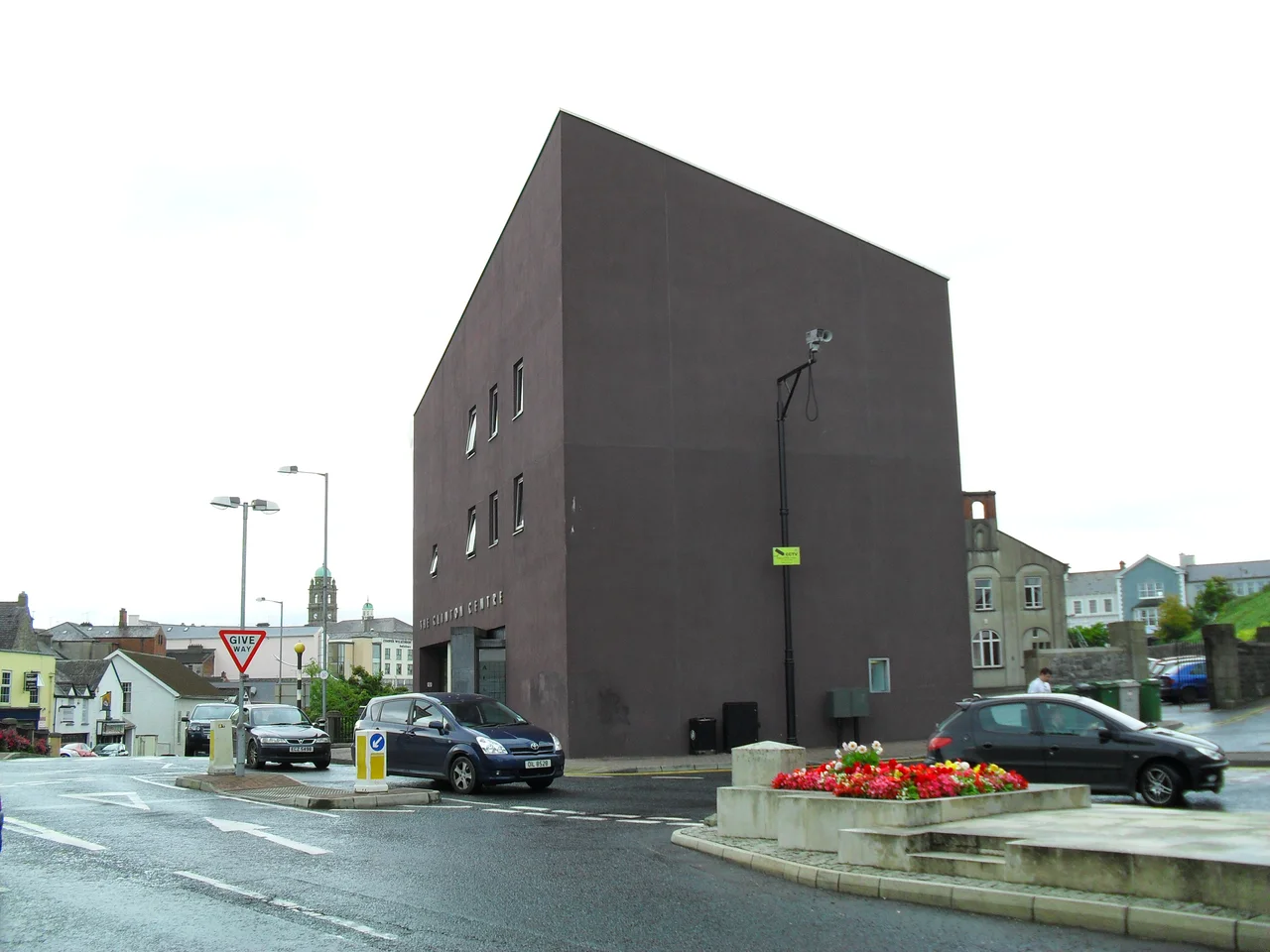
Two weeks after the bombing, the Remembrance Sunday service was held again in Enniskillen, this time with 5,000 people in attendance and Margaret Thatcher among them. U2 had played a concert in Denver, Colorado, on the day of the bombing, and during their song Sunday Bloody Sunday, Bono interrupted the performance to condemn the attack and the Irish-American funding of the armed struggle. The footage appeared in their concert film Rattle and Hum. Simple Minds wrote Belfast Child, inspired by the bombing; it reached number one in the UK in 1989. Chris de Burgh wrote a private song called Remembrance Day that he only ever performed twice in solo piano arrangements, with the line: 'Whatever you believe in, whatever flag you wave, let us not forget what happened on Remembrance Day.' The Clinton Centre, opened by President Bill Clinton in 2002, now stands on the site of the Reading Rooms where the bomb had been planted. A separate memorial to those killed was unveiled on the thirtieth anniversary in 2017 and now stands at the Clinton Centre too. Enniskillen has not stopped remembering. It has chosen, painfully, to remember publicly.
From the Air
The site of the bombing is at 54.3444°N, 7.6347°W on Belmore Street in central Enniskillen, beside the County Fermanagh War Memorial and immediately adjacent to the Clinton Centre, which now occupies the location of the Reading Rooms. From the air, Enniskillen is unmistakable as the bow tie of land between Upper and Lower Lough Erne, with the cenotaph site near the eastern end of the central island. St Angelo Airport (EGAB), 4 miles north of the town centre, is the closest active field. Belfast International (EGAA) lies 75 nautical miles east; Donegal (EIDL) is 35 nautical miles northwest. November mornings here are typically cold, grey, and low-overcast.
Nearby Stories
- Ballyconnell 3.1 km away
- Castlederg 5 km away
- Belleek, County Fermanagh 8.7 km away
- Castlecaulfield 17 km away
- Lissan House 17 km away
- Castleblayney 19 km away
- McDermott's Castle 19 km away
- Gweebarra Bay 32 km away