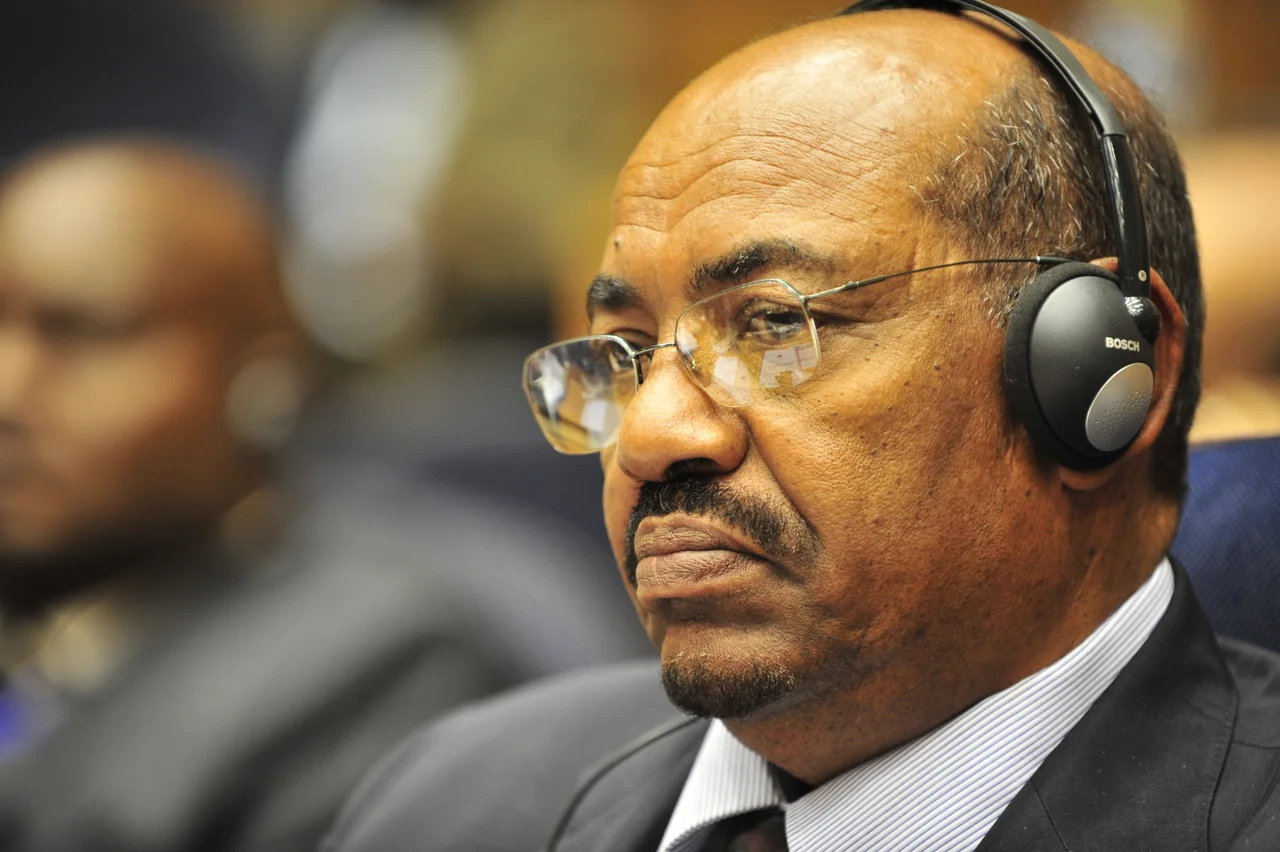

Republic of Sudan (1985–2019)
The protests that ended Omar al-Bashir's thirty-year rule began on 19 December 2018 over the price of bread. The government had just tripled the cost of basic goods, and people who had endured sanctions, civil war, secession, genocide accusations, and the quiet grinding of an economy with 70 percent inflation decided that they would not endure this, too. For the next four months Sudanese civilians - many of them young, many of them women - filled the streets of Khartoum, Omdurman, Port Sudan, and Atbara. By 11 April 2019, Bashir was under arrest. Between those two dates, ordinary Sudanese lives were the pressure that finally cracked a regime backed by army, intelligence, and foreign patrons.
The Coup That Opened the Door
On 6 April 1985, Defence Minister Abdel Rahman Swar al-Dahab removed President Gaafar Nimeiry while Nimeiry was abroad. Nimeiry's sixteen-year rule had ended in mass protests against austerity, fuel shortages, and his imposition of Sharia law - strains that would prove durable. The transitional military government handed power to a civilian coalition in 1986, headed by Sadiq al-Mahdi of the National Umma Party. What followed was three years of unstable coalition politics. Al-Mahdi's governments could not resolve the civil war in the south, could not negotiate with the IMF, and could not agree on what to do about the Sharia code Nimeiry had imposed in 1983. In August 1988, severe floods devastated Khartoum. In November 1988, Ahmed al-Mirghani of the Democratic Unionist Party signed an agreement with the Sudan People's Liberation Movement that offered to freeze Sharia and lift the state of emergency - a real chance at peace. The National Islamic Front, led by Hassan al-Turabi, opposed it. The coalition collapsed.
Bashir Takes Over
On 30 June 1989, Colonel Omar al-Bashir, with backing from the National Islamic Front, overthrew the civilian government. His Revolutionary Command Council ruled until 1993, when Bashir dissolved it and declared himself president. He imposed Sharia nationwide, hardened the war against the south, and created the Popular Police Forces - a politicized militia of at least 35,000 that enforced "moral standards" on the civilian population, with a poor human rights record that persisted until the regime itself fell. Khartoum became a destination for figures Washington labeled terrorists: Carlos the Jackal, Osama bin Laden (who lived in Khartoum from 1991 to 1996), and Abu Nidal all resided in the Sudanese capital during these years. In 1993, the United States designated Sudan a state sponsor of terrorism. In August 1998, after the East Africa embassy bombings, American cruise missiles struck Khartoum. By then the country was more isolated internationally than at any point in its post-independence history.
Darfur
In early 2003, rebel movements in Sudan's western region of Darfur - the Sudan Liberation Movement and the Justice and Equality Movement - rose against the central government, accusing Khartoum of deliberately neglecting the region. The government's response was to arm Arab militias known as the Janjaweed. What followed was one of the worst atrocities of the early twenty-first century. Villages were burned. Wells were poisoned. Women were raped as a systematic tactic. Estimates of the dead range from tens of thousands to several hundred thousand - by combat, starvation, or disease - and more than two million people were displaced. Hundreds of thousands fled into neighboring Chad. In 2009 the International Criminal Court issued an arrest warrant for Bashir for crimes against humanity and war crimes; a second warrant followed in 2010 on genocide charges. These were the first warrants the ICC had ever issued against a sitting head of state. Bashir kept flying to foreign capitals anyway, daring African Union members to arrest him. None did.
The South Leaves
The civil war in the south - the one al-Mahdi had failed to end and Bashir had intensified - finally reached a negotiated settlement in January 2005 at Naivasha in Kenya. The terms gave southern Sudan six years of autonomy and then a referendum on independence. When the referendum came in January 2011, the south voted overwhelmingly to leave. On 9 July 2011 South Sudan became an independent country with its capital at Juba and Salva Kiir Mayardit as its first president. Half of Sudan's oil revenue left with it. Bashir accepted the result but the border remained violent - the Heglig Crisis of 2012, continuing conflict in South Kordofan and Blue Nile, a dispute over Abyei. Sanctions eased during the Obama administration's final days in January 2017, and the Trump administration lifted most of the rest in October 2017. The economy did not recover. Inflation climbed toward 70 percent. And on 19 December 2018, a government decision to triple bread prices put people in the streets.
Revolution and After
The 2018-2019 uprising was driven by Sudanese youth and anchored by neighborhood Resistance Committees that organized protests across the country. Women were at the front - the image of Alaa Salah standing on a car in a white toub, leading chants, became the revolution's most recognized photograph. The regime responded with force. More than 800 opposition figures and protesters were arrested. Around 40 protesters were killed according to Human Rights Watch, though local reports suggested higher numbers. On 11 April 2019 the military finally moved: Bashir was arrested and a three-month state of emergency declared. But the protests did not stop, because the military council that replaced him was not what people had demanded. On 3 June 2019, security forces dispersed the mass sit-in outside the Armed Forces headquarters in Khartoum with live ammunition and tear gas. Over 100 people died in what became known as the Khartoum massacre. The African Union suspended Sudan. In August the civilian Forces for Freedom and Change signed a power-sharing agreement. Abdalla Hamdok, a UN economist, was sworn in as prime minister on 21 August 2019. A new era was, briefly, beginning. What came next - the 2021 military coup, the April 2023 outbreak of civil war - is a story these earlier pages did not yet write.
From the Air
The reference point is Khartoum at 15.61°N, 32.53°E, capital throughout this period and site of the 2019 revolution's central sit-in. Darfur lies in the far west of the country - roughly 13°N, 24°E - and South Sudan (after 2011) is south of the 10th parallel with its capital Juba at 4.85°N, 31.61°E. At cruising altitude Sudan's geography becomes legible: the Blue and White Niles converging at Khartoum, the arid wastes of Kordofan and Darfur westward, the Nuba Mountains, and the green belt of the south. Khartoum International (HSSS) is the primary aviation reference; El Fasher (HSFS) and Nyala (HSNN) serve Darfur; Juba International (HSSJ / later HJJJ) serves South Sudan.
Nearby Stories
- Esh Shaheinab 27 km away
- Naqa 56 km away
- Mahdist War 65 km away
- Musawwarat es-Sufra 100 km away
- Gezira State 101 km away
- Northern Sudan 215 km away