
Ritter Park
Charles Ritter cut down trees for a living, but the park that carries his name is shaded by them. In 1908, a future mayor named Rufus Switzer convinced the city of Huntington, West Virginia, to buy 75 acres of bottomland along 13th Avenue. The lumberman threw in an additional twenty acres of his own. Five years later, in September 1913, Ritter Park opened to the public - a green ribbon stitched into a young river town that was still figuring out what kind of place it wanted to be. More than a century later, locals call it the heart of Huntington, and the name fits in a way park names rarely do.
A Town Built for Walking
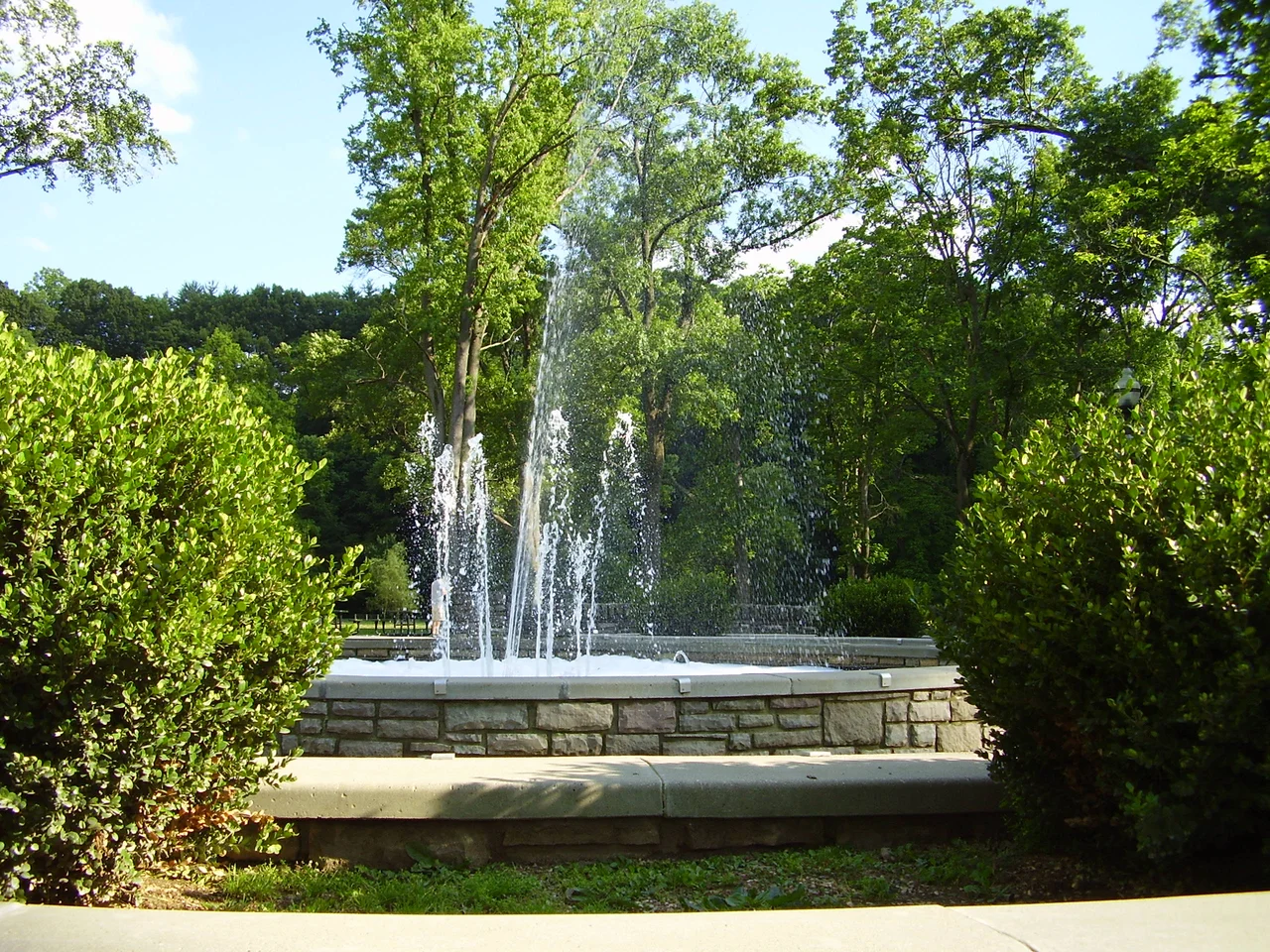
Ritter Park does not announce itself the way bigger parks do. There is no monumental gate, no grand fountain at the entrance. Instead, the park spreads along a creek bed, with footbridges crossing the water at three points and nine miles of hiking and biking trails threading through the trees. You can enter from a neighborhood street and be among rose bushes within a minute. The Rose Garden was added in the 1930s as a Works Progress Administration project, and on a June morning, when the blossoms are at their fullest, the scent stops conversations mid-sentence. The amphitheater hosts summer concerts. Two picnic shelters fill up with birthday parties. Eleven tennis courts, eight pickleball courts, and a recreational field absorb whoever shows up. It is the kind of park that feels less like a destination than a part of the neighborhood that happens to be public.
From Alice in Wonderland to the Woodland
For thirty years, children climbed through an Alice in Wonderland playground built in 1987 - giant teacups, a Cheshire Cat, the whole strange world rendered in wood and metal. In 2017, Huntington set aside $236,000 to rebuild it. The new playground, completed soon after, traded Lewis Carroll for the surrounding hills: a woodland forest theme, with a zipline, a sand pit, and structures designed to look like they belong among the actual trees. A separate corner of the park became Huntington's PetSafe Dog Park, paid for by a $100,000 grand prize the city won in 2011 in PetSafe's Bark for Your Park contest. The dog park opened in 2012. On any given evening, you can hear the zipline, the laughter, and the barking layered over each other - a soundtrack of small American happiness.
The Park That Made the Cameo
Ritter Park has wandered, briefly, into national pop culture. The ESPN documentary Rand University, part of the 30 for 30 series, traces NFL wide receiver Randy Moss's roots in nearby Rand, West Virginia. In one stretch of the film, fellow West Virginia quarterback Chad Pennington speaks while walking a Ritter Park trail, the dappled light of the trees behind him standing in for the entire idea of West Virginia. It is a small cameo, but a fitting one. Ritter Park rarely insists on being noticed, which is precisely what makes it photograph so well as background. Local events keep the park busy through the year: Art in the Park, the Graffiti in the Park car show, the Huntington Music and Arts Festival, Paws in the Park, the Funktafest. None of them are particularly famous outside the Tri-State, and that, too, feels right.
The Lumberman's Long Shadow
There is something quietly satisfying about a park named for the man who donated part of the land. Charles Ritter made his fortune in West Virginia timber, an industry that flattened entire ridges and floated logs down the Guyandotte and Big Sandy rivers to mills near Huntington. By the early 1900s, much of the original forest in this part of the state had been cut. Ritter's twenty acres - and the city's seventy-five - became one of the first attempts in Huntington to set aside green space rather than clear it. The park is now surrounded by the Ritter Park Historic District, a neighborhood of brick homes and tree-lined streets that grew up around it. The trees lining the trails today are not the old growth Ritter's crews would have known. They are second growth, third growth, the patient work of a century. Which is, in its own way, a kind of restitution.
From the Air
Ritter Park sits in Huntington, West Virginia at 38.41 degrees north, 82.44 degrees west, in a shallow creek valley one mile south of the Ohio River. Best viewed at 2,500 to 4,000 feet AGL: look for the green wedge between the grid of 13th Avenue neighborhoods and the wooded ridges to the south. Tri-State Airport (KHTS) is six miles west; Huntington Tri-State and the Ohio River make natural waypoints. Best visibility on clear afternoons when the rose garden and amphitheater pop against the surrounding rooftops.
Nearby Stories
- Battle of Scary Creek 6 km away
- Portsmouth 7.2 km away
- Fred M. Vinson Museum and Welcome Center 14 km away
- Staats Mill Covered Bridge 24 km away
- Lake Tight 25 km away
- Battle of Blair Mountain 32 km away
- Lower Shawneetown 35 km away
- The Kentucky Meat Shower: When Flesh Fell From a Clear Sky 68 km away