
RNAS Culdrose
Royal Naval Air Station Culdrose was originally meant to last about ten years. Built by John Laing and Son and commissioned as HMS Seahawk in 1947, the airfield outside Helston was a wartime contingency that the Royal Navy expected to close down quickly. Nearly eight decades later, Culdrose has become one of the largest helicopter bases in Europe, the operational home of every Royal Navy Merlin anti-submarine helicopter, and the principal Cornish employer of the Lizard Peninsula. The ten-year wartime airfield has outlasted most of its planners.
From Fighter School to Carrier Backbone
Admiralty surveyors began looking at the fields outside Helston in 1942. By 1947 the airfield was commissioned. The original plan was simple: a Naval Fighting School to train pilots in the Navy's first jets. Within a few years the role had multiplied. Culdrose trialled the Navy's earliest jet aircraft, trained airborne early warning crews, and based carrier-borne squadrons between deployments. Over the decades the emphasis shifted from fixed wing to rotary, but the core idea did not change: Culdrose existed to put naval aircraft to sea. Today two front-line Merlin HM2 squadrons - 814 Naval Air Squadron and 820 Naval Air Squadron - are based here. 814 deploys with Royal Navy frigates specialised in anti-submarine warfare; 820 protects the carrier strike groups built around HMS Queen Elizabeth and HMS Prince of Wales. 824 Naval Air Squadron trains the new Merlin aircrew and engineers before they arrive at those frontline units. The base also hosts 750 Naval Air Squadron, which trains Royal Navy Observers and RAF Weapon Systems Officers, and 700X NAS, the Navy's specialist drone-operations unit.
The Plan Called PYTHON
There is a quieter line in Culdrose's history. From 1968, the base was one of the designated locations for plan PYTHON - the British government's standing arrangement for continuity of government in the event of nuclear war. The Lizard Peninsula's southerly position, well clear of the major cities of southern England, made it useful for the kind of dispersal that PYTHON envisaged: senior ministers, civil servants, and military leadership scattered across hardened sites so that the United Kingdom could continue to function even if its capital ceased to exist. Most of the personnel walking onto the base in the late 20th century would never have known that bunker space, somewhere, was reserved for the catastrophe that never came. The same airfield that hosted training jets in daylight was, on paper, an emergency seat of government.
The Olympic Flame, Delivered by Airbus
On 18 May 2012 a yellow-painted British Airways Airbus A319 named The Firefly turned final at Culdrose. On board, in a specially designed lantern, was the Olympic Flame, flown in from Athens International. The passengers walking off the aircraft included Lord Coe, Princess Anne, and David Beckham. The next day the Torch Relay began its first leg at Land's End and worked east across Cornwall and Devon to Plymouth, then onward to the Olympic Stadium for the start of the 2012 Summer Olympics. Beckham would later say the flight felt like a privilege beyond what football had ever given him. For Culdrose, it was a single afternoon in a busy year. The base contributes around £100 million annually to the Cornish economy and is one of the largest single-site employers in the county; the Olympic landing was a high-profile minute in a continuous flow of work.
The Dummy Deck and the Volunteer Band
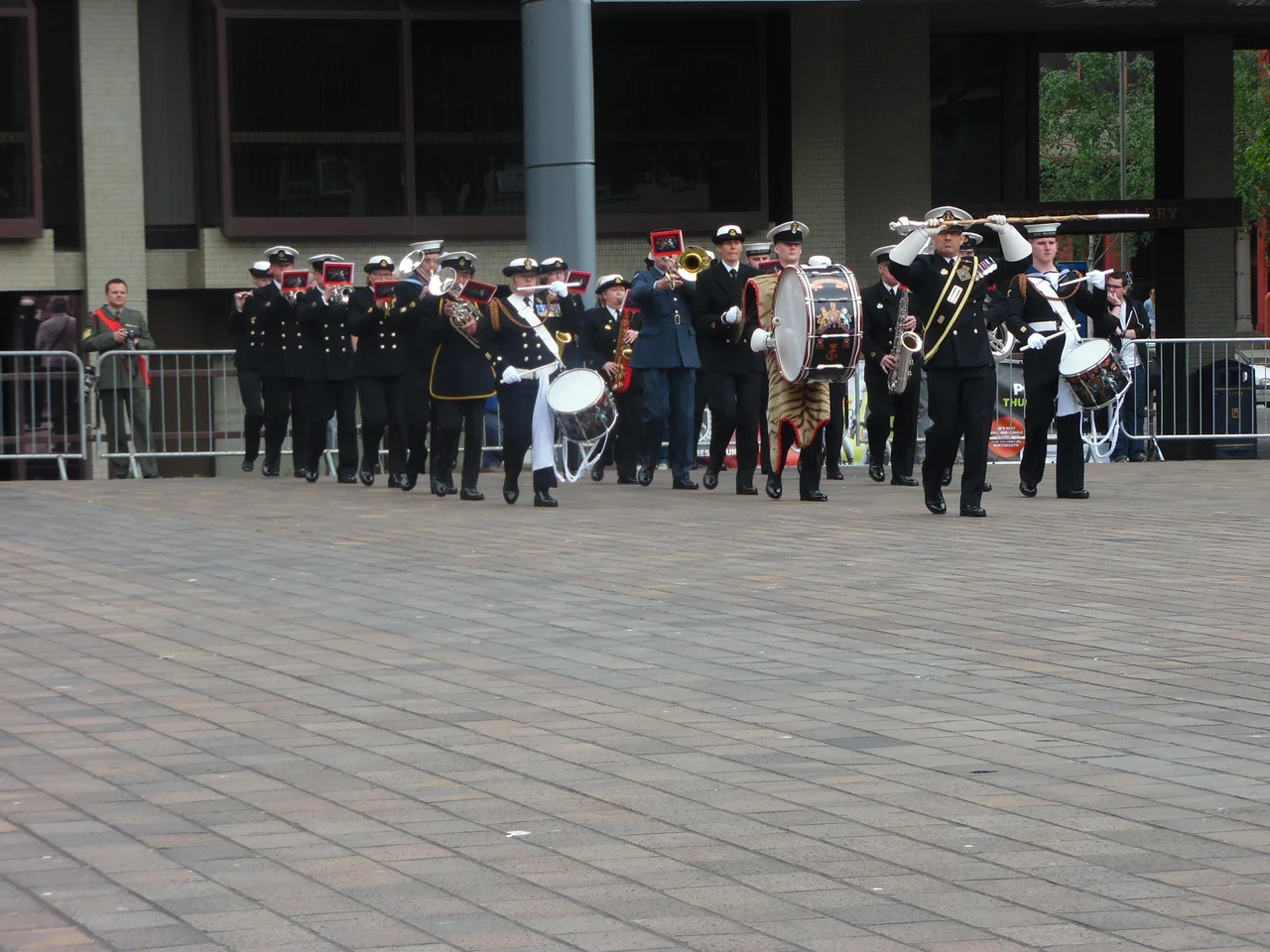
Walk around the base today and you will find some of the strangest training infrastructure in the British armed forces. The Royal Naval School of Flight Deck Operations operates a full-size replica of an Invincible-class aircraft carrier deck - the Dummy Deck - so that trainees can practise marshalling, refuelling, and fire-fighting on what is essentially a flight deck planted in a Cornish field. Mock-up aircraft can be reconfigured at the instructor's controls. Real helicopters land and take off from it. You can also, on a good Saturday, hear the HMS Seahawk Volunteer Band, one of nine volunteer bands of the Royal Marines Band Service, playing through the streets of Helston. In 2003 they were awarded the Bambara Trophy as the best band in the Fleet Air Arm. On 7 June 2016 they performed a dawn fanfare on the King Harry Ferry to mark the official birthday of Queen Elizabeth II. The whole base - aircraft handlers learning to put out helicopter fires, drone pilots flying ScanEagles out of Predannack, Merlin aircrews drilling for anti-submarine patrols, and a brass band playing on a ferry at dawn - is the Royal Navy in Cornish miniature.
From the Air
RNAS Culdrose (ICAO: EGDR) is at 50.086 degrees north, 5.256 degrees west, immediately east of Helston. The base has two crossing runways and substantial helicopter hardstanding; expect heavy Merlin HM2 activity in the Lizard area and ScanEagle drone operations from the satellite airfield at Predannack (12 km south). It is military airspace - check NOTAMs and contact ATC well clear; do not transit without authorisation. Nearest civilian airport is Newquay (EGHQ), 60 km north. The base is also a search-and-rescue node for the western English Channel. Recommended viewing altitude well outside the controlled zone, in clear weather only.
Nearby Stories
- Logan Rock 3.6 km away
- Polperro 7.4 km away
- Great Wheal Charlotte 10 km away
- Battle of Plymouth (1652) 26 km away
- SS Irma (1905) 30 km away
- Black Swan Project 75 km away
- HMS Affray 77 km away
- 1979 Fastnet Race 100 km away