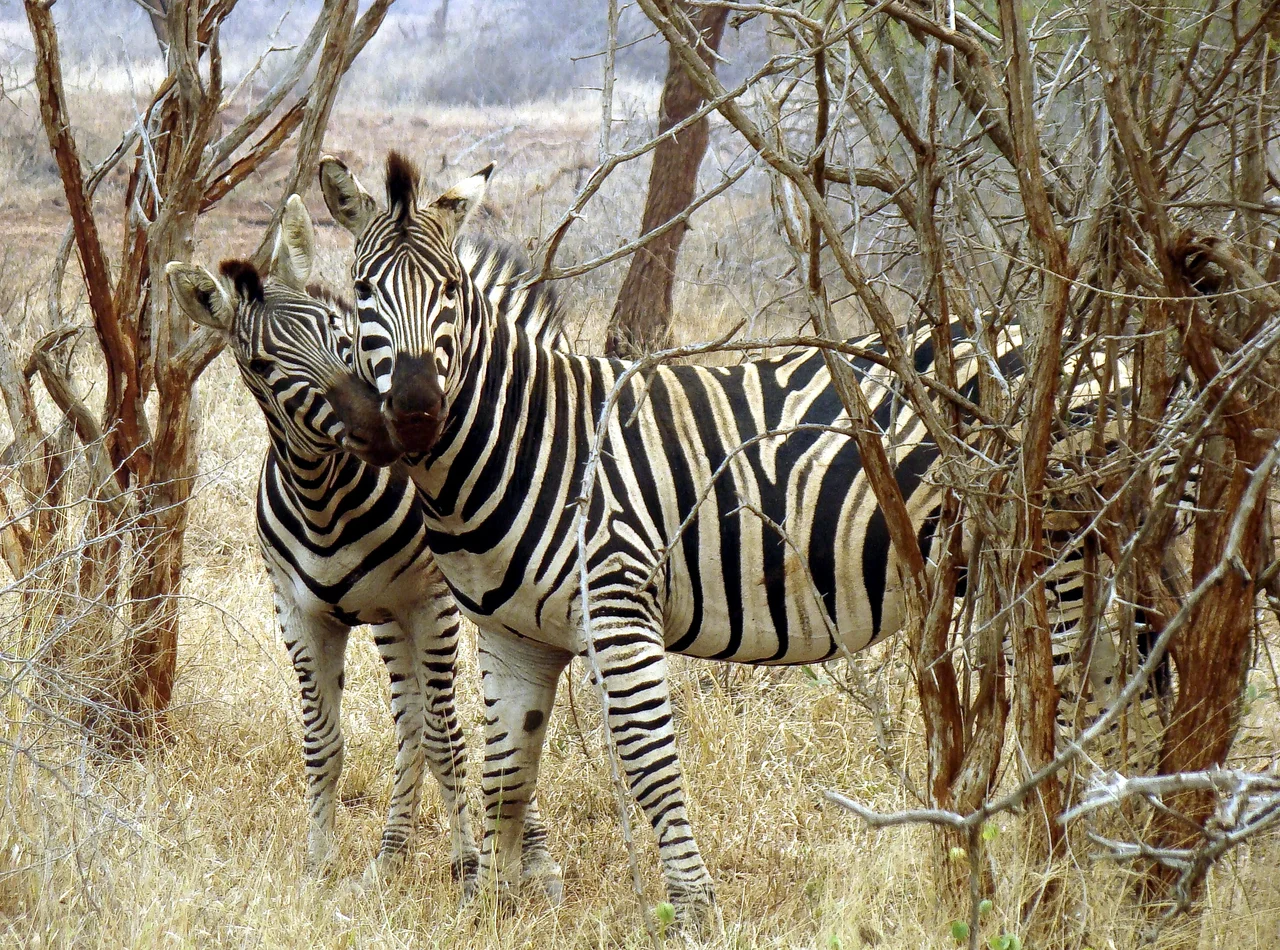

Sabi Sand Game Reserve
There is a place in the bushveld where the leopards do not run. Elsewhere across Africa the big cat is a rumor in the grass, a flicker seen for two seconds before it dissolves into shadow. In the Sabi Sand, generations of leopards have grown up alongside the open vehicles that follow them, and they have decided the vehicles are not worth fearing. The result is the closest thing the wild offers to an audience with a ghost: a leopard draped along a marula branch at eye level, ignoring you completely, grooming a paw in the last gold light of the day.
The Fence That Fell
The reserve began in 1934, when a handful of landowners on the western edge of what would become Kruger National Park agreed to manage their farms for wildlife rather than cattle. For decades a fence still separated their ground from Kruger. Then, in 1993, the eastern fences came down. The effect was profound. The Sabi Sand's 65,000 hectares became, in practice, an open western doorway into a protected wilderness of more than two million hectares, and the animals began to move as they had before any boundary existed. Elephant, lion, buffalo, and the great herds of impala now cross freely between the two, and the reserve breathes with the larger ecosystem instead of holding a fragment of it captive.
Two Rivers Through the Dry
The land takes its name from the water that defines it. The Sabie River and the Sand River cut across the reserve, and in a region that bakes hard through the winter dry season they are the difference between life and absence. Where the rivers run, the bush thickens into riverine forest of jackalberry and sycamore fig, and the game concentrates. This is no accident of geography but the engine of the whole place: predators follow prey, prey follows water, and the photographer who learns the rivers learns where the morning will happen. Around these green corridors gather nearly 150 species of mammal, from the obvious giants down to the genets and civets that only the night drive reveals.
Cats Without Fear
The Sabi Sand is best known for the Big Five, the old hunters' shorthand for lion, leopard, elephant, buffalo, and rhino, but its reputation rests above all on the leopard. Few places on the planet hold so many in so small an area, and decades of careful, low-pressure viewing have produced cats that tolerate vehicles to an astonishing degree. Trackers here know individual leopards by the rosette patterns on their faces and follow their lineages across generations, naming mothers and daughters and watching territories pass down. To sit quietly while a leopard walks past the wheel, unbothered, is to witness a relationship between wild animal and human observer that exists almost nowhere else.
The Craft of the Drive
Experiencing the Sabi Sand means surrendering to a rhythm older than the lodges that now line its rivers. The day pivots around two game drives, one launched before dawn into the cold blue light, one rolling out in the afternoon and stretching past sunset into the dark, when a spotlight picks out the eyeshine of nocturnal hunters. Every vehicle carries a ranger at the wheel and a tracker on the bonnet seat, reading dung, drag-marks, and broken grass the way a city dweller reads street signs. Walking safaris go out on foot with armed guides for those who want the bush at its rawest. Whichever way you travel, the rule is the same: this is the animals' country, and you are the guest.
From the Air
The Sabi Sand sits at roughly 24.90 degrees south, 31.55 degrees east, against the western boundary of Kruger National Park in northeastern South Africa. The Sabie and Sand rivers are the clearest landmarks from the air, threading green through the surrounding lowveld. Several lodges keep their own bush airstrips, and the reserve is well served by Skukuza Airport (FASZ) just across the Kruger boundary, with Hoedspruit Eastgate (FAHS) to the north and Kruger Mpumalanga International (FAKN) to the south near Nelspruit. From Johannesburg the flight runs about an hour. Skies are clearest and game-viewing best in the dry winter (May through September), when thinning vegetation and shrinking waterholes concentrate the wildlife.
Nearby Stories
- Pilgrim's Rest 19 km away
- Blyde River Canyon Nature Reserve 22 km away
- Sudwala Caves 35 km away
- Kruger National Park 68 km away
- 1986 Mozambican Tu-134 Crash 99 km away
- Maputo 105 km away
- Portuguese Mozambique 130 km away
- Zavora 325 km away