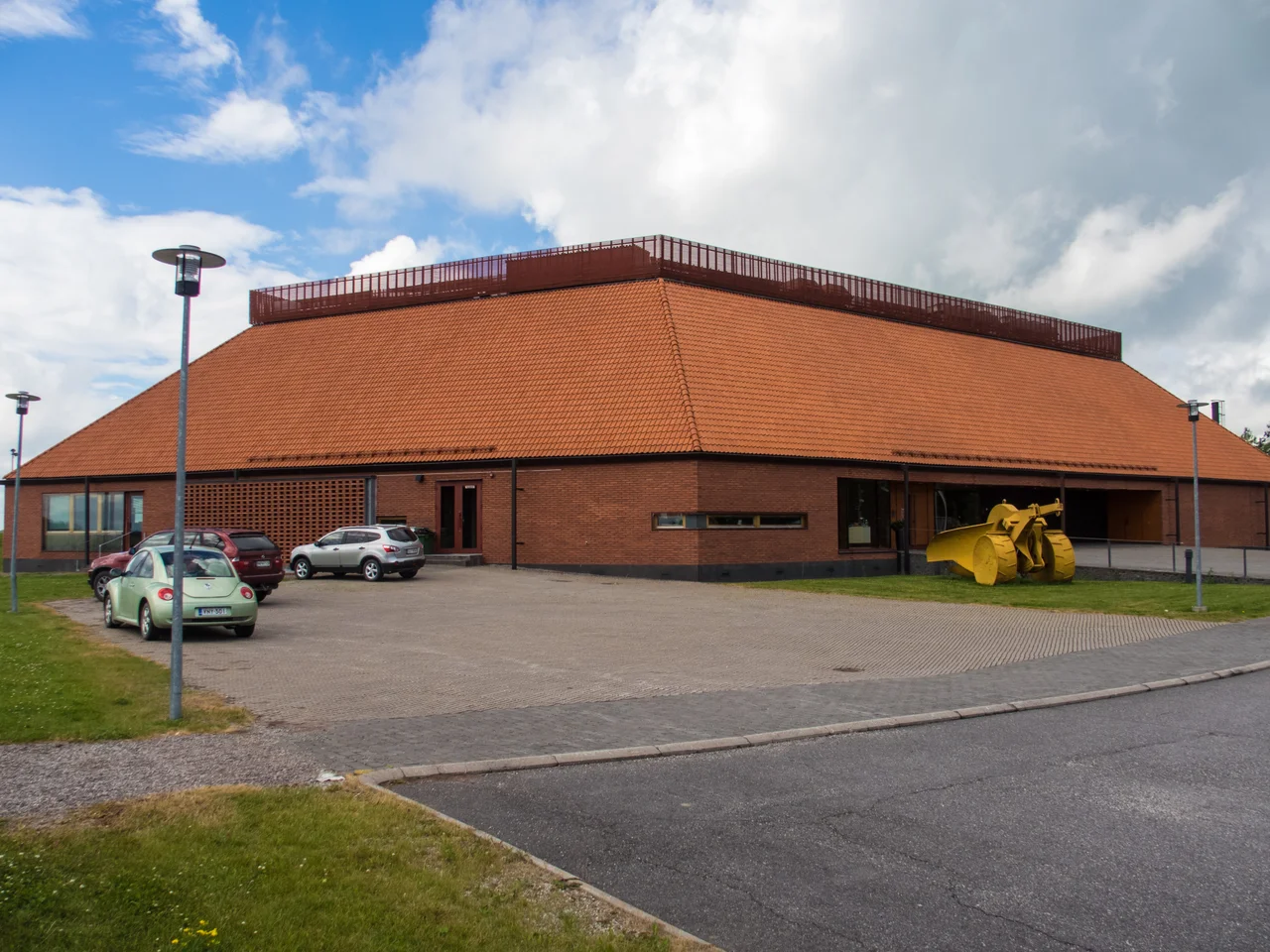

Sarka (museum)
A sarka is one strip of field. It is the working unit that ploughing, drainage and inheritance all quietly organised themselves around, and Finland's national museum of agriculture named itself after it — a choice that is far more precise than it first appears. The museum stands about five kilometres out of Loimaa on the Turku road, in Varsinais-Suomi, in some of the flattest and most thoroughly cultivated land in the country. What it holds is three thousand years of a nation learning to grow food in a climate that would rather it didn't.
Sixty Years of Asking
The idea is a great deal older than the building. People were arguing for a national agricultural museum as early as the 1940s, at a point when a large share of Finns still lived off the land — which is precisely why the case looked less urgent then. You do not usually put a museum around something you are standing in. The argument outlasted the condition. A serious project ran from 1996, construction began in 2004, and the doors opened to the public on 1 June 2005. The building belongs to the state; the Finnish Agricultural Museum Foundation runs what happens inside it. In 2010 responsibility shifted from the agriculture side of government to the education side. That is a bureaucratic footnote with a real meaning underneath it: farming had finished becoming heritage.
Three Thousand Years of Arguing With the Latitude
Maatalouden aika — The Age of Agriculture — is the spine of the place, and its span is deliberately immodest. Three thousand years, from the earliest cultivation in this corner of the north to the present day. Finland is a hard country to farm, and almost everything in that history follows from a short list of obstacles. The growing season is brief. The soils are young, thin and stony, scraped and dumped by ice that left only ten thousand years ago. Frost can arrive while the crop is still green. What the exhibition traces is the long, patient argument with those conditions, waged by people who mostly could not read the science behind it and worked it out anyway. Finland, in the end, largely won that argument.
Before and After the Machines
Two further permanent exhibitions sit alongside the first, and they split the story at its obvious hinge. Ennen koneita — Before Machines — opened in March 2019, built largely on collections inherited from the University of Helsinki's former agricultural museum at Viikki. It covers work done by hand and by animal, which in Finland means most of the work for most of the time. On Se Kone! opened in June 2024 and carries the account from 1900 forward through mechanisation. Between them they mark the fastest transformation in the history of rural Finland. Changing exhibitions on particular themes, along with art and photography shows, rotate through the remaining space.
Why Loimaa Is the Right Address
There was never much doubt about where this museum belonged. Loimaa sits on the Loimijoki in country where fields run to the horizon and grain dryers are the tallest structures in sight; the town has been a farming centre since long before the railway arrived in 1876. Sarka is Finland's national responsibility museum for agriculture, which makes it the institution of record for the subject rather than simply a local collection. In 2021 it was named Vuoden museo, Museum of the Year, at a ceremony in Turku that May. In 2024 it set a visitor record, with more than 76,000 people through the exhibitions and events — a serious number for a museum reached by a country road. There is a restaurant serving lunch and à la carte, which in a farming town reads less as a convenience than as a statement about the subject.
From the Air
60.8339°N, 22.9875°E, about five kilometres from central Loimaa toward Turku and close to Highway 9, at roughly 60 m elevation. The visual cues are the Loimijoki, the arrow-straight highway, and the tower of the Loimaa church a few kilometres north; beyond that the plain offers almost nothing to fix on. Turku (EFTU) lies about 50 km southwest, Forssa (EFFO) about 35 km east, and Tampere-Pirkkala (EFTP) roughly 80 km north. Recommended viewing altitude 1,500-2,500 ft AGL, low enough to read the strip pattern of the fields that gives the museum its name. Summer visibility is long and hazy; from November the plain frequently sits under low cloud, and snow cover erases the field boundaries entirely.
Nearby Stories
- Koijärvi 6.9 km away
- Hiidenlinna 11 km away
- St. Henry's Chapel 12 km away
- Vaskijärvi Strict Nature Reserve 15 km away
- Huittinen 18 km away
- Old Castle of Lieto 19 km away
- Paimio Sanatorium 26 km away
- Tursiannotko 31 km away