
Mosquito Island's Older Residents
The nickname is earned honestly. Selirong Island sits in Brunei Bay at the delta of the Temburong River, and the mosquitoes are relentless. But the locals who gave the island that name were talking about more than insects -- they were acknowledging a place so densely alive that even the air bites back. Beneath the canopy, proboscis monkeys crash through branches with their absurd pot-bellied grace. Mudskippers haul themselves across exposed roots at low tide. Monitor lizards hold still until you are close enough to flinch. The mangroves that cover nearly all of Selirong's 2,566 hectares have been doing this for centuries, long before anyone thought to call it ecotourism.
A Sanctuary Before the Word Existed
Brunei established the Labu-Selirong Wildlife Sanctuary in 1948, when the country was still a British protectorate and conservation was rarely a colonial priority. The original sanctuary covered 2,499 hectares. By 1954, it had been expanded to 8,984 hectares, absorbing surrounding mangrove swamp and tidal flats into a protected zone that few people visited and fewer still studied. Plans to create a formal forest reserve at Selirong were drawn up as early as 1950, alongside similar plans for the Andulau Forest Reserve on the mainland, but both fell through -- shelved by the slow bureaucracies of a nation still finding its modern shape. It took another four decades before the island was formally developed into a recreational park. In 1998, under Brunei's 6th National Development Plan, the Forestry Department built the infrastructure that would finally bring visitors into the mangroves rather than just past them.
Walking on Roots
The park's 2-kilometer elevated walkway threads through the mangrove canopy on wooden planks, raised high enough to stay dry at high tide and low enough to feel the humidity thicken around you. An observation tower at one end offers a vantage point over the treetops, where the forest flattens into a green blanket broken only by tidal channels and the occasional exposed mudflat. From up there, Brunei Bay stretches east and north, its shallow waters the color of milky tea where sediment from the Temburong River mixes with saltwater. Below, the mangrove roots form an architecture of their own -- the stilt roots of bakau trees and the sprawling pneumatophores of other species creating a lattice that traps sediment, buffers storms, and provides nursery habitat for fish. Nipah palms crowd the gaps, their fronds used for centuries as roofing material in the water villages downstream.
The Residents Who Were Here First
Selirong's most famous inhabitants are its proboscis monkeys -- Nasalis larvatus, a species found only on Borneo, recognizable by the males' enormous drooping noses and russet fur. They move through the canopy in troops, feeding on young mangrove leaves and unripe fruit, their strange honking calls carrying across the water. Macaques share the forest with less fanfare but more adaptability, while kingfishers flash electric blue along the waterways. Eagles circle above, hunting the fish that shelter among the roots. At the water's edge, mudskippers and archer fish occupy the tidal zone where fresh and salt water negotiate their boundary twice a day. Flying lemurs -- not actually lemurs and not actually capable of flight, but expert gliders -- stretch their membranes between trees at dusk. The biodiversity is not incidental. Mangrove forests are among the most productive ecosystems on Earth, generating biomass at rates that rival tropical rainforests while occupying a fraction of the attention.
Traces of Older Traffic
Archaeological surveys have turned up pottery shards, primitive tools, and trade artifacts on Selirong, evidence that the island was not always the uninhabited wilderness it appears today. During the 15th and 16th centuries, when the Sultanate of Brunei controlled much of coastal Borneo and the trade routes that threaded through it, Selirong's position at the mouth of the Temburong River made it a natural waypoint. Chinese porcelain fragments and trade beads found on the island suggest a vibrant exchange of goods, linking Selirong to the broader maritime commerce that made Brunei wealthy. The mangroves provided timber, charcoal, and tannin to the regional economy. That the forest recovered so completely after centuries of human use speaks to the resilience of the ecosystem -- or perhaps to the restraint of the people who used it.
Getting There Is Part of the Point
Selirong cannot be reached by road. From Bandar Seri Begawan, visitors board a speedboat that follows the Brunei River downstream and then crosses the open water of Brunei Bay -- a 45-minute journey from the port at Muara that functions as a decompression chamber between city and wilderness. The island is one of ten in Brunei designated for ecotourism, research, and education, and the boat ride enforces a separation that no entrance gate could replicate. By the time you step onto the walkway, the capital feels distant in ways that have nothing to do with kilometers. The mosquitoes greet you immediately. The proboscis monkeys take longer to appear, but they will -- crashing through the canopy overhead, indifferent to your presence, busy with the ancient business of being the strangest-looking primates on Borneo.
From the Air
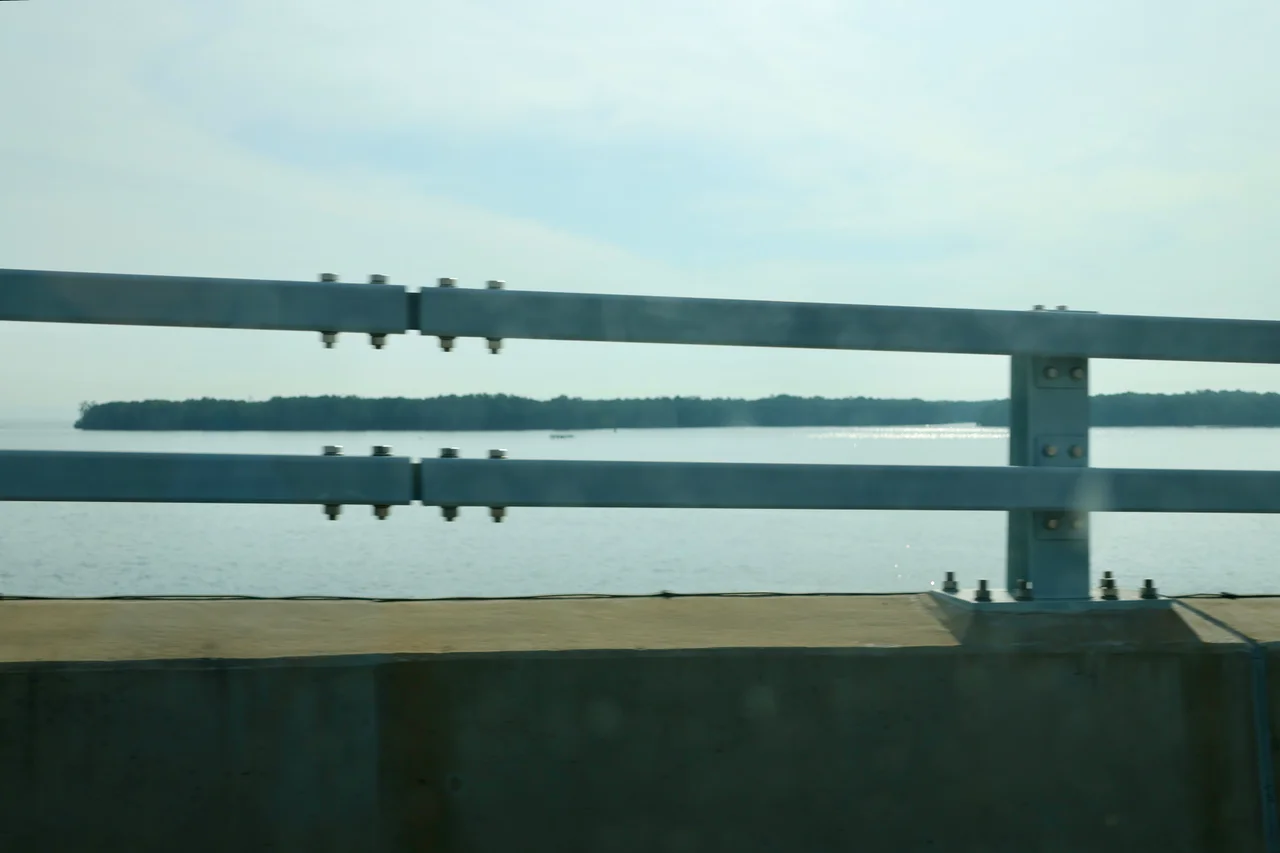
Located at 4.88°N, 115.13°E in Brunei Bay at the delta of the Temburong River, Temburong District. The island is clearly visible from 3,000-5,000 feet as a dense green mass surrounded by the lighter waters of Brunei Bay. The new Sultan Haji Omar Ali Saifuddien Bridge (Temburong Bridge) passes nearby, providing an excellent visual reference. Nearest airport is Brunei International Airport (WBSB), approximately 20 km to the west. The mangrove-covered island contrasts sharply with the open bay waters and is easy to identify from the air.
Nearby Stories
- Where the River Meets the Sea 6.6 km away
- USS Salute: The Minesweeper That Found the Last Mine 7.2 km away
- The Green Jewel You Can Only Reach by River 13 km away
- The Dragon's Lake 16 km away
- Sabah State Railway 29 km away
- Starcevich Monument 57 km away
- Raid on Kalabakan 203 km away
- Luconia Shoals 245 km away