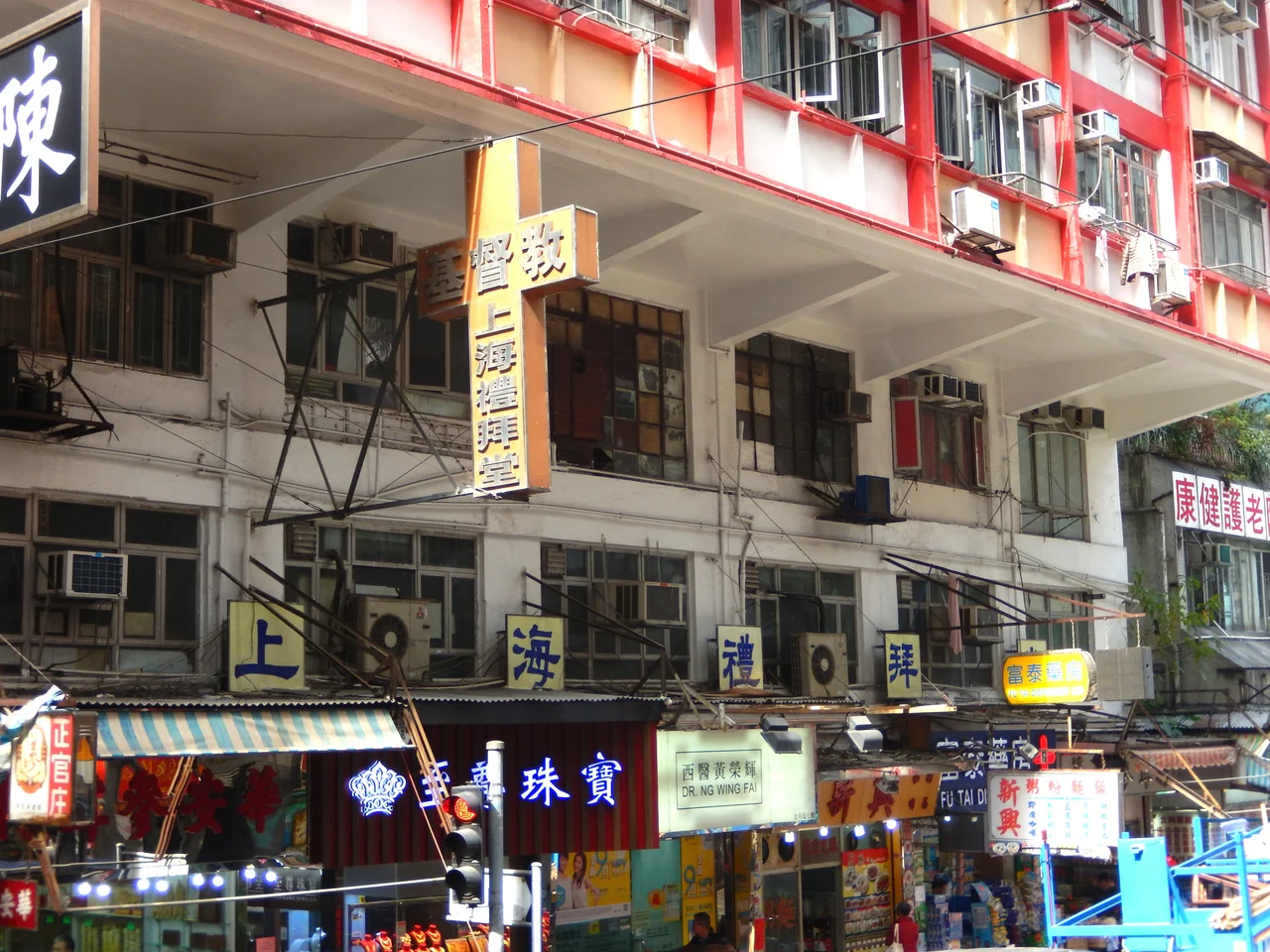

Shanghainese People in Hong Kong
Call it the exile of Chinese capitalism — that is how historian Ming Chan of the Hoover Institution described it. Beginning in 1937, as Japanese forces closed around Shanghai, people began leaving. The trickle became a flood as the Chinese Civil War resumed in 1946 and the Communist victory drew near. An estimated 1.4 million people from Shanghai and the surrounding Jiangnan region endured a ten-day rail journey south, sometimes switching to road or continuing on foot where tracks had been damaged. They arrived in British Hong Kong carrying whatever portion of their former lives they could transport: professional skills, business acumen, family networks, and the stubborn conviction that what had been built once could be built again.
A City Within a City
The Shanghainese settled in clusters. North Point on Hong Kong Island became known as 'Little Shanghai' — Shanghainese-owned shops and bathhouses, Mandarin drifting through the streets, the cheongsam moving through the crowds. Organizations like the Kiangsu-Chekiang Provincial Association (香港蘇浙滬同鄉會) helped roughly 15,000 former soldiers find work and navigate an unfamiliar city. The Shanghai Fraternal Association, founded in 1977, began as an exclusive dining club for Shanghainese-speaking businesspeople at a time when Shanghainese cuisine was nearly impossible to find in Hong Kong. Over the decades, as the original generation aged and passed, the membership quietly opened to include Cantonese neighbors — a small, telling symbol of how an immigrant community slowly becomes woven into the fabric of a place.
They were called 'Northerners' by locals, an odd designation since Shanghai sits well south of China's actual north. The label revealed less about geography than about distance — the distance between Cantonese Hong Kong and the Wu-speaking world that had arrived on its shores.
Rebuilding from Nothing
Most Shanghainese who reached Hong Kong had been successful industrialists before the war. Most arrived with little. A notable exception was Yue-Kong Pao, a Ningbo native and shipping magnate who managed to transfer much of his family's wealth before the window closed. For the others, reconstruction meant starting over. They rebuilt in textiles and garment manufacturing, in plastics, in toys — the light industries that came to define Hong Kong's economic identity in the 1950s and 1960s.
Before their arrival, Hong Kong's economy had revolved around its role as an entrepôt, a transit point for trade. What the Shanghainese brought was manufacturing. Scholar Goodstat notes that their economic influence has sometimes been exaggerated into legend — a myth partly propagated by the British, who tended to favor the Shanghainese as business partners over the local Cantonese population. The reality is more textured: the transformation was real, but it was collaborative, contested, and uneven. Around 7 percent of Shanghainese in Hong Kong had attended university, compared to 2 percent of Cantonese speakers at the time — yet a quarter of Shanghainese had received no schooling at all.
Cinema, Cloth, and Culture
The Sino-Japanese War also drove an exodus of filmmakers and actors south. Run Run Shaw and his brothers moved their media company from Shanghai to Hong Kong during the war and would later found TVB, the television channel that would define Cantonese popular culture for generations. Shanghainese tailors brought with them a garment that would become iconic: the cheongsam, called qipao in Mandarin and zansae in Shanghainese, which they helped popularize across Hong Kong.
Director Wong Kar-wai — born in Shanghai, raised in Hong Kong — has spent his career excavating precisely this in-between world. Films like In the Mood for Love and Days of Being Wild linger in the sensory residue of Shanghainese emigre life: the Mandarin spoken in corridors, the music drifting from a neighbor's apartment, the particular longing for a city that no longer exists as it was remembered. Maggie Cheung, born in Hong Kong to Shanghainese parents, has returned to these characters repeatedly in collaboration with Wong. The 1960 film The Wild, Wild Rose adapted Carmen to explore the friction between Shanghainese and Cantonese worlds — proof that the encounter between communities had found its way into art almost immediately.
The Long Assimilation
By the 1961 census, around 70,000 Shanghainese speakers lived in Hong Kong — 2.6 percent of the population over five. More than 90 percent were immigrants. By 2016, the share of Shanghainese speakers had fallen to 1.1 percent, as the community aged and its descendants shifted toward Cantonese and English. The neighborhood of North Point, once 'Little Shanghai,' was later diversified by waves of Fujianese migration — parts of it took on the informal name 'Little Fujian' — and the Shanghainese character of the district faded gradually into the city's palimpsest.
What persists is harder to see but runs deeper: the manufacturing traditions they established, the banks they staffed, the cinematic language they introduced, the pedicure tradition from Yangzhou that Time Magazine once called the 'World's Most Amazing Pedicure.' A culture that arrived under duress, rebuilt under pressure, and dissolved slowly into the city it helped make.
Notable Figures
Shanghainese heritage runs through the top of Hong Kong's political and cultural life. Chief Executive Tung Chee-hwa, Chief Executive Carrie Lam, Chief Secretary Anson Chan, and former Chief Justice Yang Ti-liang all have Shanghainese family roots. Wong Kar-wai, one of the most celebrated filmmakers in the world, was born in Shanghai. The Kiangsu and Chekiang Primary School in North Point, founded by the provincial association, was among the first Hong Kong schools to teach primarily in Mandarin — a legacy institution from a community that knew education was the one asset no government could confiscate.
From the Air
The Shanghainese community centered on Hong Kong Island at approximately 22.29°N, 114.20°E, with the neighborhood of North Point — once known as 'Little Shanghai' — lying on the island's northeastern shore. From altitude, Hong Kong Island is visible as the densely built landmass south of Victoria Harbour, with North Point occupying the northeastern tip. Nearby ICAO airport: VHHH (Hong Kong International Airport), approximately 30 km to the west on Lantau Island. Recommended viewing altitude: 5,000–8,000 feet for a clear view of the full island and harbour geography.
Nearby Stories
- Lok Ma Chau Loop 2.3 km away
- Portas do Cerco 2.3 km away
- Kweilin Incident 17 km away
- Wanshan Archipelago Campaign 34 km away
- Nanxiong Formation 115 km away
- Battle of Nanpeng Island 148 km away
- Heyuan 169 km away
- Cape Maobitou 632 km away