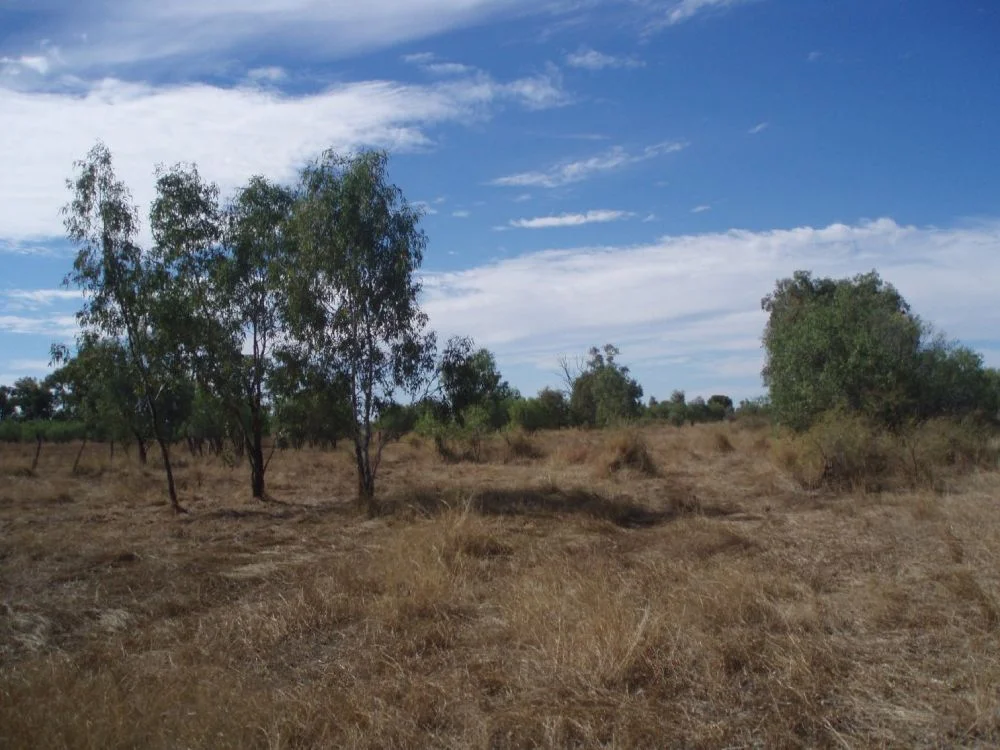
,_Barcaldine.jpg)
Shearers' Strike Camp Site, Barcaldine
An ant-bed oven, half-melted back into the red earth, is nearly all that remains. Walk three kilometres north-east of Barcaldine to the south bank of Lagoon Creek, through the scattered gidgee, and you can still find the crumbled remains of the oven the strikers built to bake their own bread. For a few months in 1891 this quiet stretch of creek held one of the largest gatherings of working men Australia had ever seen, a camp of up to a thousand shearers and their families that became, for a tense autumn, the focus of the whole country's attention.
Why They Stopped Work
The grievances were real and they were specific. Out here the great sheep stations ran like private townships, and their owners held the whip hand over an itinerant workforce hired by the season. Pay was being cut. The newly formed Pastoral Employers' Association had introduced reduced rates and was pressing shearers to sign freedom-of-contract agreements that would have undercut the unions, while raising the threat of cheaper imported labour to fill any chair a striker left empty. The men who refused were not radicals by temperament. They were bush workers who had built unions, the Queensland Shearers' Union, the carriers, the labourers, because collective bargaining was the only leverage a seasonal hand had against an employer who could otherwise dictate every term. When the cuts came, they walked off.
A Camp Like a Town
What they built on Lagoon Creek was no rabble. Tents stood in disciplined rows with a cleared parade ground between them. The men were issued food, soap, tobacco, and salt; the ant-bed oven turned out fresh bread; a library tent was raised, and there were games of cricket on the flat. They drilled. They held torchlight processions through Barcaldine, where the townspeople largely cheered them on, and on 1 May 1891 they marched in what is remembered as one of the earliest May Day processions anywhere in the world. On the north-eastern edge of camp they blazed a tree and painted it: "United we stand. Divided we fall. A.L.F. the strike camp 1891." The order and dignity of the camp were themselves an argument, a demonstration that these men could govern themselves.
Troops on the Plain
The government answered with force. Police and soldiers were sent west, and as carriers and railway workers came out in sympathy, military reinforcements followed. Field guns were brought up. Through March, with armed men in the camp and armed men ranged against them, central Queensland stood on the edge of open conflict. Then, near the end of the month, the authorities reached for an old conspiracy law and arrested the entire strike committee. Thirteen leaders were charged with sedition and conspiracy, taken to Rockhampton, convicted, and sentenced to three years' hard labour on St Helena Island in Moreton Bay. With the leaders gone, with sickness and heavy rain in the camp and non-union shearers working the sheds under military escort, the strike broke apart. On 15 June 1891 it was officially called off.
Defeat That Changed a Nation
They lost the strike and won something larger. The bush workers concluded that the fight could not be won in the shearing sheds alone; it had to be carried into parliament. In 1892 Tommy Ryan, who had chaired the Barcaldine strike committee, was elected for the seat of Barcoo, one of the first labour representatives returned to any parliament on earth. Among the convicted men sent to St Helena, William Hamilton, Julian Stuart, and George Taylor would later sit as Labor members themselves. The defeat on Lagoon Creek became a founding story of the Australian Labor Party and of organised labour in this country. Archaeologists have since dug here and found the camp's bottles, tins, ammunition, and shearing gear; many people in Barcaldine today descend from the men who pitched those tents. The strike has never stopped belonging to the town.
From the Air
The strike camp site lies on the south bank of Lagoon Creek about 3 km north-east of Barcaldine, near 23.53 degrees south, 145.33 degrees east. From the air the creek line threads through flat, lightly timbered gidgee country a little outside the green grid of the town itself; the site today is a low scatter of trees rather than a built landmark, so navigate by the creek and the town. Nearest field is Barcaldine Airport (ICAO YBAR), just to the south-west; Longreach Airport (YLRE) sits about 100 km west-northwest. Clearest viewing is in the dry season, when the plains hold long visibility and the creek stands out against the surrounding scrub.
Nearby Stories
- Aramac Tramway Museum 28 km away
- Beaconsfield Station Sheep Wash 34 km away
- Wellshot Station 44 km away
- Bexley Station 53 km away
- Yalleroi 54 km away
- Augustus Charles Gregory 97 km away
- Cullin-la-ringo Massacre 230 km away
- Brigalow Belt 265 km away